
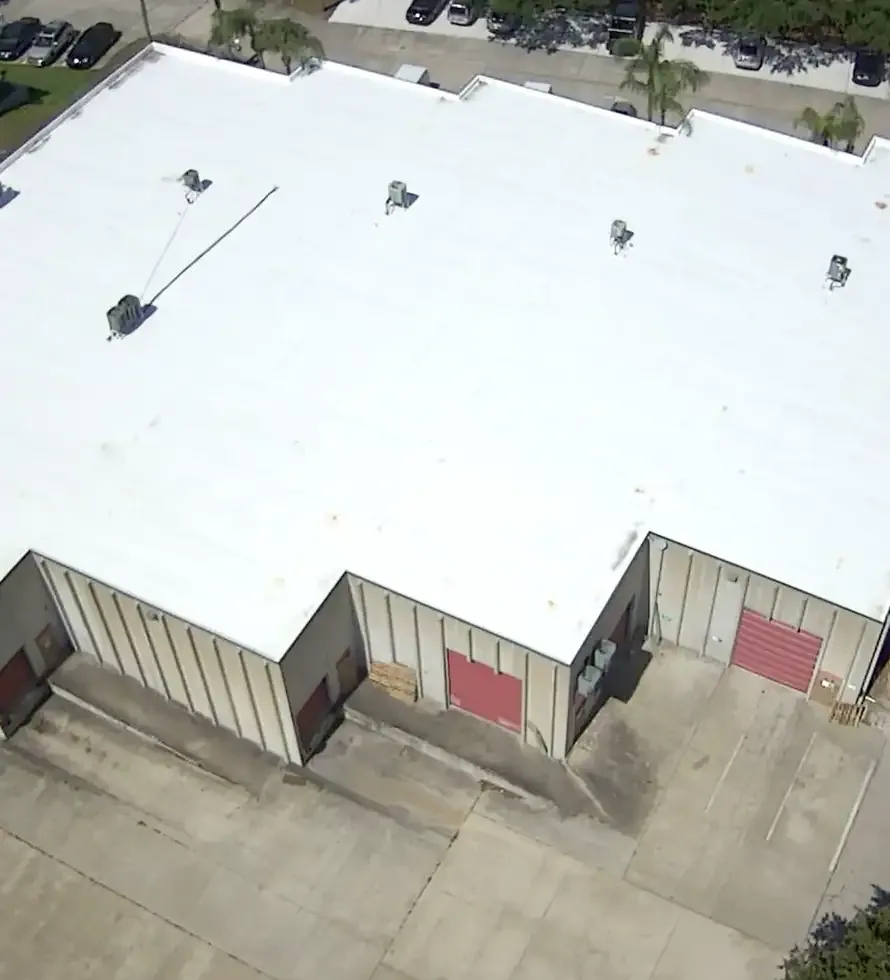
A cool roof fights the wrong enemy in most of Flagstaff, AZ. Winter is long here, and heat is short. Snow load decides most roof questions, not summer sun. A reflective roof still has a place. It just needs a clear reason, and the reason is not always energy.
Commercial Roofing Flagstaff installs reflective membranes and coatings where they fit. We say plainly when they do not. Start with the building, its mechanical load and its roof structure. Then decide.
Heat load is also a structural story. Dark membrane on a clear day runs far hotter than the air. That heat cycles the membrane from cold nights to hot afternoons, and thermal movement works on seams and fasteners. A reflective surface narrows that swing. It may add years to the membrane, which is a reason to choose one even when the energy numbers are modest.
Clear skies are the norm here: about 78 percent of possible sunshine, near 3,475 hours a year. Sun at 7,000 feet is strong, and it heats dark membrane fast on a clear day, even in cold air.
A cool roof helps most in a building that runs cooling. Think data rooms, restaurants, labs and sunny south-facing roofs over conditioned space with heavy equipment. It helps less on a building that rarely cools. Heating runs longer than cooling in Flagstaff, and a cold snap can drop to minus 30 degrees F.
A white surface earns its cost only where the building spends real hours cooling, so we test that against the heating season first. If cooling load is small, we say so.
Rooftop equipment changes the answer too. A roof with a row of units and ductwork under the sun gains heat around each one. A reflective surface on the surrounding field cuts that gain. A roof with few units and a long cold season gains less. We map the units and the shaded areas before we price.
A white roof reflects winter sun too. It melts snow more slowly than a dark roof does. That can be a plus: less melt, less refreeze, fewer ice ridges at the eave. It can be a minus: snow load stays on the roof longer.
Snow stacks up on a flat roof all winter, and the city tied several collapses to the late February 2023 storm. A reflective roof does not change the structural load. It changes how long the snow sits. So the sag check comes first, and the cool roof decision comes second.
We do a sag check before any reroof. We look for sagging ceilings, bowing trusses and sticking doors. Any flag goes to the owner before we price a cool roof.
Roof access in winter matters for a white roof. Snow hides edges and curbs, and a lighter surface under thin snow is hard to read. We mark curbs and drains with tall flags before the first storm so crews can find them after a heavy fall.
Two paths give a reflective surface. One is a white single-ply membrane, such as TPO or PVC, installed as the new roof. The other is a reflective coating over a sound existing roof. A coating costs less and goes on faster, but the roof underneath has to be dry and attached.
For a replacement, a white TPO roofing or PVC roofing system is the usual choice. For a restoration, a silicone roof coating or an acrylic roof coating can add a reflective layer. We test the old roof first. A moisture scan and a few cores show whether a coating will bond and last.
Insulation is part of the decision. A reflective surface does not replace insulation. In a cold climate, thicker insulation and a tight air barrier do more for heating cost than reflectivity does. We look at the existing insulation depth and condition, and we propose an upgrade if the roof is already open. A roof insulation and cover board package can pair with a white membrane in one project.
Reflective surfaces do not skip the freeze-thaw cycle. Water gets under a coating at a pinhole. It freezes. The ice lifts the film. By spring the coating is blistering and peeling.
Surface prep decides the outcome. The roof must be clean and dry. Seams, flashings and penetrations must be sealed first. Coating goes on within the temperature range the product allows, and it needs time to cure before the next freeze. In Flagstaff the application window is short. It runs from late spring to early fall, with freezing temperatures returning in late September.
We plan around that window. If a coating cannot cure before cold weather, we stop and dry in. We would rather wait for the next warm week than seal in moisture.
Dirt matters. A white surface collects soot, dust and pollen, and its reflectivity drops. A yearly wash brings back much of the lost reflectivity. We include a wash in the maintenance plan and note which products suit the surface. Harsh cleaners can damage a coating, so we pick the method before the first wash.
July and August thunderstorms carry about a third of the city's yearly moisture, and they arrive in short, hard bursts. A coating that is not fully cured can wash out in a monsoon cell. A membrane with unwelded seams can lift.
We watch the forecast. Application stops when a storm threatens. Sections are dried in before we leave each day. The schedule carries float for weather, since afternoon storm cells can build fast in July and August.
Drains get checked before the monsoon too. A roof drains and scuppers check keeps a reflective roof from ponding, since standing water collects dirt and shortens the life of any white surface.
Local energy and building rules can add insulation or reflectivity items to a reroof. We price those items on separate lines. We confirm what applies before we price.
Building type matters. A new office or research building in the airport technology park can specify a white membrane from day one. Industrial buildings on Mike's Pike and in Bellemont along I-40 come down to their cooling load and roof structure. Downtown brick buildings in the Railroad Addition need a closer look at structure first. A white membrane often rides along with a commercial roof replacement, and it can be planned beside solar-ready roofing in the same scope.
Sometimes. It helps buildings that run cooling under a sunny roof, such as data rooms and restaurants. It helps less on a building that mostly heats. We run the cooling and heating picture for your building before we recommend it.
It can, because it melts snow more slowly. That cuts refreeze at the eave but leaves load on the roof longer. Do a sag check before any reroof, and shovel on schedule after heavy storms.
Only if it is dry and attached. We scan for moisture and take cores. If the insulation is wet or the membrane is loose, coating hides the problem. Replace or repair first.
In the warm part of the year, with time to cure before freezing weather returns in late September. We avoid days with storm risk. If a coating cannot cure in time, we wait.
Clean drains, no ponding and a yearly walk. Dirt and standing water shorten the life of any white surface. We check seams, flashings and penetrations each visit.
Browse the services, roof systems and building types we work with across Flagstaff and nearby Arizona communities.
A walk of the roof with photos, findings and a written scope.
Active leaks, storm damage and blocked drains get a fast response.
Roofing across Flagstaff and nearby Arizona communities.