
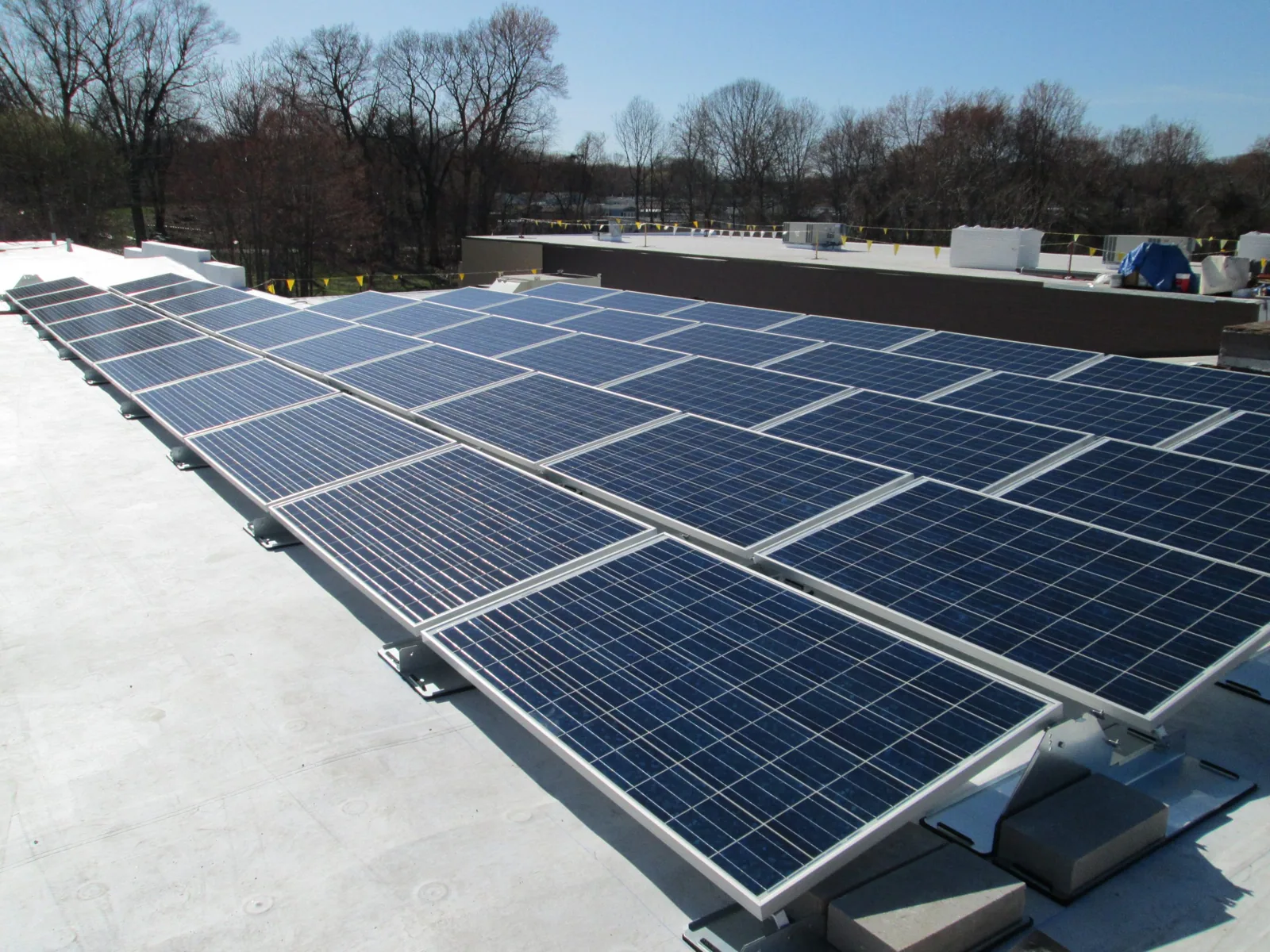
A solar array adds weight to a roof that already carries snow. That is the first fact. Flagstaff, AZ holds snow for months, and it still logs sun about 78 percent of the time it could. Both matter. The sun is why owners want the array. The snow is why the roof has to be ready for it.
Commercial Roofing Flagstaff prepares roofs for solar and works around arrays already in place. We do not install the panels. We make sure the roof under them is sound, flashed and able to carry the load.
A solar array is meant to run for decades. A roof under it often cannot. If the roof has ten years left and the array has twenty, the roof must come off with the array on it. That costs more than doing the roof first.
So the first check is remaining service. We walk the roof, scan for wet insulation and take cores. We rank the membrane by years left. If the roof is near the end, we recommend replacement before the array goes up. If it has decades left, we say so and move to the next check.
A roof condition report puts those findings on paper, with photographs and a cost band for each option.
Roof age is not only years. Heat from a clear day at altitude, freeze-thaw and monsoon wetting all age a membrane faster than the calendar. Two roofs of the same age can sit in very different shape. We read the surface, not the date on the invoice.
Panels, racking and ballast weigh something. Snow weighs more. The late February 2023 storm dumped as much as 24.5 inches on Flagstaff, and snow load brought several roofs down, officials said. Officials told owners to watch ceilings for sag, trusses for bow and the building for heavy leaks. An array owner should know all three.
Panels change where snow settles on the field. Panels shed snow fast when sun hits them, and the slide piles on the roof below. Drifts form behind rows. A roof edge can take a sudden load.
We do a sag check before any solar project. We look at the ceiling, the deck and the trusses. The owner's structural engineer sets the load limit for the array. Our job is the roof surface and the check that flags a problem early.
Snow guards deserve a plan. Slick panels let snow slide as one sheet. A sheet that lands on a walkway or a loading dock is a hazard. We add guards or fences at the edge where the layout puts a path below, and we check that the guards attach to structure, not just the membrane.
Arrays attach two ways. Ballasted systems sit on the roof under their own weight and stone or block. Mounted systems bolt through the roof to structure. Each way has a cost to the roof.
Ballast adds dead load and can wear the membrane under the feet. We lay protection pads under every foot and keep drainage clear. Mounted systems add penetrations. Each one needs flashing, and each flashing is a place for water to enter. We detail them with pitch pockets or curb-style boots, and we log the count and location of every one.
Wind and uplift matter too. We confirm the roof edge and fasteners can take the added loads before racking goes on.
Cable and conduit runs add their own wear. Wires lie across the membrane. They rub in wind. Supports lift them off the surface. We check that every run sits on supports with pads under the feet, and that nothing drags.
Racking can block a drain path. Rows sit across the slope. Water that used to reach a drain now meets a barrier. Ponding follows.
We map drains and slope before the array is laid out. We ask the solar designer to leave aisles along the drain lines. We check roof drains and scuppers before and after install. A drain choked with needles in March floods the aisle by April.
Summer storms use those same aisles. Monsoon thunderstorms in July and August bring roughly a third of the town's yearly moisture, and they test every aisle.
Roofs under arrays still need maintenance. Crews need a path to drains, curbs and flashings. Snow crews need a path too. We recommend marked walkways with pads, a clear aisle around each mechanical well and a shoveling plan that avoids panels.
Metal shovels cut membrane and scratch panels. Plastic shovels and roof rakes are the tools. We write the plan with the layout marked, so a crew in January knows where to step. We also mark snow guards or fences where sliding snow could hit a walkway or an entry below.
Electrical work belongs to the electrician. The City of Flagstaff adopted the 2017 National Electrical Code with 2019 local amendments. Roof work and electrical work are scheduled in sequence.
Inspection after install closes the loop. We walk the roof once the array is complete, compare it to the baseline photographs and log any new damage. Small punctures from tools and dropped hardware are common during install, and they are cheap to patch the same week.
A roof warranty can be voided by a penetration done wrong. Many manufacturers want to approve or inspect a solar attachment. The owner should ask the roof manufacturer what it requires before the array contract is signed.
We help with that paperwork. We gather the roof's installation date, system type and warranty status. We tell the owner what to send and track the answer in a roof warranty management file. When the array goes on, we inspect each penetration and photograph the flashing before the racking covers it.
Wide, open roof fields suit arrays best. Whether a building in the airport technology park, an I-40 industrial site or a Butler Avenue retail center has such a field depends on its roof, so the first walk measures it. At 7,014 feet and 5 miles south of the city, Pulliam Airport gets the same thin-air sun and the same snow.
Inside the Railroad Addition Historic District downtown, a panel layout meets different limits. Historic status can limit what goes on a roof. A tired roof under a planned array points toward commercial roof replacement first. A sound roof with surface wear may only need roof coating restoration before the racking goes on.
If the roof has less service life than the array, yes. Replace first. Removing an array to reroof costs more than doing the roof first. A core and moisture scan tell us how many years the roof has left.
It adds dead load and changes how snow sits. Panels shed snow fast, and it piles below. Your structural engineer sets the limit. We do a sag check and flag any problem before install.
Ballast avoids penetrations but adds weight. Mounted systems add penetrations and flashing. The right pick depends on deck capacity and membrane. We review both with the owner and the designer.
It can if done wrong. Get the manufacturer's terms in writing before signing. We gather the roof records and inspect each penetration before racking covers it.
Use plastic shovels and roof rakes. Keep marked aisles around panels, drains and mechanical wells. Do not use metal blades. Write the plan with the layout so crews know where to step.
Browse the services, roof systems and building types we work with across Flagstaff and nearby Arizona communities.
A walk of the roof with photos, findings and a written scope.
Active leaks, storm damage and blocked drains get a fast response.
Roofing across Flagstaff and nearby Arizona communities.