A condition report is a roof on paper, and it has to be right. Commercial Roofing Flagstaff writes roof condition reports for commercial buildings in Flagstaff, AZ. Each one comes from a walk on the roof, with photographs, measurements and a ranked list of what to do. The reader is a property manager, a lender or a board that cannot climb up and look. The report has to let them see it anyway.
Winter shapes what we write. We record drift lines, drain condition and any sign of sag, because those decide how the building will do in the next storm. A report that skips them is a summer report for a winter town.
Every report follows the same order, so owners can compare roofs side by side.
Every finding ties to a photo and a place on a roof plan. A reader who finds a split seam in the text can also see the seam, the date and the location.
Photographs are dated and numbered against the roof plan, so a second visit lines up image for image. That is how a reader sees whether a crack grew, a ponding ring widened or a repair held through the freeze.
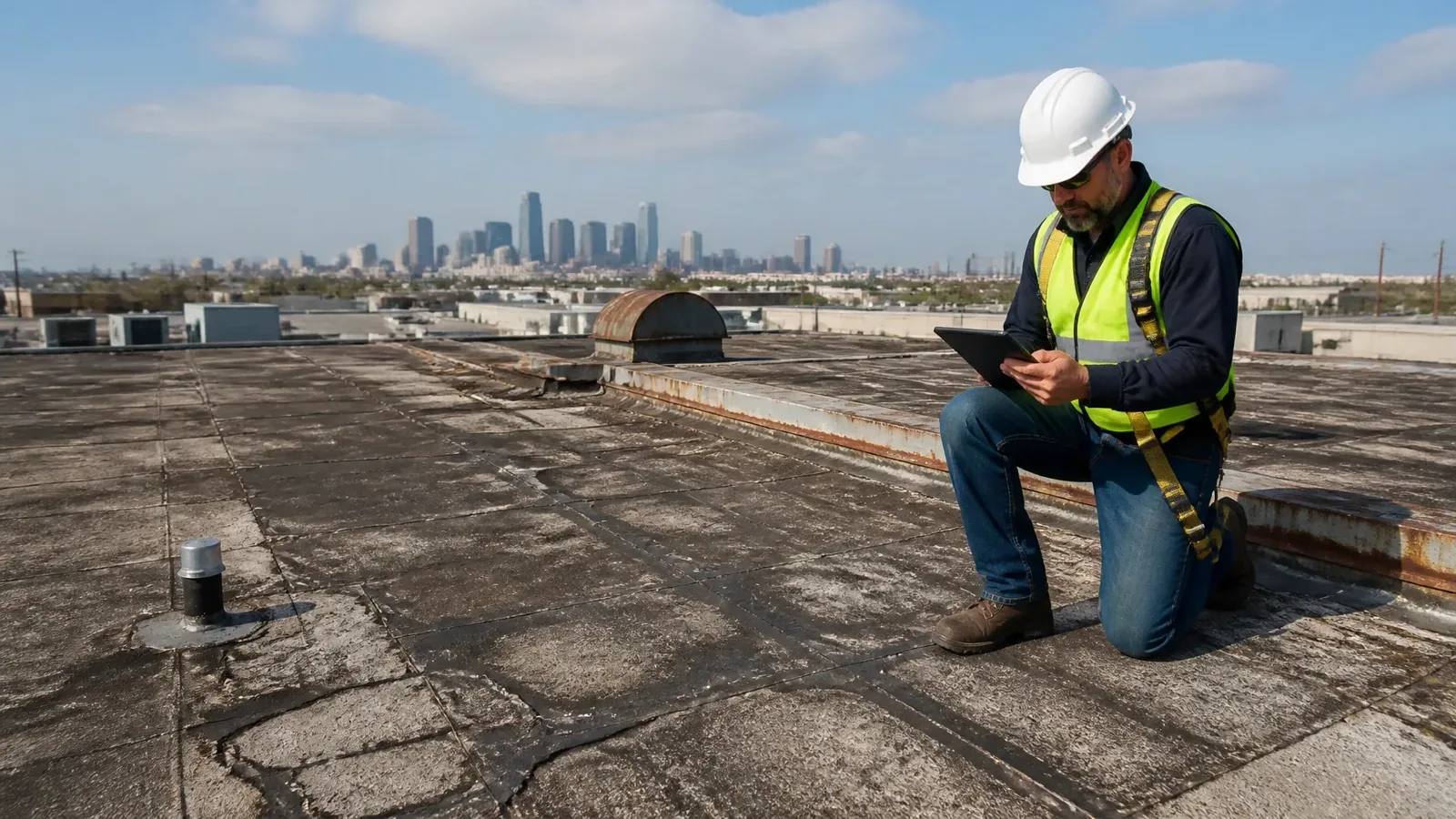
The walk comes first. We cover the whole roof on foot, probe seams, press on suspect spots and open details where needed. On large or hard-to-reach roofs, a drone pass shows the whole surface and finds areas worth a closer look. An infrared moisture survey maps wet insulation that the surface hides.
Core samples confirm what is underneath: layers, thickness, insulation type and moisture. A small sample tells us whether a roof can take a recover or needs tear-off. Where a deck is suspect, we check from below when access allows.
Each method has limits, and the report states which method produced which finding. Infrared works best in the right temperature and light conditions, and a snow-covered roof cannot be inspected in the usual way. We schedule the survey for the window when the data will be sound, which in Flagstaff often means waiting for a clear, dry stretch.
On the roof, we carry a moisture meter, a probe, a straightedge for slope and a camera that logs position. Access matters too: we record hatches, ladders, fall protection points and any area where a crane or lift would be needed for repair.
Snow turns a standard condition report into something more specific. A normal winter here, at almost 7,000 feet, adds up to 90 to 97 inches of snow. The late February 2023 storm was followed by official reports of several roof collapses, with sagging ceilings, bowing trusses and severe leaks named as the signs to watch.
The report therefore carries a drift map of where snow collects behind parapets and around mechanical wells. It lists each drain with its condition, strainer type and freeze risk. It records sag readings at several points, with the method, so a repeat reading after a storm is a true comparison. It marks where ice ridges form and what they reach.
If anything on the roof suggests structural movement, the report says it plainly and recommends an engineer. An owner who spots those signs also has the shared city and county number for structural roof concerns, and our recommendation goes beside it.
Property managers use the report as a work order. The ranked actions feed straight into a repair schedule and a budget request. Lenders and buyers use it as evidence of condition, which is why our due diligence surveys follow the same format with added sections.
Boards and committees use it to approve spending. A report with photographs and a ranked list is easier to approve than a verbal summary. For owners with several buildings, the same layout makes comparison fast, and the findings feed the asset record for each roof.
Local examples show the range. The same format serves a retail center near Butler Avenue and Lone Tree Road, a brick building in the Railroad Addition and an industrial building on Mike's Pike. The roof types differ, so the findings differ, but the order of the report does not.
The report ends with choices, not a sales pitch. Each action carries its timing and the cost drivers behind it, and larger options come with a comparison. A patch is priced against a repair program, and a repair program is priced against a replacement. The owner picks.
We also give a re-inspection date. A roof that is fine today may not be after a hard winter, and the report names the trigger that would put it back on the list: a new sag reading, a freeze that cracks a drain or a seam that opens after a thaw.
If insurance is involved, the report doubles as a base document. Photographs and measured areas, taken before work starts, separate storm damage from older wear, which the adjuster will look for.
For roofs with open warranty questions, the report lists what paperwork the owner should locate and which defects could affect coverage. For roofs under a maintenance program, the findings roll into the next scheduled walk. Either way the report ends with a dated next step, not a general suggestion to keep an eye on things.
The walk takes a day or less for most single roofs, and the report follows in a few working days. Larger roofs and multi-building sets take longer. If moisture scans or core samples are part of the scope, we schedule them for dry, workable weather, which can stretch the timeline in winter.
Only partly. We can record the drift pattern, check drains, take interior observations and note ceiling signs, but a full membrane review needs a clear surface. We write an interim report with the limits stated and schedule the full survey for the first dry window.
The inspection finds problems. The report records them in a form someone else can use: photographs tied to a plan, measured quantities, a ranked list of actions and a re-inspection date. A manager, lender or insurer can act on the report without having been on the roof.
We give cost drivers and a range for each item, tied to the scope on the roof. Final figures depend on access, schedule and the state of the insulation below. For each item, the report marks it as a patch or a fix, so an owner can budget before a contract is signed.
When the roof shows sag, bowing members, ceiling stains in a pattern or ponding that grows, yes. We report what we see on the roof and recommend a structural review where the evidence calls for one. We do not make structural calls ourselves, and we hold the roofing work until the answer is in.
Browse the services, roof systems and building types we work with across Flagstaff and nearby Arizona communities.
A walk of the roof with photos, findings and a written scope.
Active leaks, storm damage and blocked drains get a fast response.
Roofing across Flagstaff and nearby Arizona communities.