A roof you do not track is a roof you will learn about from a ceiling stain. In Flagstaff the winter does the tracking for you, and it sends the bill in March. Commercial Roofing Flagstaff builds roof asset records for commercial owners in Flagstaff, AZ: one file per roof, with condition, age, repairs, drains and snow history in the same place. The goal is simple. Know which roofs are sound, which are tired and which will fail next.
This is not paperwork for its own sake. A property manager with twelve roofs and one budget needs an order of attack. The record gives it to them.
Every roof gets its own file, and the file stays with the building. We build it from the first walk and update it after each visit.
Missing items are marked, not guessed. If a roof's age is unknown, the file says so and plans a core sample. The record is only useful if every line is something we saw or measured.
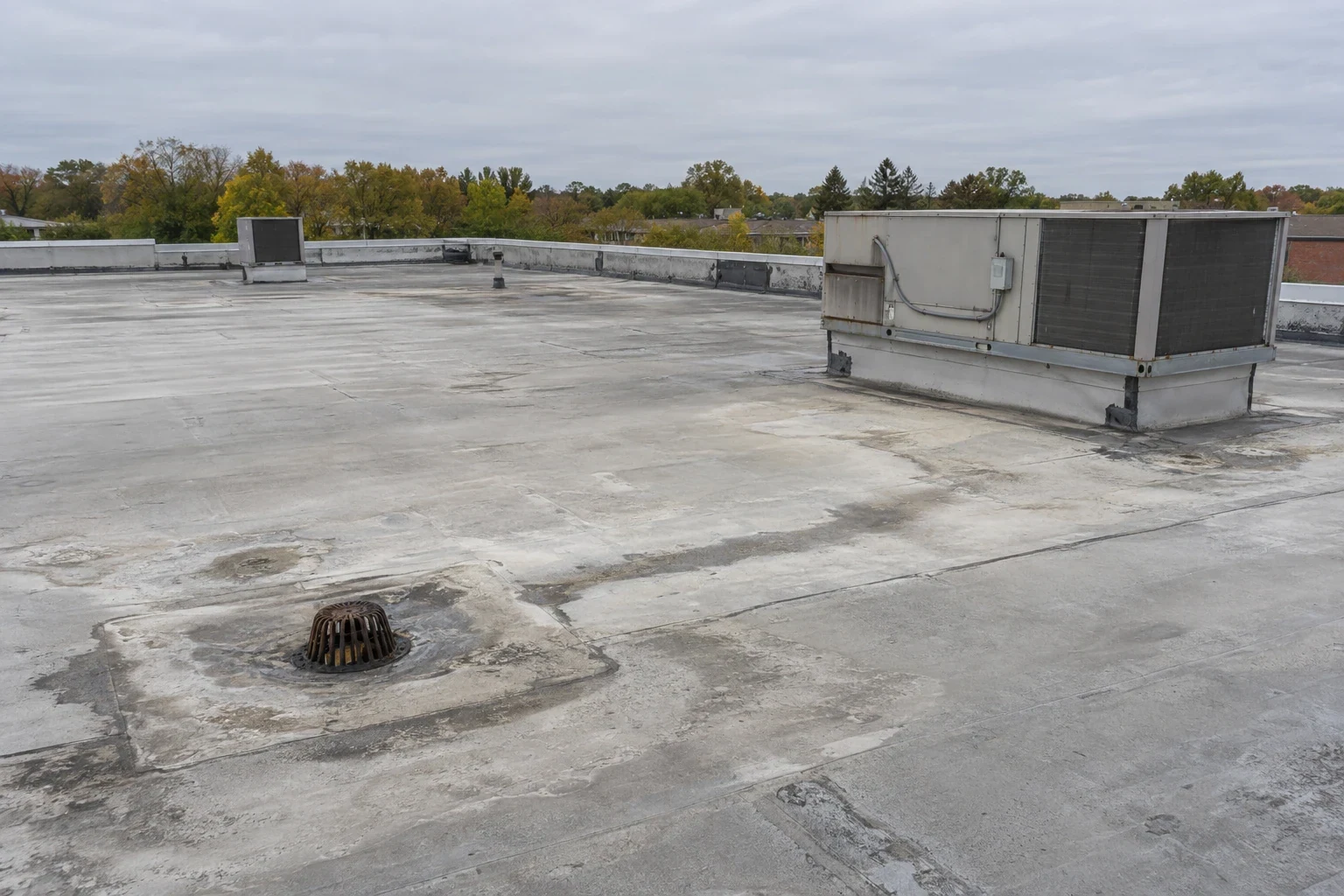
The file also holds the access facts a crew needs on a snow day: where the roof hatch or ladder is, which curbs and walkways should stay clear of blades, and where the drains sit under a drift. A crew arriving in a storm should not have to hunt for a way up or a drain. The details live in the record, and the record travels with the work order.
A normal Flagstaff winter brings 90 to 97 inches of snow, and the late February 2023 storm put 24.5 inches on parts of the city within days. City officials reported several roof collapses afterward. A roof's history of drift lines, sag readings and drain performance shows how close it runs to the limit.
One reading tells you little. A series tells you everything. If a mid-span reading drops a quarter inch each winter, the owner has a structural question long before the membrane has a leak. If one drain freezes every year, the owner has a cheap fix waiting. The record turns a pattern into a decision.
It also helps after a storm. On the first call about a sagging ceiling, an owner with a file already knows which roofs to check first.
Local owners rarely hold one kind of building. A property manager may oversee a downtown brick building in the Railroad Addition, a metal industrial building on Mike's Pike and a retail center near Butler Avenue. Each has a different roof, a different failure pattern and a different budget cycle. The file lets us rank them side by side.
Institutional owners face the same problem at scale. Northern Arizona University operates large buildings across its Flagstaff campus, Flagstaff Unified School District and Flagstaff Medical Center run facilities of their own, and each carries many roofs. The principle is the same for any owner with more than a few roofs: sort by condition and consequence, not by who called last.
An owner with many buildings can run one schedule and one set of reports through a multi-site roof program.
Every roof lands in one of three bins. Sound roofs need routine maintenance. Watch roofs show wear or movement and get checked more often. Act roofs have a defect or a trend that needs money this year.
The bins carry real cost logic. A sound roof gets a fall walk and a spring walk. A watch roof gets those plus a mid-winter drain check. An act roof gets a repair scope, a priced option for replacement and a date. We do not move a roof between bins without a reason in the file.
Owners use the bins to plan the budget. The capital plan draws directly from them, and the condition reports back them up with photographs and measurements.
Consequence matters as much as condition. A tired roof over a storage building and a tired roof over an occupied clinic are not the same call. The file notes what sits under each roof, who occupies it and what a leak would stop. A roof with a modest defect over critical space can rank above a worse roof over empty floor.
A record that stops updating becomes a record of the past. We tie updates to the calendar: a fall walk before the first freeze, a post-storm check after any major snow, a spring assessment after the thaw and a monsoon check in July or August. Each visit adds photographs, new readings and any repairs.
Work on a roof goes into the file the same week. Patches, new flashing, drain replacement and coating all appear with dates and locations. Over a few seasons the file shows the repair cost per roof, which is the number owners need when they weigh another patch against a maintenance program or a new roof.
If an owner already has records from another contractor, we read them, mark gaps and fold the useful parts into the file.
At budget time the owner gets a short summary: roofs by bin, repair cost to date for each, and the next dated action. That one page is what a board or an ownership group needs to approve spending, and it comes straight from the walks.
With a walk of all the roofs inside a single week, so the notes compare fairly. We photograph defects, count drains, measure areas and sort each roof into sound, watch or act. That first pass takes the place of years of missing history. The file grows from there, and the missing items are marked for follow-up.
Yes. Installer does not matter. We identify the system, check for a warranty and read any paperwork the owner has. Where the age is unknown, a core sample or a look at the deck fills the gap. The file records what is on the roof, not who put it there.
It tells you where to look first. Roofs with drift lines over weak structure, past sag readings or frozen drains go to the top of the call list. After a storm like the one that closed February 2023, an owner with a file can check the risky roofs in an afternoon instead of guessing.
The owner does. The file is written for the owner's use and can be exported with photographs and measurements. If a building sells, the file goes with it and helps the buyer see what the roof has been through. We keep our working copy only to update the visits we perform.
After every visit and after every repair. The baseline walk goes in first, then the fall and spring walks, then any storm or leak call. Owners can ask for a printed summary at budget time, with ranked roofs and the condition of each, so the capital request has support.
Browse the services, roof systems and building types we work with across Flagstaff and nearby Arizona communities.
A walk of the roof with photos, findings and a written scope.
Active leaks, storm damage and blocked drains get a fast response.
Roofing across Flagstaff and nearby Arizona communities.