
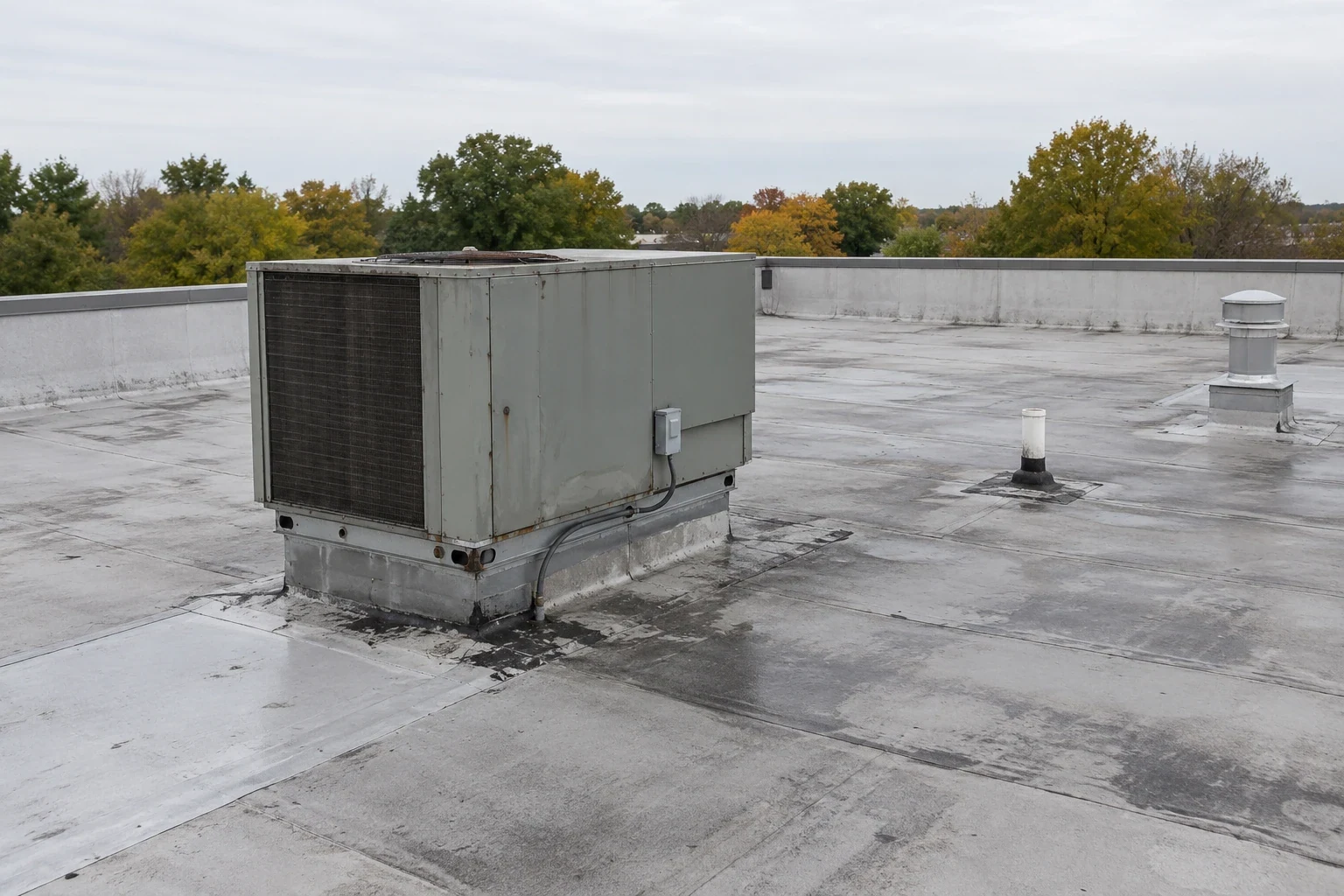
Schedule two walks a year: one in early fall, one after the thaw. Flagstaff, AZ roofs get tested twice. The first test is a winter of snow load that lands on the roof for months at a time. The second is the monsoon, which peaks in July and August. A single inspection in the middle of the year misses what each season does. Commercial Roofing Flagstaff inspects the roof on foot, with probes and meters, and writes a report that ranks what we find by risk. You get photos, locations and a plain recommendation for every item.
The fall walk is about preparation. Freezing temperatures return in late September, and the roof has to be ready before the first heavy storm. We clear and test drains, check scuppers, inspect seams and sealants, look at coping and edge metal, and confirm that rooftop equipment curbs are tight.
We also look at structure from the top. Are there low spots where the deck has deflected? Is there rust at fasteners? Are there bowing roof members visible from inside? These are the same warning signs that city officials listed after the late February 2023 storm. Finding them in October is a planned repair. Finding them in March is an emergency.
We mark the roof plan with the places where snow will drift, such as behind parapets and around mechanical units. That map helps whoever clears snow later.
The spring walk looks for damage. We check for lifted seams, cracked sealant, torn membrane, crushed insulation and ponding that did not drain. Ice and shovels leave marks. Melt cycles open seams. A tarp from a winter emergency may still be in place and needs to be replaced with a proper repair.
We also look at what the monsoon will test. Drains and scuppers must be clear, flashings tight, and low spots identified. A roof that comes through winter with open seams will not do well in a July thunderstorm. This walk gives you time to fix it.
If you plan capital work, the spring report is the best document to take into a budget meeting. It states what is sound, what needs work now and what can wait.
We walk every square foot of the field. We test seams with a probe, press on blisters, check flashing height and look at every penetration. A moisture meter or infrared scan finds wet insulation that the eye misses. For large or complex roofs, a drone roof inspection adds an aerial record.
Core cuts are a last resort and are used only when we need to see the layers. We patch each one the same day. The cut tells us the insulation type, the thickness, the condition of the deck and whether moisture is present.
Every defect is photographed with a location marker. The report ties each photo to a spot on the roof plan. That plan is what your next contractor, appraiser or insurer will want to see.
The membrane is the visible layer. The deck decides how long the roof lasts. During the walk we press on the surface to find soft spots, listen for movement, and look at the underside where we can reach it. Rust on steel deck flutes, stained plywood, and fasteners that have backed out all say the same thing: water has been inside for a while.
Where we see signs of overstress, we say so in the report and recommend a structural engineer. Our part is evidence: we measure deflection, mark the spot and photograph it, so the engineer starts with facts and not a phone call. Snow load is the stress that matters most at 7,000 feet. The design value for a building follows its location and the code adopted by the city.
We plan every roof visit around access and fall protection. We ask for the hatch or ladder location, any restricted areas and a contact who knows the building. In winter, we check the surface for ice before we walk it, and we stay off roofs that look overloaded.
For roofs with skylights, open edges or fragile panels, we mark the hazards and protect ourselves accordingly. We also keep tenants informed. A roof visit above a working store or clinic needs a few minutes of notice, not a surprise.
A report that lists forty problems with no order is useless. Ours ranks them. Urgent items go first: active leaks, structural signs, failed flashings. Then near-term items: aging seams, worn sealant, minor ponding. Then watch items: surface wear, early blistering, minor corrosion.
Each finding includes what we saw, what it will do if ignored and what we recommend. We describe cost drivers and timing in plain terms and give you a recommendation on repair, recover or replacement. If the report supports a roof condition report for lenders or insurers, we format it to fit.
Records matter. Warranty claims, insurance claims and sale negotiations all go better with a dated inspection file. Keep each one.
Inspection priorities change with the building. In the downtown Railroad Addition, historic commercial buildings need close attention to flashing at masonry walls. Along Butler Avenue and Lone Tree Road, retail space such as Aspen Place at the Sawmill puts a ceiling stain in front of customers, so a fast, photographed finding earns its keep.
The airport technology park area is planned for bioscience, advanced manufacturing and technology tenants, so new office and research roofs there benefit from baseline inspections that record the as-built condition. A baseline makes later comparisons easy.
For owners with several properties, our preventive roof maintenance program schedules these walks and tracks findings across buildings.
A small roof takes one to two hours. A large, complex roof can take most of a day. We schedule time for the field, the edges and every penetration. A rushed inspection misses the details that cause leaks, so we do not rush it.
It ranks the problems, maps them and attaches a recommendation. Maintenance staff see leaks. We see the conditions behind them, including wet insulation, aging seams, deck movement and drainage flaws. We also compare findings with the roof's age and the system type, which changes what is worth fixing.
After a major snowfall, yes. The storm that reached Flagstaff late on February 28, 2023 left 24.5 inches in places and several roofs failed. A quick walk after an event catches new openings early. For routine years, fall and spring are enough.
A dated inspection with photos shows the roof's condition before and after an event. That helps a claim. The report does not decide coverage, but it gives your adjuster facts. Pair it with notes on the storm date and weather.
Send any drawings, warranty papers, past repair invoices and a list of known leaks. The roof age and the system type shape what we look for. If you have photos of past damage, include them. We compare what we find with what was recorded before, which shows whether a problem is new or old.
Yes. Many warranties require periodic inspections and notice of repairs. We note warranty items, check that repairs followed approved methods and record the results in a form you can send to the manufacturer.
Browse the services, roof systems and building types we work with across Flagstaff and nearby Arizona communities.
A walk of the roof with photos, findings and a written scope.
Active leaks, storm damage and blocked drains get a fast response.
Roofing across Flagstaff and nearby Arizona communities.