
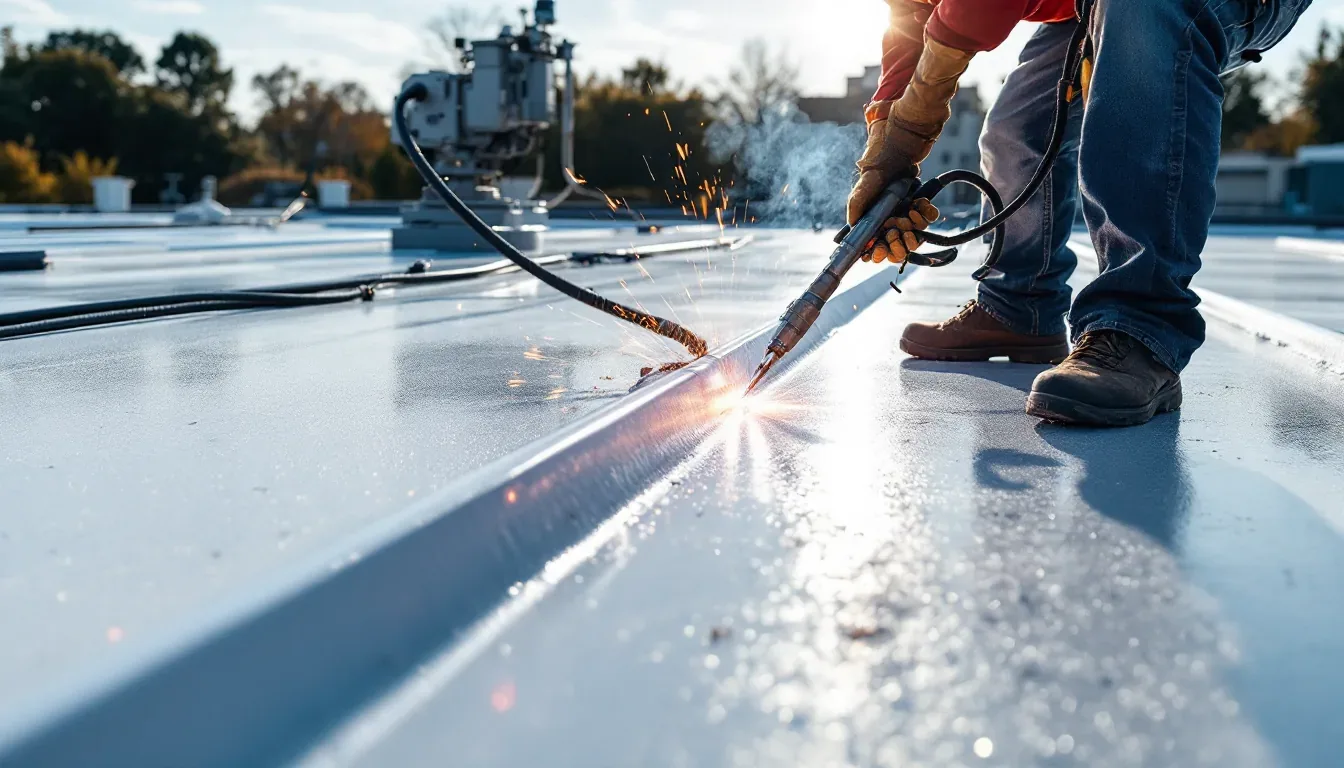
Replace a Flagstaff roof for the snow, not for the sunshine. The deck, the insulation and the drains all have to carry a winter that averages about 90 inches of snow. The city has recorded 35.9 inches in a single day, on February 21, 2019. A roof specified for a mild climate is not fine here. Commercial Roofing Flagstaff in Flagstaff, AZ tears off the old system, checks the deck underneath, and builds a new one for the load it will actually see. That includes the thaw cycles that follow every storm and the monsoon that arrives each July.
Some owners call because of leaks. Others call because a ceiling is sagging. Treat the second call as the urgent one. A sag is a structural flag, not a stain.
Repair is cheaper today. Replacement wins once the patches start stacking up. The choice turns on three things you can see from a ladder. First, how much of the membrane is wet underneath. Second, whether the seams and flashings are failing in many places or one. Third, whether the deck has movement, rust or soft spots.
Wet insulation is the deciding item. Water that gets under a membrane in a freeze-thaw climate does not stay put. It freezes, expands and lifts the layers apart. Then it thaws and runs to the lowest point, which is often a drain sump or a parapet corner. We take core samples and run an infrared moisture survey before we recommend tear-off. If the wet area is small, we cut it out and patch it. If it covers a large share of the field, we tell you replacement will cost less than a third round of repairs.
City officials tied several roof collapses to the heavy snow at the end of February 2023, and they pointed owners to sagging ceilings, bowing trusses and severe leaks as the early signs. Those are not cosmetic complaints. They mean the structure is working harder than it was built to.
A replacement is the right time to ask the engineering question. The engineering call belongs to a licensed structural engineer, and our job is to hand over what we find: a deflected purlin, a corroded steel deck flute, a joist end that has been wet for years. If the deck needs a structural engineer, we say so before the bid, not after the tear-off.
New insulation adds weight too. A thick polyiso layer plus a ballast or cover board changes the dead load. We price the assembly with that in mind and confirm the total with the engineer of record.
A typical low-slope assembly stacks a single-ply membrane over polyiso insulation and a cover board. Mechanically attached or fully adhered, TPO roofing is common for reflective, heat-welded seams. EPDM roofing stays flexible in deep cold and stays pliable when temperatures drop. Heavy-traffic roofs and roofs with a lot of rooftop equipment may call for modified bitumen or a built-up system.
Each choice has a winter cost. Dark membranes shed snow faster, because they absorb heat. White membranes hold snow longer, which keeps the load on the deck for more days. Neither is wrong, and the right pick depends on the structure, the drainage and how the building is used. A fully adhered membrane resists wind. A mechanically attached one allows faster installation and easier future repairs.
Drainage gets re-cut at the same time. We confirm slope to the drains, size the crickets behind equipment and add overflow scuppers where the code calls for them. A drain that works in July can freeze shut in January.
Flagstaff has a short window for adhesives, hot work and welding. Freezing temperatures return in late September. Then July and August bring thunderstorms that deliver about a third of the year's moisture. That leaves clean weather in two bands: late spring and early fall, with monsoon cells in between.
Plan the tear-off in sections. We open only the area we can dry in before the afternoon cells. A half-finished roof with a tarp over it is a leak waiting for a thunderstorm. Cold-weather installs are possible with the right adhesives and heat-weld equipment, but they cost more and run slower. We tell you early if your target date falls outside the good weather.
Replacement scopes look different across Flagstaff. Downtown, the Railroad Addition district holds historic commercial buildings, and an 1897 ordinance required brick, stone or iron in the business area. Wherever a low-slope roof meets a masonry wall, flashing height and counterflashing detail decide whether the roof drains or the wall leaks.
Along the Southside and Mike's Pike area, the buildings are mostly industrial, with metal, wood and concrete structures. Any penetration and curb on a roof like that is a flashing detail. Replacement is the chance to re-flash each one and raise the curbs to a proper height. Near the airport, the technology park area is aimed at bioscience, advanced manufacturing and technology tenants, with office and research buildings in the first phase.
Out on I-40, Bellemont sits higher than the city, near 7,100 feet, and Williams reports about 65 inches of snow of its own. Edge metal and perimeter fastening get a hard look on jobs at that elevation.
A replacement on an open building starts with logistics. We map crane picks, haul routes and loading-dock conflicts before the first panel comes off. Tenants hear about noise windows in advance.
Plan the shoveling too. Foot traffic on a new membrane in winter needs a plan, and the person clearing snow needs to know where the drains and seams are. We hand over a simple roof map with drain locations marked. Tenants that cannot stop work need occupied building reroofing phasing.
We inspect the deck from above and below during the survey, and again once the old roof is off. Rust, deflection, soft spots and wet insulation all show up quickly. If anything looks structural, we pause and bring in an engineer. A deck problem found after tear-off can stop the job in the middle of the dry season. Deck repair is the usual surprise on any tear-off, so we carry a unit price for it and the bid does not change when the deck is opened.
Yes, when the sections are separate and the drainage is independent. A split by area works well on large flat roofs where one side has failed and the other is sound. It does not work when water from the old section runs into the new one.
Ultraviolet exposure is stronger at elevation, and freeze-thaw cycles work the seams every winter. The cold season starts in late September and has dipped to minus 30 degrees F on record. Membranes move with the temperature, and fasteners and seams absorb that movement. A good installation handles it. A thin one shows cracks and open laps sooner.
Budget for deck repair, insulation upgrades, new edge metal, drains and curb work. These are where surprises live. Insulation depth is often set by the energy code, so the city's adopted edition governs how much foam goes under the new membrane. That lets you approve extras before they are installed.
Sometimes. Mechanically attached systems with heat-welded seams can go down in cold weather if the deck is dry and the temperature allows. Adhesives and coatings are less forgiving. We prefer late spring through early fall for the main field, and we use the colder months for planning, ordering and small repairs. For an emergency, we dry in first and finish the permanent work when conditions allow.
Browse the services, roof systems and building types we work with across Flagstaff and nearby Arizona communities.
A walk of the roof with photos, findings and a written scope.
Active leaks, storm damage and blocked drains get a fast response.
Roofing across Flagstaff and nearby Arizona communities.