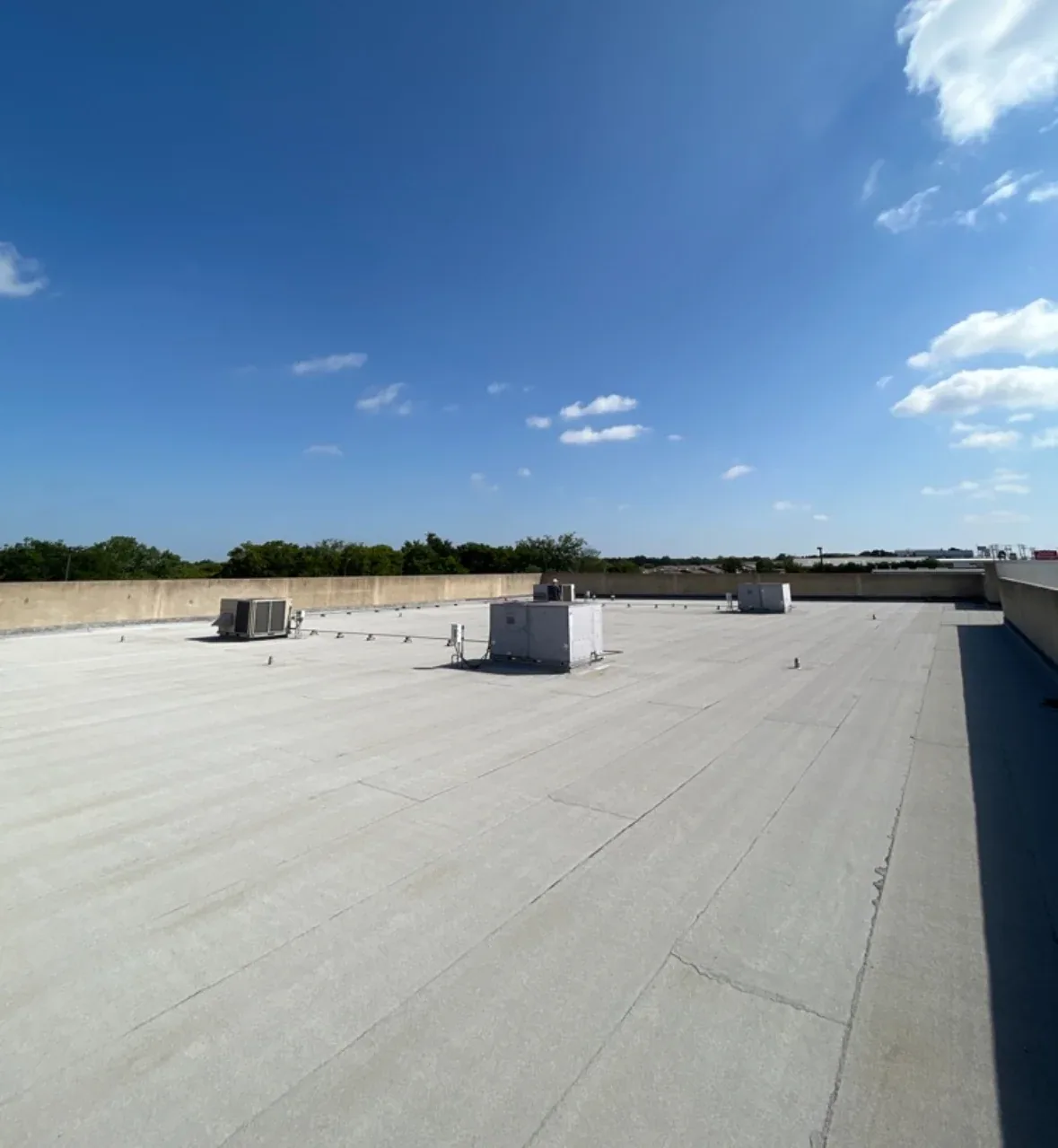
Mod bit is asphalt with rubber or plastic added. The add-on gives it stretch and cold resistance. In Flagstaff, AZ that matters, since the first freeze comes in late September and winters have hit minus 30 degrees F. The roof also carries a snowpack that totals 90 inches or more. A tough, layered roof has a long record in that kind of weather.
Commercial Roofing Flagstaff installs and repairs modified bitumen. We pick the type, the attachment and the heat method to fit the building.
The sheet is only part of the roof. Insulation, cover board, fasteners and flashing carry as much weight as the cap. A good cap over wet insulation fails early. We start with a moisture scan and cores, then pick the sheet.
Modified bitumen comes in rolls of reinforced asphalt. The reinforcing mat gives strength. The top surface is often granulated, which protects the asphalt from sun. The roof is built in plies: a base sheet, then a cap sheet, sometimes more.
Two chemistries dominate. SBS is rubber-modified and stays flexible in the cold. APP is plastic-modified and holds up well under heat. Both can be applied by torch, hot asphalt, cold adhesive or self-adhering backing. The method sets the fire risk and the weather window.
Insulation and cover board sit below. Seams are lapped and sealed. Flashing uses the same sheets, cut and formed at walls and curbs.
Plies add redundancy. If one ply is cut, the next still sheds water. That is why mod bit suits roofs with heavy service traffic, such as a Butler Avenue retail roof with rooftop units or a Mike's Pike building with equipment wells. Each added ply adds weight and cost, so we match plies to use.
Reinforcement type matters too. Polyester mats stretch and recover. Fiberglass mats hold their shape. The right mat depends on how much movement the deck and walls have. We pick the mat with the owner and the specification.
SBS flexes when temperatures fall. A layered roof tolerates heavy foot traffic and ice better than a thin sheet. That is why mod bit has been used on cold-climate roofs for decades.
Snow load is still structural. Between February 28 and March 2, 2023, parts of the city took 24.5 inches, and officials reported collapsed roofs. Leaks and a drooping ceiling line were among the early signs it named. A thick roof adds a little dead load. We check the structure before a reroof.
Granulated surfaces hold snow a little more than smooth ones. Snow guards sit over doors and walks, where a slab would do harm.
Ice ridges at the eave test the edge detail too. Meltwater runs down the roof and freezes at the overhang. The ridge of ice backs water up under the edge. Good flashing height, proper edge metal and open drainage keep that water out. We check the eave on every fall walk, and we clear drains before the first storm.
Torch application melts the underside of the sheet to bond it. It is fast and makes strong seams. It is also a fire risk, especially on wood decks and near parapets. We use it only where the building and the rules allow, with a fire watch after the last flame.
Cold-applied adhesive and self-adhering sheets avoid open flame. They need mild, dry weather to cure. Adhesive and heat work here fits a window from late spring to early fall. In shoulder weeks, adhesives cure slowly, so we choose mechanical attachment or heat-welded seams where we can.
Where a downtown building in the Railroad Addition Historic District has timber framing or a wood deck, torch-free methods are the safe call. A flame beside dry framing is a risk we skip.
Rain can interrupt an adhesive day. Monsoon cells build on summer afternoons, with thunderstorms most common in July and August. We check the forecast each morning, stage covers on the roof and dry in each section before the crew leaves.
Some 3,475 hours of sun a year work on the cap. UV at 7,000 feet is strong. Granules protect the asphalt. As they wear off, the asphalt is exposed. It dries and cracks.
We look at the cap sheet. Granule loss in gutters, bald patches, and blisters all show wear. A coated cap can add life. A roof coating restoration works on a dry, attached mod bit roof with sound seams. We scan for moisture first.
Blisters need a decision. A small blister that has not opened can be left and watched. A blister that has cracked lets water into the plies. We cut it open, dry it and patch it, then note it in the log. A roof with many blisters has trapped moisture and may be near the end of its life.
Mod bit repairs with patches of the same type. The surface must be clean and dry. Laps are sealed. Flashing is cut back to sound material and replaced. Blisters are opened, dried and patched.
A seam failure repair reseals the lap and checks the layers below. A flashing failure repair replaces the failed piece. A ponding water roof repair looks for the low spot and the drain. Standing water ages the cap faster.
Cores reveal the plies and any wet board. Infrared scanning maps where moisture sits. Between them the repair-or-replace line becomes clear.
Walk pads help on a granulated roof. Foot traffic grinds granules into the asphalt and thins the cap along service routes. Pads along every route spread the load and cost little. We replace pads that have worn through and add them where we see a path forming.
Mod bit suits roofs with traffic, equipment and heavy snow. It is tougher than a thin single-ply. It weighs more and takes longer to install. Built-up roofing is its older cousin, with more plies of felt and asphalt. TPO roofing is lighter and reflective.
On Mike's Pike and downtown, deck type and building use make the call. In downtown Flagstaff, torch-free mod bit is the method to price first where the deck is wood.
Price follows plies, insulation, access and detail count. Mod bit costs more per square foot than a single thin sheet and less than some heavy built-up roofs. Sheet cost and detail cost are broken out on separate lines of the scope.
SBS stays flexible in the cold, and the layered build handles ice and foot traffic. The structure still decides snow load. Do a sag check before any reroof.
Not on timber or old wood decks. We use cold-applied or self-adhering sheets there. Where torch is allowed, a fire watch follows the last flame.
Granules have worn off and the asphalt is exposed to sun. The surface dries and cracks. We core, scan and decide on coating, repair or replacement.
Not reliably. Adhesives and heat bonds need mild, dry conditions. We work late spring to early fall and stop when the surface chills.
Mod bit uses factory-made sheets with rubber or plastic added. Built-up uses plies of felt mopped with asphalt. Mod bit goes down faster and flexes more.
Browse the services, roof systems and building types we work with across Flagstaff and nearby Arizona communities.
A walk of the roof with photos, findings and a written scope.
Active leaks, storm damage and blocked drains get a fast response.
Roofing across Flagstaff and nearby Arizona communities.