
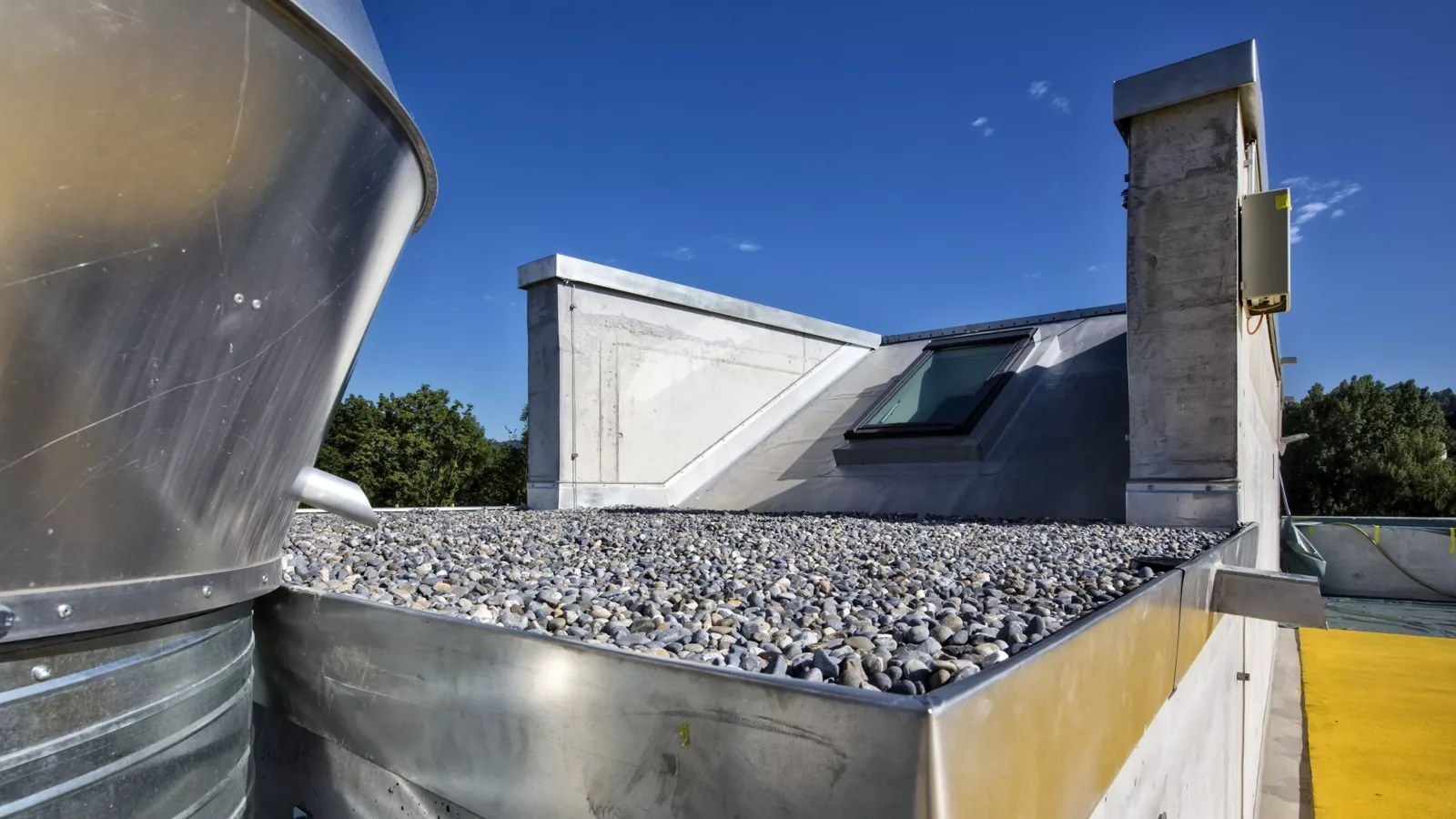
Built-up roofing is layers, and layers add weight. Plies of felt and asphalt stack up into a thick, heavy membrane. That bulk gives it toughness. It also adds dead load to a roof that has to carry Flagstaff snow. In Flagstaff, AZ the question is whether the structure can take both.
Commercial Roofing Flagstaff repairs, restores and replaces built-up roofs. We read the layers before we quote. A core sample tells the story the drawings cannot.
Records help with a BUR roof. Original drawings, past repair invoices and photographs show how many plies were laid and when. Where records are missing, we build them: cores, a moisture map and a roof plan. That baseline lets us rank the roof against the others in a portfolio.
A BUR roof starts with a base sheet over insulation. Then come plies of reinforcing felt, each mopped or rolled into asphalt. The top is a protective surface: gravel in a flood coat of asphalt, a granulated cap sheet or a coating. Three to four plies were common on older roofs. Each ply is a backup for the one above.
Hot asphalt, cold-applied adhesive and some torch methods are used to bond plies. Hot kettles carry fire risk and fumes. Cold-applied systems avoid the kettle but need mild weather to cure.
BUR has a long record in cold climates. A thick, redundant roof tolerates foot traffic, small punctures and thermal movement well.
The surface choice changes maintenance. Gravel needs raking and topping up. A cap sheet needs granule checks. A coating needs recoat dates. We tell the owner which applies and put the dates in the log. A BUR roof that is walked every year usually shows trouble early.
A gravel-surfaced BUR roof is heavy. Add snow and you stack loads. The 24.5 inches that fell by March 2, 2023 in parts of town landed on roofs already carrying winter snow. Several roofs came down. The city pointed owners to three signs: a sagging ceiling, a bowing truss, a severe leak.
A BUR replacement starts with the framing, not the felts. We read the ceiling line, the deck underside and the truss bearings. We ask for the original loads where records exist. A structural flag sends the owner to an engineer before any roofer. Roof repairs do not fix framing problems.
With about 90 inches of snow in a normal winter, spare capacity in the framing matters. We flag any older building where dead load plus snow looks tight.
Drainage ties into weight. Ponded water adds load, and a pond at mid-span on an older deck can sag it further. We measure ponds after rain and trace them to a cause. A low deck, a high drain and a blocked outlet need different fixes, and the scope prices each one.
Insulation under a BUR roof holds the answer to weight too. Wet insulation weighs far more than dry. A roof with soaked board carries extra load that never shows from the surface. A moisture scan finds it, and cutting it out reduces dead load as well as stopping the damage.
Gravel protects the asphalt from sun and holds the roof down. It also moves. Wind pushes it. Snow melt drags it toward drains. Gravel in a drain clogs it. Bare patches then expose the asphalt to UV.
We check gravel coverage on every walk. We rake stones away from drains and back into thin spots. We add stone where the surface is bare. Where the flood coat has failed, we reseal the area. Stones in a drain plus snow on the deck make a pond the first warm day.
Bare asphalt sits under strong sun for roughly 3,475 hours a year. At 7,000 feet it dries out quickly. The surface cracks and lets water into the plies.
Edge details need care under gravel. Gravel stops at an edge strip that holds it in. A broken strip lets stones spill off the roof onto a path below. We check the strip, the cant and the flashing at walls, and we replace what has pulled away.
Hot asphalt is a hazard. Kettles sit on the ground or roof. Fumes carry. Fire starts fast on wood decks. We set a fire watch, keep extinguishers at the kettle and the work face, and stay on site after the last heat of the day.
In dense blocks, we favor cold-applied or mechanically attached methods. Downtown, the Railroad Addition Historic District is a dense group of commercial buildings, and a kettle on one roof is close to its neighbors. Open flame beside neighboring buildings is a risk we avoid where another method works. Occupied buildings add smell and air-intake issues. An occupied building reroofing plan covers intake protection and hours.
Cold-applied BUR uses adhesives instead of a kettle. The adhesive needs mild, dry weather. In Flagstaff, freezing temperatures return in late September, so we finish plies well before the first frost. A ply left uncured over winter is a weak spot in spring.
BUR repairs with patches of felt and asphalt, or with a flood coat. Blisters get cut open, dried and patched. Cracks get sealed. Flashing at walls and curbs is the usual weak point. Old flashing dries out and pulls away.
A flashing failure repair removes the failed piece and sets new flashing tied into sound plies. Water that sits ages asphalt fast, so a ponding water roof repair finds the low spot first.
Infrared and moisture readings outline any soaked insulation under the plies. Cores give the ply count and show how each layer is holding. A dry BUR roof with a few defects restores well. A roof with wet, delaminated plies is near the end.
Delamination is the end-of-life sign. Plies lift from each other and trap moisture between them. The roof feels spongy underfoot. Water travels between plies and shows up far from the opening. When we find it across a wide area, we price replacement and say why a patch will not hold.
New BUR is less common than it was. Modified bitumen roofing offers factory sheets with less hot work. TPO roofing is lighter. BUR still fits roofs that need toughness and redundancy.
For recoating, silicone roof coatings can restore a sound BUR surface. A dry, attached BUR surface on a building in Southside and Mike's Pike can take a coating the same way.
Price follows plies, insulation, access and the count of details. Hot work and fire controls add cost. Cold-applied systems cost more in material and less in controls. We show those lines apart, so the owner can weigh them.
Only if the structure can carry the dead load plus snow. We check the ceiling, deck and trusses and ask for records. If we see a flag, call a structural engineer first.
It shields asphalt from sun and holds the roof down. It also moves and can clog drains. We rake it back and add stone where the surface is bare.
It needs strict controls: a fire watch, extinguishers at the kettle and a plan for fumes. In tight blocks, we choose cold-applied or mechanical methods.
Often, if it is dry and attached. A moisture scan and cores tell us. A coating over wet plies hides the problem.
A core sample shows it. Cores also show the state of each ply and the insulation. We patch the hole and log the location.
Browse the services, roof systems and building types we work with across Flagstaff and nearby Arizona communities.
A walk of the roof with photos, findings and a written scope.
Active leaks, storm damage and blocked drains get a fast response.
Roofing across Flagstaff and nearby Arizona communities.