
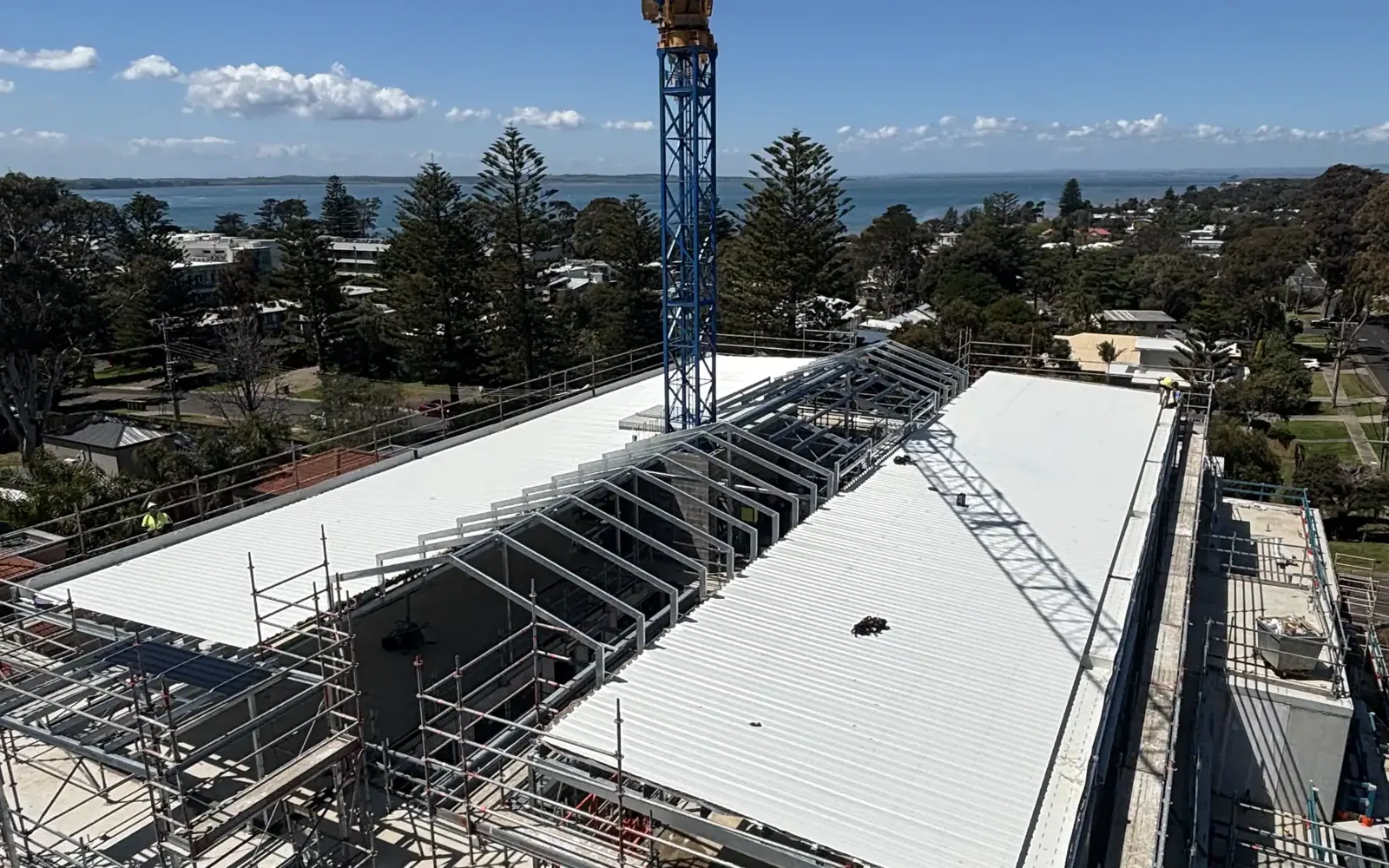
Flagstaff gives you a short window to reroof, and the building stays open the whole time. Freezing temperatures return in late September. The monsoon peaks in July and August. Between those, the roof has to come off and go back on while tenants work underneath. That takes a plan, and the plan starts in winter.
Commercial Roofing Flagstaff reroofs occupied buildings in sections. We dry in every night. We protect the people and the contents below. Owners get a written schedule before the first load arrives.
Occupied does not mean the same for every building. A warehouse with one shift is easy. A hospital that never closes is hard. A hotel full on a weekend is somewhere in between. We ask what occupied means for yours, and the answer shapes every line of the schedule.
Work backward from late September. Count the weeks. Subtract monsoon days. What is left is the real window. A large roof may not fit in one season. If it does not, we phase it: finish a defined area, close it up for winter and resume in spring.
Winter closure has rules. Every section we leave must be watertight, drained and able to carry snow. We do not leave an open edge. We do not leave unfinished flashing. The city reports roofs coming down under snow load, and a half-done roof is a weak one. That February 28, 2023 storm ended with several reported collapses, so a roof left half built must still carry snow.
Every section gets a written dry-in method and a closing date. The owner gets that plan at bid time.
Weather drives the order of work. We start on the side of the building that drains toward the best outlet, finish it and move on. We do not open two large areas at once. A sudden cell then catches us with one small open area, not two big ones.
Material staging follows the same rule. Rolls of membrane and pallets of insulation stay under covers. Wind lifts loose sheets, and a gust can carry a roll across the roof edge. We tie down and weight everything at the end of each shift.
A roof open at night is a roof that leaks. Monsoon cells build fast on summer afternoons and can drop heavy rain. We tear off only what we can close the same day. Tear-off, insulation, membrane and flashing all finish before the crew leaves, or the exposed edge gets a temporary seal.
We stage tarps and temporary membrane on the roof before the first cut. A weather check runs each morning and midday. If a cell is building, we stop and close up. Sections of the roof are sized to our crew's pace and the forecast.
Interior protection runs in parallel. We ask what sits under each section: product, records, equipment or people. Plastic and covers go up first where water would cost the most.
Dew point matters in the cool months. Frost on a deck traps moisture under new membrane. We check the surface each morning and wait for it to dry. A moisture meter on the deck settles the question. Covering a damp deck with new membrane is how a new roof begins to fail.
Noise, dust and smell reach the people inside. We ask for the hours that matter. A hotel needs quiet at night and in late morning. A clinic needs a clear path and low dust. A shop wants no blocked entry during peak hours.
Hotels, clinics and shops keep trading while we work overhead. Each has its own hours and its own tolerance for noise. A hotel on the I-40 corridor, a clinic near Flagstaff Medical Center and a retail center on Butler Avenue each need a plan fitted to the people inside.
We give the manager a daily note: what is open, what is loud and what changes tomorrow.
Parking and access matter at retail and hotels. Lifts and dumpsters need space, and snow in the lot can make it tighter late in the season. We mark the staging area on a site plan, keep fire lanes clear and place barriers where the public could walk under work.
Roof work beside Northern Arizona University buildings such as the Walkup Skydome has to fit class and event calendars. Flagstaff Medical Center, a Level I trauma center, is the clearest case of a building that cannot close. Large institutions run on schedules that do not stop. A reroof there needs a joint plan with facilities staff.
For a care setting, we plan containment, dust control and clean routes for material. Odor and fume control matter near air intakes. For a campus, we use breaks and plan around events. A hospital roof job and a college or university roof job each need written phases, set hours and one named person who can stop work.
Records follow the people. A hospital or a campus facilities group wants daily logs, photographs and a name for every issue raised. We give them the log each week and keep the open items on one page.
Flagstaff Mall, in East Flagstaff, is a one-story center of 62 stores that opened in 1979. A center of that kind is reroofed in bays, so no store is left without cover. We work store by store, dry in daily and protect entrances.
Downtown, the Railroad Addition Historic District holds buildings such as the Weatherford Hotel and the Babbitt Brothers Building. Historic status can add review steps. Older downtown roofs sit on masonry buildings, and masonry edges mean extra flashing work. We read the layers first. Santa Fe Avenue buildings all face the rail line, which limits where lifts and dumpsters can sit. Work in downtown Flagstaff follows those limits.
The last month before the freeze is the hard one. Adhesives cure slower in cool air. Mornings start with frost. We shift to mechanical attachment and cold-applied products where needed. We also stop if a section cannot cure before the first storm.
Before we close the season, we check drains. An iced-over drain in the first thaw leaves meltwater with nowhere to go. We also check the sag line on older decks and flag any concern. A roof drains and scuppers check at closeout costs little and prevents a lot. The same close-out applies to a commercial roof replacement and to a roof recover overlay.
Sometimes. Size, weather and crew size set the answer. If not, we phase it into defined sections, close each one for winter and resume in spring. The schedule names each section and its closing date.
We stop and close up. Tear-off only covers what we can dry in the same day. Temporary membrane and tarps are staged before the first cut. A forecast check runs each morning and midday.
We ask for quiet hours, clear paths and sensitive areas. Plastic goes up inside where water would cost the most. Dust and odor stay away from intakes. The manager gets a daily note.
Yes, with review steps. We read the layers, plan staging and note any approvals. Brick parapets add flashing work. The schedule includes the review time.
We close the section. Every area left is watertight, drained and able to carry snow. No open edges. We resume in spring and keep the section on the sag-check list.
Browse the services, roof systems and building types we work with across Flagstaff and nearby Arizona communities.
A walk of the roof with photos, findings and a written scope.
Active leaks, storm damage and blocked drains get a fast response.
Roofing across Flagstaff and nearby Arizona communities.