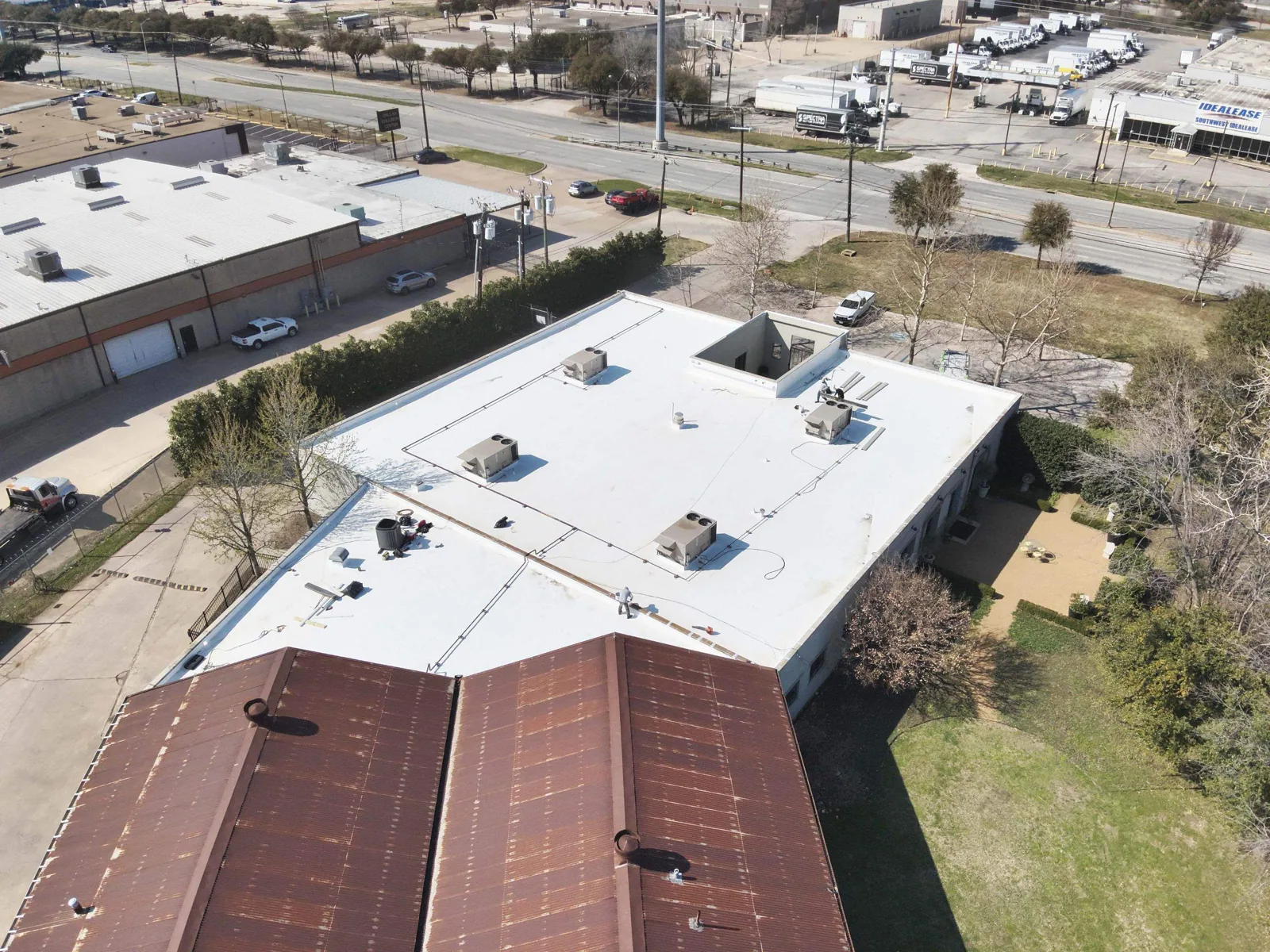
A recover adds weight, and weight is the one thing a Flagstaff roof cannot take for granted. A new membrane over the old one saves tear-off time and landfill cost. It also puts another layer of dead load on a deck that must carry the snow on top of it. Commercial Roofing Flagstaff in Flagstaff, AZ tests the existing roof first. We find out what is wet, what is rusted and how much the structure can still hold. Then we tell you whether a recover is a smart saving or a mistake that costs more later.
A tight budget is a fair reason to ask for a recover. Cost pressure is real. It is not a sufficient one.
Wet insulation kills a recover. Trapped water has nowhere to go under a second membrane, so it sits, freezes and works the layers apart through every winter. We scan with infrared at dusk, when a wet roof releases heat differently from a dry one. Then we confirm with core cuts and a moisture meter.
The rule is simple. If the existing insulation is dry, a recover can go ahead. If it is wet across a large area, the saturated sections come out first. If wet areas are everywhere, the answer is a full replacement. Our infrared moisture survey produces a marked plan so you can see the wet areas before you decide.
A recover laid over wet layers fails early. A roof that looks fine from the ladder can hold a lot of water in the layers beneath it.
The late February 2023 storm buried parts of Flagstaff under 24.5 inches, and officials then reported several roofs down. That storm is why the weight question comes before the membrane choice. Every pound we add comes out of the reserve the structure has for snow.
A recover weighs less than a replacement of a ballasted system, but it is still more than a single layer. The code also limits how many layers can sit on a deck. Flagstaff enforces the 2018 building code with local amendments, and the building department makes the final call on an overlay. We ask before we price, not after.
If you can, bring the original drawings. They show the design load and the deck type. Without them, we inspect the deck from below, look at the steel or joists, and call in an engineer if the evidence is thin.
Two paths dominate here. The first is a mechanically attached single-ply over a thin cover board, often TPO roofing or PVC roofing. The second is a fluid-applied restoration, which adds almost no weight. Silicone is the usual choice on low-slope roofs that hold water.
The cover board does a lot of quiet work. It separates the new membrane from the old surface, spreads fastener load and gives the seams a flat bed. Without one, the old roof's ridges and patches show through and wear holes in the new sheet.
Fasteners need a plan. They must reach the structural deck through both roofs. Long fasteners in a cold climate can bridge the insulation and create cold spots, so we space and size them with that in mind. In cold weather, condensation inside the roof assembly is the hidden risk of any overlay.
Snow comes by the foot here, and freezing nights return in late September. Every storm is followed by a thaw, and every thaw puts water on the roof. A recovered roof needs drains that are clean and sloped, because the added layer can raise the roof surface above the drain body and leave a lip. We check each drain and, where needed, install tapered insulation to re-establish flow.
The monsoon is the other test. Thunderstorms peak in July and August, and the monsoon delivers about a third of the year's precipitation. A roof that sheds a light rain can pond in a cloudburst. We confirm ponding depth before the recover and mark areas that need a cricket or a new drain. A recovered roof that ponds is a roof that will need work in a few years.
Edges matter in the same way. The added thickness raises the roof surface at the perimeter, so coping, gutters and edge metal often need to come off and go back on higher. We price that work in the recover scope. Leaving it out is how an owner ends up with a roof that looks finished and a wall that still leaks at the parapet.
Plan the cold-weather steps too. Once the new membrane is down, snow will slide differently across it. Smooth single-ply sheds snow in sheets, so we look at what sits below the eave and whether snow guards or a clear zone are needed over doors and walkways.
Recover is a good fit on a building with a dry, flat, well-drained roof and a structure with reserve. It is a poor fit on buildings with a history of leaks, many penetrations or visible deck rust.
Along the Butler Avenue and Lone Tree Road corridor, retail tenants such as the grocery and outdoor stores at Aspen Place at the Sawmill make a recover worth pricing whenever the moisture scan comes back clean. Buildings on Mike's Pike are a different case. The street is mostly metal, wood and concrete industrial structures, so we weigh each building on its own evidence.
When the survey says no, we tell you. A recover that fails in three winters is not a saving. The right answer is sometimes a commercial roof replacement, and we put the numbers beside the recover option so the comparison is plain.
That is set by the building code and the structure, not by preference. Flagstaff has adopted the 2018 building code with local amendments, and the building department rules on what a given deck may carry. We confirm the layer count at the survey and ask the department before we write a price.
Only if the leak history is mapped and the wet insulation is removed. A leak that has run for years leaves a pattern of damp insulation, rusted fasteners and sometimes a soft deck. We trace it with infrared and cores, cut out the damage, and recover the rest. If the damage is everywhere, we say replacement.
From the ground, no. From the roof, the new membrane sits a little higher, and edges and walls need taller flashing to keep the water out. We raise the flashings and edge metal so the height of the new system matches the old details. Skipped details are how a recover starts leaking at the walls.
A manufacturer warranty on a recover depends on the manufacturer's approval of the existing roof and the assembly. Some manufacturers accept a recover over dry, sound insulation. Others require a tear-off. We submit the survey and the proposed assembly before work starts, and we hand you the written terms so you know what the coverage includes.
It is a schedule problem. A recover leaves the old roof in place, which makes it less exposed than a tear-off. Even so, we weld or adhere only in dry weather and cover seams at the end of each shift. July and August thunderstorms can arrive in the afternoon, so we start early and close early.
Browse the services, roof systems and building types we work with across Flagstaff and nearby Arizona communities.
A walk of the roof with photos, findings and a written scope.
Active leaks, storm damage and blocked drains get a fast response.
Roofing across Flagstaff and nearby Arizona communities.