
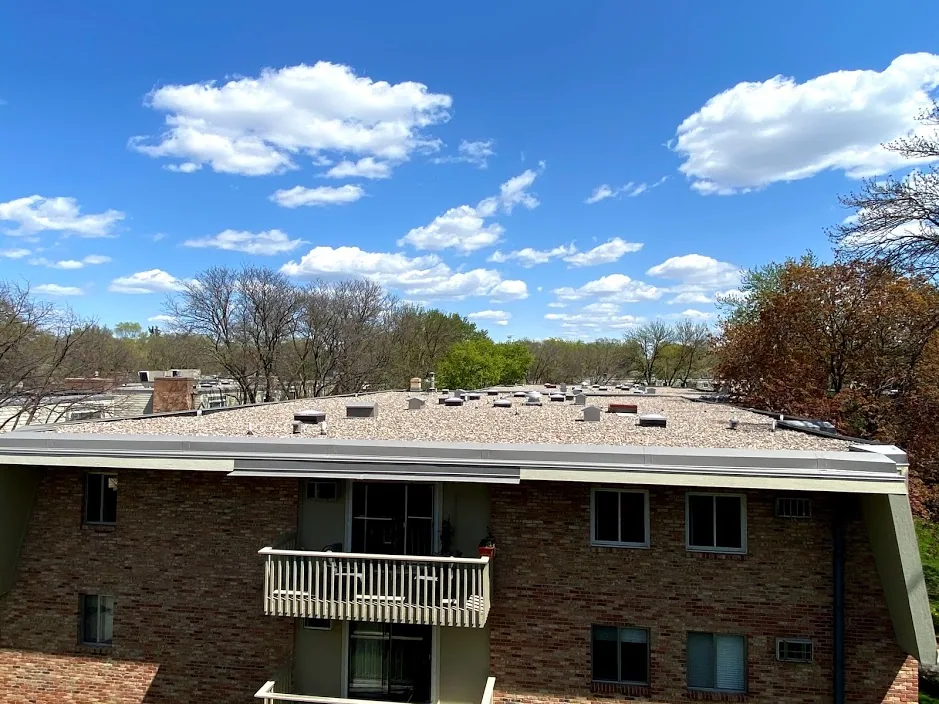
A clogged drain is a leak on a timer. Snow piles up on a flat roof in Flagstaff, AZ, then it melts, and every gallon needs a way out. If the drain is packed with needles and grit, the meltwater pools. The pool finds a seam. A few days later the ceiling stains.
Drains, scuppers and crickets are the plumbing of a flat roof. We clear them, test them and fix the slope around them. Then we write down where the water goes.
Interior drains sit in low spots. They carry roof water inside the building to storm lines. A drain can clog with debris, freeze solid or collapse. Any of those leaves the roof with a pond.
Freezing temperatures return in late September. We clear drains in early fall, check the sump, the strainer and the connection and run water through to confirm flow. We record the strainer type and fix any that are missing. A missing strainer lets debris into the pipe.
Winter checks matter too. After a heavy storm, we look for ice around the drain. A thin skim can seal the opening. We thaw it with warm water and a hose, never with an open flame. Then we clear the area so the next melt has a path.
Connections matter. A drain that tests clear on the roof can still back up if the pipe below is blocked or frozen. We run water and watch the flow. If the water rises, we stop and tell the owner a plumber should check the line. A roof drain that cannot discharge is only a hole.
A scupper is an opening through a wall or parapet that lets water leave the roof. It works as a primary drain on some buildings and as an overflow on others. In both roles it needs to be clear and set at the right height.
The monsoon tests overflow scuppers. About a third of Flagstaff's yearly moisture falls as monsoon rain, and July and August bring most of it. A cloudburst can overwhelm a primary drain in minutes. An overflow scupper set above the roof surface lets water leave before it rises over the flashing.
We check the height of each scupper against the roof surface. A scupper set too high holds water. A scupper set too low drains the roof dry and defeats its overflow job. We also check the sheet metal and the sealant around the opening, since leaks start there.
Throat size matters too. A small scupper in a long parapet cannot move much water. We compare scupper size to the roof area it serves and recommend a larger opening or an added one where the ratio looks thin. Leaves and pine needles can block even a large opening, so a basket or a guard may help.
Water that stays on a flat roof for two days is ponding. It speeds membrane wear, adds weight to the deck and invites freeze damage. In Flagstaff, ponded water also freezes, and ice cracks seams.
We measure slope with a level and mark ponds after rain or melt. We log each pond with a location and depth. Then we find the cause: a clogged drain, a deck that sags, a drain set too high or insulation that settled.
The fix follows the cause. We clear the drain. We add a drain at the low spot. We install a tapered insulation section or a cricket to push water toward an outlet. Our ponding water repair work starts from the same measurements.
Drainage and structure connect. Standing water adds weight, and a deck that already sags holds more water, which makes it sag more. If ponds grow, we flag the structure and recommend a check by an engineer before the next heavy snow.
A cricket is a small sloped section built behind a curb, a chimney or a wall. It sends water around the obstacle instead of letting it dam up. Snow behind a unit melts into a pond if no cricket exists.
Rooftop units and mechanical wells are drift traps. Wind piles snow behind them, and the melt has nowhere to go. We look for ponds and stains behind every curb. Where we find them, we recommend a cricket, built from tapered insulation or framed and covered with the membrane.
A cricket costs little compared with repeated leaks at the same curb. It also reduces the load of standing water on the deck. We flash each one to the curb and the field with care.
Walls are the other place crickets belong. Where a higher wall meets a lower roof, snow slides and drifts against the base. The melt needs a way to the outlet, and the base flashing needs to stand high enough above the pond. We check both heights.
Ice is the enemy of drainage. Meltwater runs to the drain, hits cold pipe and refreezes. A ridge of ice builds at the drain or the eave and holds water back. On a warm afternoon the ridge lets go, and a rush of water finds a weak seam.
Heat tape and heated drains prevent some of it, where installed. We check them each fall and test them. Heat loss from the building below is a cause too. Warm air escaping around penetrations melts snow from beneath. We note the heat source and recommend sealing it.
Gutters and downspouts freeze in the same way. Repairs to edge metal, coping and gutters reopen those outlets.
Downspouts freeze at the base, and ice there pushes back up the pipe. We check that discharge points are clear and angled away from walls, walks and parking. A sheet of ice on a walk is a hazard we can prevent with an extension.
Mike's Pike is a half-mile of old Route 66 in Southside, and most of its buildings are industrial. City officials expected the area to revitalize after the Rio de Flag drainage project was completed. Roof drainage and site drainage work together there.
Flat roofs near Butler Avenue and Lone Tree Road, like any others, collect drift behind parapets and units. Owners in Southside and Mike's Pike and Butler Avenue and Lone Tree Road can schedule a drain walk in early fall. We report where water goes after it leaves the roof, because a good drain that dumps onto a lot or a sidewalk creates its own problem. A preventive maintenance schedule keeps the outlets working.
At least twice a year: early fall before the freeze and spring after the thaw. Add a check after any heavy storm and before the July monsoon peak. If the roof sits under pines or other trees, clear more often, since needles and grit collect quickly.
A drain is an interior opening that sends water into piping inside the building. A scupper is an opening through a wall or parapet that lets water leave to the outside. Many roofs have both: drains as primary and scuppers as overflow.
No. Hammering can crack the drain body or the pipe. Thaw ice with warm water and let it drain. If the drain stays frozen, call us. Never use a torch or open flame on or near a roof.
Yes, when they are built at the right slope behind curbs and walls. They send water around the obstacle and keep drift melt from ponding. A cricket costs far less than repeated repairs at the same curb.
Not always. Deck sag, settled insulation and a drain set too high can cause it too. We measure slope with a level and test drains before we pick a fix.
Browse the services, roof systems and building types we work with across Flagstaff and nearby Arizona communities.
A walk of the roof with photos, findings and a written scope.
Active leaks, storm damage and blocked drains get a fast response.
Roofing across Flagstaff and nearby Arizona communities.