
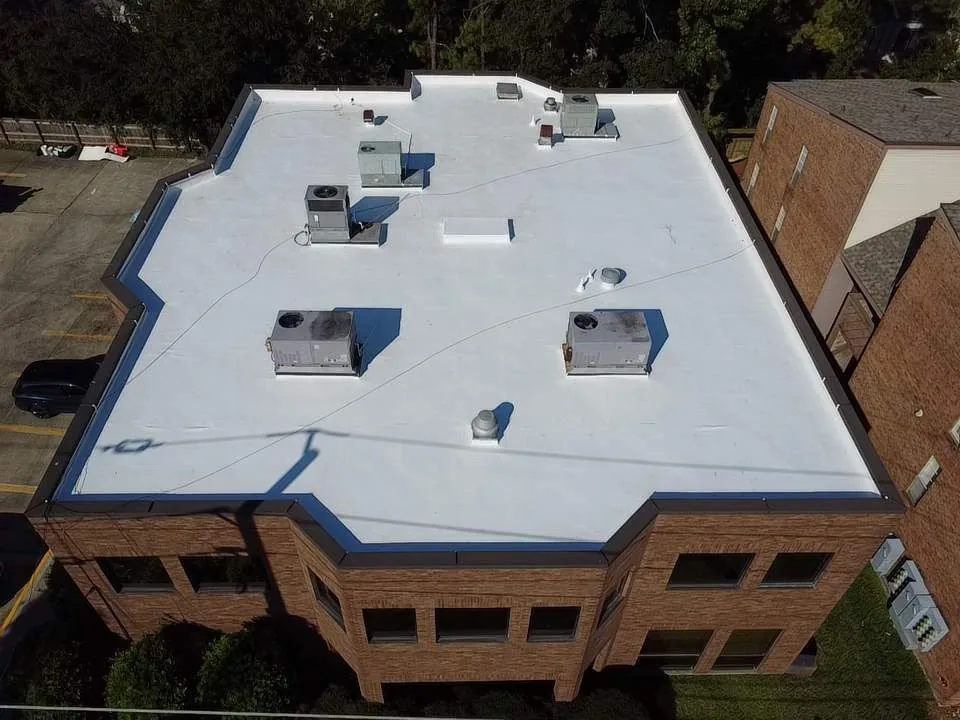
EPDM stays soft when the weather turns hard. It is a rubber sheet, and rubber does not crack in the cold the way stiffer plastics can. In Flagstaff, AZ the record low is minus 30 degrees F, and freezing temperatures return in late September. That long cold season is where EPDM has a track record. Its weak spots are seams, flashing and sun.
Commercial Roofing Flagstaff installs and repairs EPDM. We probe every seam and we say when another sheet fits the building better.
Weight matters on a snow roof. A fully adhered or fastened EPDM roof is light. That leaves more margin for snow. A ballasted roof is heavy before the first flake lands. The sag check and the structure decide which route is safe.
EPDM is synthetic rubber, usually black. It comes in large sheets, which cuts the number of seams. Seams are joined with tape or adhesive, not heat. Crews clean the lap, prime it and press the tape. A roller seats the bond.
The sheet can be fully adhered, mechanically fastened or ballasted with stone. Ballast holds the sheet down by weight. On a Flagstaff roof, ballast adds dead load that stacks with snow. We check the structure before we recommend it. Fully adhered and fastened systems add no stone weight.
Insulation sits under the sheet. A cover board is common. Flashing uses cured or uncured rubber pieces, and they take hand work.
Thickness comes in steps. A thicker sheet resists punctures and wear. A thinner sheet is lighter and cheaper. For a roof with rooftop equipment and service traffic, we use the thicker sheet and add walk pads. Seams are the weak point of any rubber sheet, so the fewer the better. Wide sheets cut the count of seams and the number of places water can enter.
Rubber keeps its stretch in low temperatures. Thermal movement is constant in Flagstaff, since a clear winter day can swing wide between sunlit afternoon and a cold night. A flexible sheet follows that movement without cracking.
Installation in the cold is still hard. Tape and adhesive need a mild, dry surface. Frost ruins the bond. We install from late spring to early fall. In the shoulder weeks, we pick our hours and stop when the surface chills. Seams get rolled and checked.
After install, cold days test the seams. We walk each roof in spring and look for open laps, lifted tape and cracked sealant at terminations.
Flashing around penetrations is where cold work gets tricky. Pre-molded boots and cured flashing pieces help. Uncured flashing needs a longer, milder window to set. We save flashing work for the warmest hours of the day and tie off every termination with a bar and sealant before the crew leaves.
A black sheet absorbs sun. It melts snow faster than a white one. That cuts the time snow sits on the roof, and it feeds meltwater to drains. Drains must be clear. A blocked drain beneath deep snow lets the first thaw pool on the sheet.
An average winter stacks up 90 inches or more. In the days after February 28, 2023, parts of town took 24.5 inches, and the city confirmed collapsed roofs. The sheet does not change structural load. The sag check does the work. Inside, watch for ceilings that sag, trusses that bow and doors that stick.
Ice ridges at the eave need good flashing height and open drainage.
Sun on a slick sheet can send a whole snow slab down at once. The slide can land on a walkway or a door below. Snow guards or fences at the eave stop sheets from letting go all at once. We attach guards to structure and mark them on the plan. Roofs above entries get them first.
Clear skies are the norm, about 3,475 sun hours a year. A black sheet gets hot. Heat ages rubber and dries sealants. Surfaces can chalk and shrink at laps and flashing. Shrinkage pulls on terminations and corners.
White EPDM is available and reflects more heat. It costs more. For a building with heavy cooling load, it can be worth it. We look at the equipment, the use and the budget. A cool roof installation compares reflective options side by side.
UV at 7,000 feet is strong. Thin air filters less. Rubber slowly dries out under it. Surface cracking, called crazing, shows up on old sheets. We probe crazed areas and cut cores to see how deep it goes. A sheet with shallow crazing can keep working. Deep cracks mean the end of the sheet.
Old EPDM repairs with patches and tape. The surface must be clean and primed. Old rubber can be contaminated or oxidized. We scrub it and use primers made for aged sheet. If tape will not bond, we replace the section.
The usual failures are open seams, shrinking at flashings, punctures and cracked boots. A flashing failure repair removes the old flashing, preps the substrate and sets new flashing tied to sound sheet. A membrane puncture repair patches the hole and checks the insulation under it for wet spots.
Core samples show thickness and wet insulation. A moisture scan maps the wet zones. Together they set the repair or replace line.
Shrinkage is a repair story of its own. Over years, EPDM can pull back from walls and curbs. The flashing tears at the corner. We re-secure the termination, add a new strip of flashing and seal it. If shrinkage is widespread, the sheet is near the end of its life, and the report says so.
EPDM suits low-traffic roofs with simple details. It has a long record in cold climates. It handles snow well. It does not handle grease well. PVC roofing and TPO roofing weld their seams and reflect more heat.
On Mike's Pike and Butler Avenue, the sheet choice follows the building. A retail roof in the Butler Avenue and Lone Tree area that carries rooftop units sees service traffic, and traffic can wear a rubber sheet. We add walk pads along every service route.
Price follows insulation, access and the count of details. EPDM sheet costs less than most welded sheets. The saving can shrink on a busy roof with many curbs and pipes. We show sheet cost and detail cost on separate lines. The owner sees where the money goes.
It handles cold well because rubber stays flexible. Snow load is still a structural question. Do a sag check before any reroof. Keep drains clear and shovel on a plan.
It can, but stone adds dead load that stacks with snow. We check the structure first. Adhered and fastened systems avoid the added weight.
A clean, well-rolled seam can last for years. Poor prep fails early. We inspect seams each spring and reseal any open lap.
Black melts snow faster and absorbs more heat. White reflects more but costs more. The choice follows cooling load and budget.
It depends on cores and a moisture scan. A dry roof with a few defects repairs well. Wet insulation and wide shrinkage point to replacement.
Browse the services, roof systems and building types we work with across Flagstaff and nearby Arizona communities.
A walk of the roof with photos, findings and a written scope.
Active leaks, storm damage and blocked drains get a fast response.
Roofing across Flagstaff and nearby Arizona communities.