
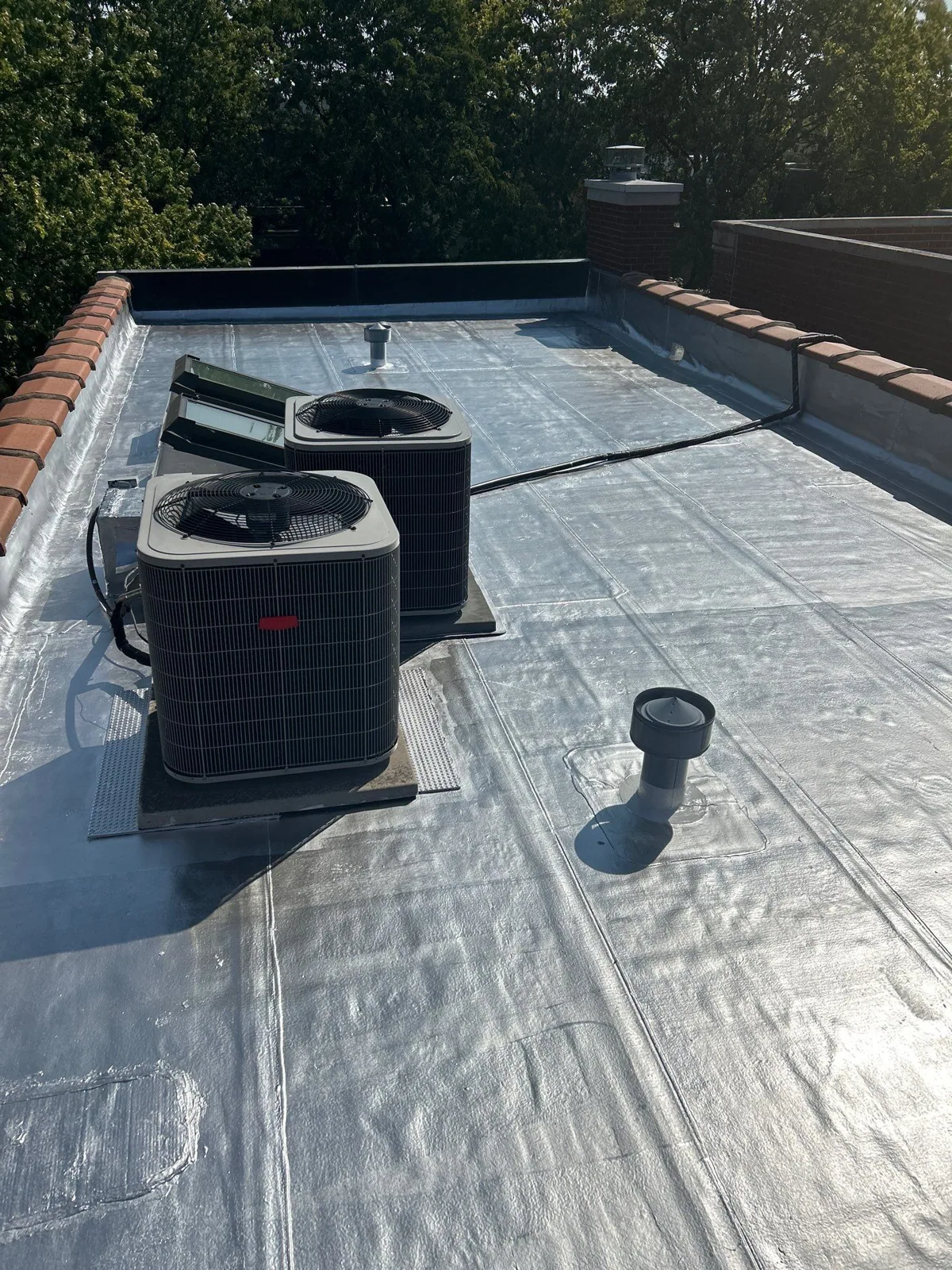
Most punctures are made by people, not weather. Someone shovels a roof, someone services a unit, someone drops a tool, and the membrane takes a cut nobody sees. Commercial Roofing Flagstaff repairs punctured and worn membranes on commercial roofs in Flagstaff, AZ. Snow brings a lot of foot traffic onto flat roofs, and the shovel that clears a drift line can open the sheet as easily as it clears the drain.
A puncture is the simplest roof defect to repair and the easiest to miss. It is a small hole in a big roof. Water finds it during the next thaw, runs under the sheet and shows up far from where it entered. Locating that hole is most of the work.
Every puncture has a story, and the story points to the fix. We sort them into groups.
The last one fools people. A pop looks like a blister, and the membrane may split days later. We feel for raised spots during the walk and check the deck connection under each one.
Snow load is a real concern here. With 90 to 97 inches of snow in a normal year, and several roof collapses reported after the late February 2023 storm, clearing snow is sometimes unavoidable. Doing it badly is how a roof gets cut. Plan the work before anyone climbs up.
A shoveling plan means three things. Use plastic blades with rounded edges. Leave an inch or two of snow on the sheet instead of scraping to the surface. Mark the drains and curbs first so crews work toward them and not over them. We write the plan with the property manager and give the crew a sketch of the roof showing drain locations, drift lines and the areas that should not take a blade.
If a crew punctures the roof anyway, the repair is straightforward once it is found. We recommend a walk right after every major clearing, because a hole made in January leaks in March.
A ceiling stain rarely sits under the puncture. Water drops through the sheet, travels along the insulation and the deck, and appears wherever there is a seam, a joint or a low spot. A moisture meter, infrared scan or capacitance survey narrows the area. Then we cut a small test hole if needed and follow the wet insulation back to its source.
On roofs with rooftop equipment curbs, punctures cluster near units where service crews work. On roofs with shoveling access, they cluster around access hatches and drain paths. We walk those zones first.
Open laps beside a puncture are common, and a seam failure can look like a hole until it is probed. If the sheet is mechanically attached, a fastener pop is a likely culprit. If it is adhered, the culprit is more likely a surface cut. Knowing the difference decides whether we patch or re-fasten.
Punctures follow foot traffic, so the question for any building is who goes up and how often. In East Flagstaff, Flagstaff Mall is a single-story center with 62 stores that opened in 1979. A center with 62 stores can have many parties with a reason to reach the roof, from rooftop unit service to sign work, and each visit is a chance for a dropped tool. One access rule and one roof log should cover the whole building.
Northern Arizona University counted 21,550 students on its Flagstaff campus in fall 2023 and runs large buildings, among them a business college complex of 111,000 square feet. A property with several buildings benefits from one walkway layout and one set of shoveling instructions, which protect every roof at once.
On industrial roofs, such as those along Mike's Pike and in the five parks near I-40 and I-17, metal debris and fastener scrap are the usual culprits. Cut metal and loose screws left near a unit become punctures by the next foot pass. Sweeping the roof after any trade visit is cheap insurance against a thaw-time leak, and we sweep after our own repair visits as well.
Single-ply punctures get a round-cornered patch of the same membrane, heat-welded around all edges, with a probe check. On EPDM we clean, prime and bond a cured patch with splice adhesive. Built-up and modified bitumen roofs get a surfaced patch ply set in compound, with granules or a cap sheet blended to match. Coated roofs take a reinforced patch coat.
A fastener pop gets the screw removed, the deck connection repaired, a new fastener set in solid material and the sheet repaired above it. Wet insulation under any puncture is replaced.
Many punctures sit beside other defects. We check for open laps, thin walkway surfacing and any flashing damage nearby, and we add walkway pads where traffic is concentrated. When the membrane is cut in many places, the issue is a worn sheet, and a preventive maintenance program or a wider repair scope is the right answer.
Cost follows the number of holes, the membrane type and whether insulation below is wet. A single dry puncture is a short visit. A cluster near a unit usually means a patch, a walkway pad and a moisture check in one trip.
Yes, because water does not stay where it enters. A pinhole above a wet board spreads sideways through the insulation, and the damage can reach a ceiling tile fifty feet away. Freeze-thaw then widens the hole. A small puncture left through one winter is a larger repair by spring.
A plastic blade with a rounded edge, used flat and with a light touch. Leave an inch or two of snow on the surface instead of scraping to bare membrane. Metal blades, ice picks and chippers cut the sheet. Mark the drains and curbs on a sketch before a crew goes up.
We follow the water. A moisture meter and infrared scan show where insulation is wet, and the high point of the wet zone leads to the entry. If the roof is adhered, we may cut a small test section to confirm. The patch goes in once we have the source, not before.
If anyone goes up regularly, yes. Walk pads spread foot load and mark the safe path to equipment. We place them at hatches, along service routes to each unit and at drain clearing points, using material compatible with the membrane. They cost far less than repeated patching.
A properly made patch on a clean, dry surface holds. Cold slows adhesives, so a bonded patch in January needs a cold-weather product or a delayed schedule. Heat-welded patches on single-ply roofs are more forgiving. We probe the patch edges after the first freeze to confirm the bond.
Browse the services, roof systems and building types we work with across Flagstaff and nearby Arizona communities.
A walk of the roof with photos, findings and a written scope.
Active leaks, storm damage and blocked drains get a fast response.
Roofing across Flagstaff and nearby Arizona communities.