Acrylic coatings are water-based, and water is the enemy of a wet-applied coat in Flagstaff, AZ. A coat needs hours of dry weather to set. In the monsoon, an afternoon cell can wash it away. In the fall, a cold night can ruin it. Acrylic can work well here. It needs a careful window and a roof that drains.
Commercial Roofing Flagstaff applies acrylic coatings over sound roofs. We scan, core and test first. We say no when the roof is not ready.
Prep is most of the job. The coating is the last step after cleaning, repair, sealing and testing. A coating on a dirty or leaking roof only hides the trouble for a season. We spend the time on the base.
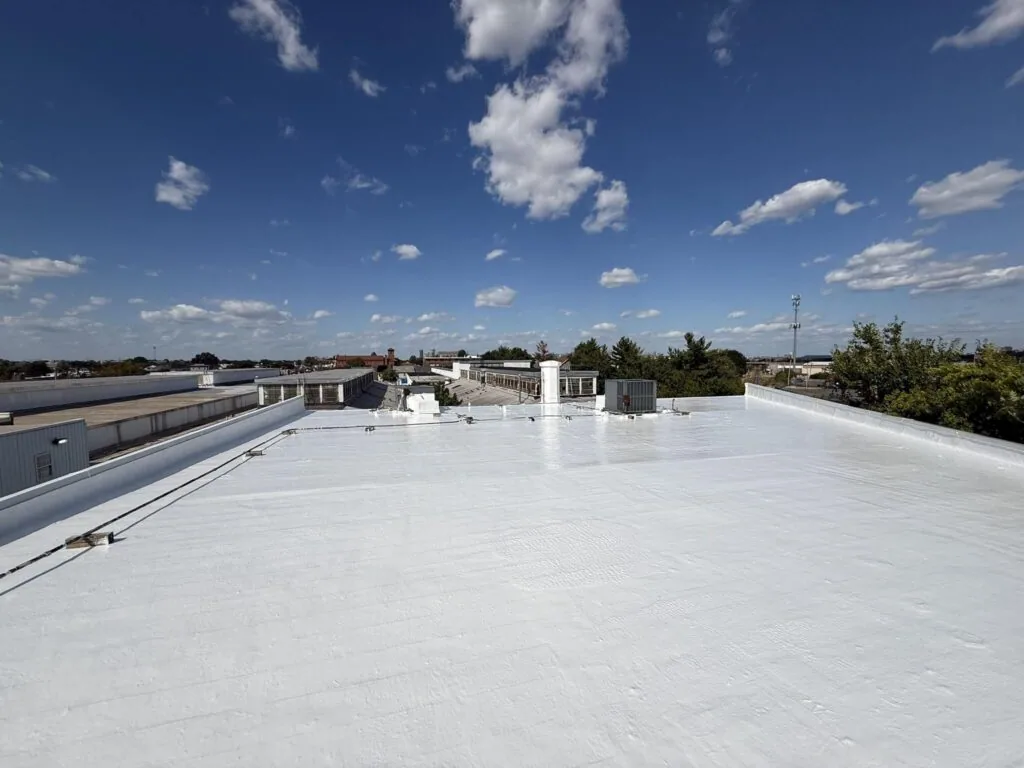
Acrylic coating is a liquid polymer in water. Crews roll or spray it over a cleaned roof. As the water leaves, the polymer forms a flexible, reflective film. White acrylic reflects sunlight and cuts surface heat. It seals small cracks and covers seams, fasteners and flashings with fabric reinforcement.
Acrylic costs less than silicone. It also recoats easily, since new acrylic bonds to old acrylic. That makes long-term maintenance simple: wash, repair, recoat.
It goes over metal, mod bit, built-up, single-ply and foam, with the right primer. Each substrate needs a test patch.
Primers matter. Some surfaces need a bonding primer, such as old built-up, chalky metal or aged single-ply. Rust needs a rust-inhibiting primer. We test a patch and pull it after cure. A coating that peels in the test will peel on the roof, and we change the method before we spray the whole area.
Application method also counts. Rolling forces coating into texture and puts down a heavier film. Spraying covers large areas fast and needs good wind control. We pick the method for the roof and the weather.
Acrylic does not like standing water. A pond that sits for days can soften the film, cause blisters and wash out the coat. So the roof must drain. We look at slope, drains and low spots before we quote.
Ninety-odd inches of snow melt off in stages, and every thaw sends water across a flat coated roof toward the drains. After the late February 2023 storm the city reported roof collapses, and a pond sitting on top of that snowpack is dead weight. Standing water makes the coating fail and the structure work harder. A ponding water roof repair fixes the cause first. If ponding cannot be fixed, silicone is the better coating.
Roof traffic leaves marks on acrylic. Heels scuff a fresh film. Cured acrylic holds up to ordinary foot traffic, but heavy service routes wear it. Walk pads protect the coating along those paths, and we replace worn pads on each visit. Scuffed spots get touched up before they spread.
Acrylic needs time to dry before rain touches it. A few hours may do on a warm, dry day, but the film is not tough until it cures through. Cold slows drying. Dew and frost can ruin a fresh coat.
The roofing season in Flagstaff runs from late spring to early fall. Freezing temperatures return in late September. July and August bring the thunderstorms, and a third of the year's moisture arrives in that short monsoon. We apply early in the day, check the forecast at midday and stop when a cell builds. Coating on a rain-threatened afternoon is wasted material.
Snow load interacts with coating choice only through the structure. A coating adds almost no weight. It does not change how snow sits, apart from a smooth surface that sheds slides. A smooth white film can let a slab go, so snow guards belong over doors and walks. The sag check comes first, as always. Look for sagging ceilings, bowing trusses and sticking doors.
Water gets under a coating at a pinhole or a lifted edge. It freezes and expands. The film lifts. By spring, a patch is peeling. Repeated freezing is the long test of any coat here, and winters can drop far below zero.
Clean prep cuts the odds of that lift. The surface must be clean, dry and sound. Seams and fasteners must be sealed and reinforced. Laps must be tight. We apply two coats at the coverage the product requires and measure it. A thin coat fails early.
We walk the roof each spring and look for peeling, blisters and pinholes. Small failures get patched. Large ones point to poor prep or wet insulation below.
Detail work takes time. Around curbs, pipes and walls, the coating is thickened and reinforced with fabric. Edge metal gets sealed at joints. Drains get a ring of coating tied into the surface. These are the spots that leak first on any coated roof, so we add material there and check it by hand.
Sun is plentiful here, about 3,475 hours in a typical year. UV at altitude is strong. White acrylic reflects it, cuts surface heat and slows the daily heat cycling that works seams and flashings. That can lengthen the life of an old roof.
Dirt cuts reflectivity. A yearly wash restores much of it. We use low pressure and a mild cleaner. We also record thickness and the recoat date. A roof coating restoration plan names both and sets the next recoat before the film wears thin.
Maintenance is a small yearly job. Wash the roof, clear the drains and walk it for peeling and pinholes. Patch small spots the same visit. Log the date and the thickness. A coated roof that is walked yearly can be recoated before the film wears through, which is cheaper than starting over.
A Butler Avenue retail roof and a Mike's Pike industrial roof ask different things of a coat. Where rooftop units are many, expect more walk pads and more curb detail. Where equipment is sparse, there are fewer details and more open field to cover evenly. We tune the coat and the log to each.
Acrylic fits roofs that drain well and need a low-cost, reflective, recoatable film. Silicone roof coatings fit roofs that pond and cannot be fixed cheaply. Either one fits a sound roof only. A wet or loose roof needs repair or replacement first.
On a metal roof, coating works with a metal roof retrofit when screws are tight and panels are sound. Over a modified bitumen roofing base, the cap sheet and seams are read first. Low-slope roofs near the I-40 exits and in the airport technology park are worth a moisture scan to see if a coating suits them.
Price follows area, prep, repairs, coats and details. Acrylic material costs less than silicone, and the labor for prep is the same. We show the lines apart, so the owner can compare acrylic and silicone on the same roof.
Only on a clear morning with a dry forecast. A rain cell can wash a fresh coat away. We stop when clouds build.
Standing water can soften the film and cause blisters. We check slope and drains first. If a roof ponds and cannot be fixed, silicone is a better coating.
Usually two, at the coverage the product requires. We measure coverage by area and thickness, not by looks.
Yes. New acrylic bonds to clean old acrylic. That makes upkeep simple: wash, patch and recoat on schedule.
We do not coat it. A coating over wet insulation traps moisture and blisters. We cut out the wet area and repair first.
Browse the services, roof systems and building types we work with across Flagstaff and nearby Arizona communities.
A walk of the roof with photos, findings and a written scope.
Active leaks, storm damage and blocked drains get a fast response.
Roofing across Flagstaff and nearby Arizona communities.