Fasteners pull. Heat moves the deck, cold moves it back, and every cycle works a screw a little looser. On a mechanically attached single-ply roof in Flagstaff, AZ that motion is the main wear mechanism. Versico makes single-ply systems, mostly TPO and EPDM, along with their insulation, adhesives and flashing. These are roofs we repair and keep up. How the sheet is held down comes first, because that decides where it fails.
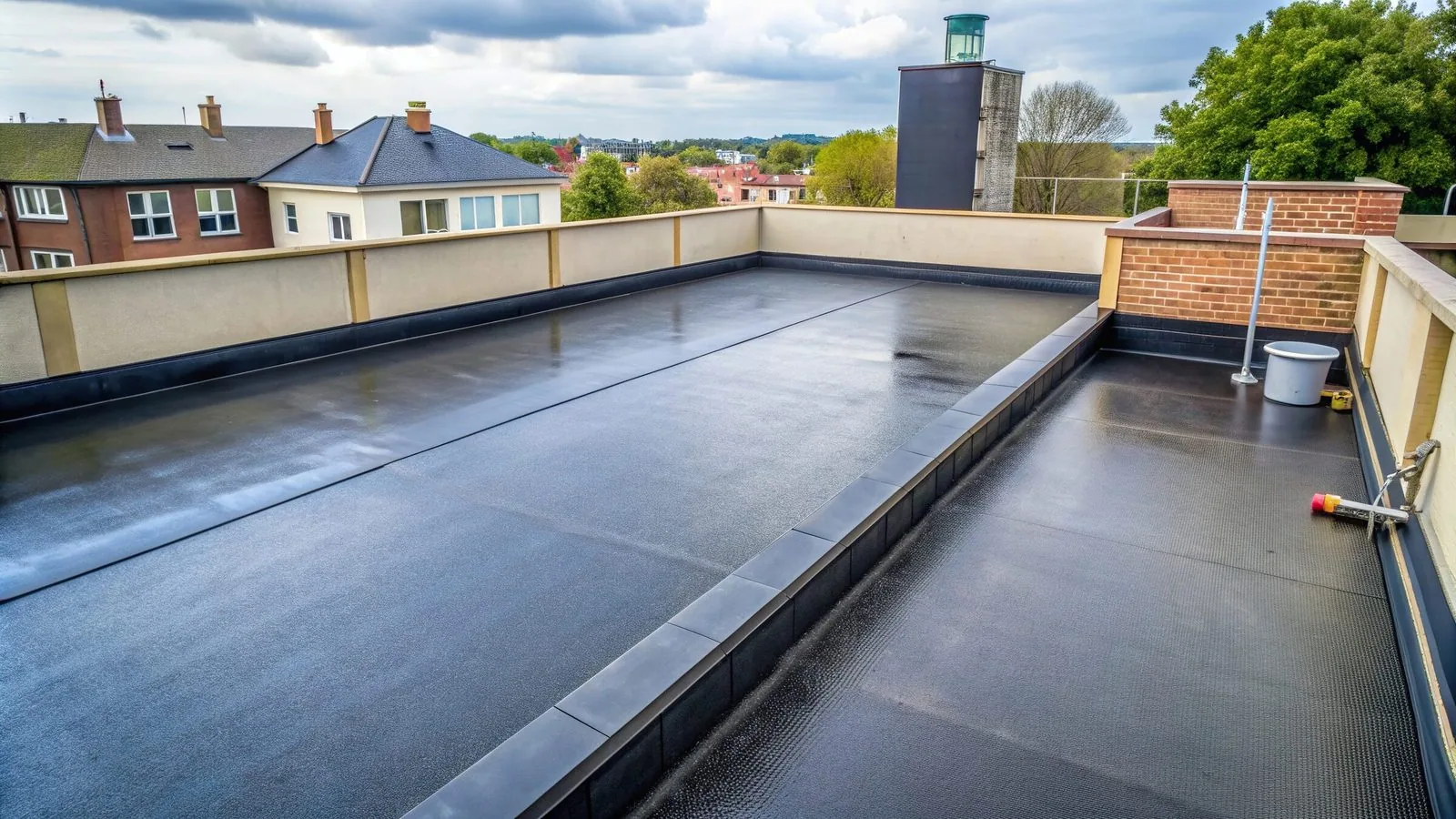
TPO is a thermoplastic sheet. Its seams are welded with hot air. EPDM is a cured rubber sheet. Its seams are taped or glued. Either can be attached three ways. Mechanically attached sheets use plates and screws through the sheet into the deck. Fully adhered sheets are glued to the board. Ballasted sheets are held by stone. Each method reacts to wind, snow and thaw differently. Mechanical attachment is quick and economical, but fasteners can back out. Adhesion spreads the load but needs a clean, dry board. Ballast adds weight the deck must carry. We confirm the method before we plan any repair.
Accessories complete the system. Insulation board, cover board, edge metal, pipe boots, pressure bars, walk pads and drain inserts all come from the same family or from compatible makers. Mixing parts is common on older roofs, where a repair years ago used whatever was on the truck. We note each part and flag mismatches, because a wrong sealant or tape at a flashing is a leak waiting for the next thaw.
Flagstaff swings from a record low of minus 30 degrees F to summer heat. Steel decks expand and contract with that range. Plates and screws ride with the deck while the sheet flutters. Over years, fasteners back out and push bumps up through the membrane. Bumps wear on traffic and tear at plates. A line of bumps along a deck flute means the screws are moving. We check by pressing the sheet and by feel. We reset or replace the fasteners, add plates where the sheet has worn and cap the damaged area. Left alone, bumps become tears.
Steel decks flex under snow too. A deck that sags a little under a heavy load lets the sheet stretch, and plates at the low point take extra stress. After a big storm we recheck fasteners along the lowest bays. If the deck itself has moved, we send the owner to a structural engineer before more roofing work.
The February 28, 2023 storm dropped 24.5 inches in some areas by March 2, and the city logged several roof collapses. Warning signs on their list: sagging ceilings, bowing trusses, severe leaks. Those are deck and framing problems. A single-ply sheet cannot fix them. Drifts form behind parapets and rooftop equipment, and melt feeds drains that may be iced shut. Drift lines get mapped on the fall walk, and the deck below the deepest ones gets checked. A curb and support check belongs on the same walk, since equipment creates the drift.
Shoveling needs a plan. Plastic tools only, no metal blades and no ice chipping at drains. Leave a few inches on the sheet. Start at the edges and work toward the center, so the load comes off evenly. A roof rake keeps people off the roof where it reaches. If a sag check shows a problem, stop and call an engineer.
Wind lifts a single-ply sheet where it is held least. The edges and corners see the highest uplift. A loose edge metal joint lets wind under the sheet, and a fluttering sheet works the plates. We check the perimeter fasteners, the edge metal and the termination bars. A wind-damaged roof starts with the edge. Fix the edge first, then the field. Bellemont sits on I-40 about 11 miles west-northwest of Flagstaff at roughly 7,100 feet, and wind on any corner or edge there gets the same check.
Walk the roof in September, before freezing returns. Clear every drain and scupper. On TPO, probe the welds. On EPDM, probe the tape and the glue lines. Press the sheet over each fastener row for raised plates. Check the flashings at walls and curbs. Look at the walk paths to rooftop units. Foot traffic wears the sheet and breaks seams along the same route every visit. We lay walk pads where the wear shows. Photograph each finding and mark it on the sketch. A TPO roof and an EPDM roof need different tools but the same discipline.
Interior signs count. A stain that comes back with each storm traces to a flashing or a drain. A slow-growing stain means wet insulation. A sticking door or a sagging tile points to the deck. Walk the space below with the roof sketch in hand. Match what you see inside to what you saw outside. The match narrows the search.
Repair with the same family. TPO to TPO, EPDM to EPDM, with the right primer, tape and adhesive. A mismatched patch peels in the first thaw. We also match fasteners and plates to the deck type. For a roof past repair, replacement allows new insulation, tapered slope, a stronger attachment pattern and better drains. A recover may work when the board is dry and the code allows another layer. In winter, we stop the water with a temporary patch and schedule the permanent repair for a dry window. We note each temporary fix on the sketch.
Cost drivers are plain: roof area, deck type, insulation condition, number of penetrations, access and the attachment pattern. We state them in the scope. A fully adhered replacement costs differently from a mechanically attached one, and a ballasted one needs a structural check first. The owner sees the numbers side by side.
Bellemont is an unincorporated community on I-40, with exit 185 serving Hughes Avenue. Camp Navajo, a former ordnance depot described as an industrial park and munitions storage site, is in Bellemont. About 42 miles west on I-40, Williams stands at 6,916 feet and gets roughly 65 inches of snow a year, mostly between November and March. Williams collects less snow than Flagstaff's 90 to 97 inches, but the cold and the thaw still reach roofs in Williams, and the wind check applies in Bellemont too. The roof type on any specific building there comes from the walk. An owner choosing between this family and Carlisle SynTec or Duro-Last should look at the deck and the attachment first. A replacement follows the 2018 energy code and the 2019 Flagstaff amendments to it.
Fasteners are backing out and pushing up through the sheet. The deck is moving. Reset or replace the screws and add plates before the bumps wear through.
Each has trade-offs. Mechanical is quick but can pull. Adhered spreads load but needs clean, dry board. Ballast adds weight to a deck that already carries snow. We recommend after we see the deck.
Only as a temporary fix. Welds need dry, above-freezing surfaces. We stop the water, mark the patch and weld the permanent repair in a workable window.
Lay walk pads along the paths technicians use. Add steps over pipes and mark the path on the roof sketch. Pads cost far less than a patched seam.
Wet insulation over wide areas, a brittle sheet or seams failing in rows all point to replacement. Core samples and a moisture scan settle it.
Browse the services, roof systems and building types we work with across Flagstaff and nearby Arizona communities.
A walk of the roof with photos, findings and a written scope.
Active leaks, storm damage and blocked drains get a fast response.
Roofing across Flagstaff and nearby Arizona communities.