Wind does not break a roof all at once. It finds one loose edge and works it for hours. Commercial Roofing Flagstaff repairs wind damage on commercial roofs in Flagstaff, AZ, and the first job is always the same: find where the roof let go and what let it. A torn corner, a peeled coping run and a rattling panel are three symptoms with three different causes. We separate them before anyone picks up a tool.
Flagstaff adds a twist. Roofs here carry snow for months, then take a monsoon cell in July or August with a gust front that arrives faster than the forecast. A roof that spent winter bending under load can have fasteners and adhesive already tired when the wind shows up. Repair has to account for both seasons.
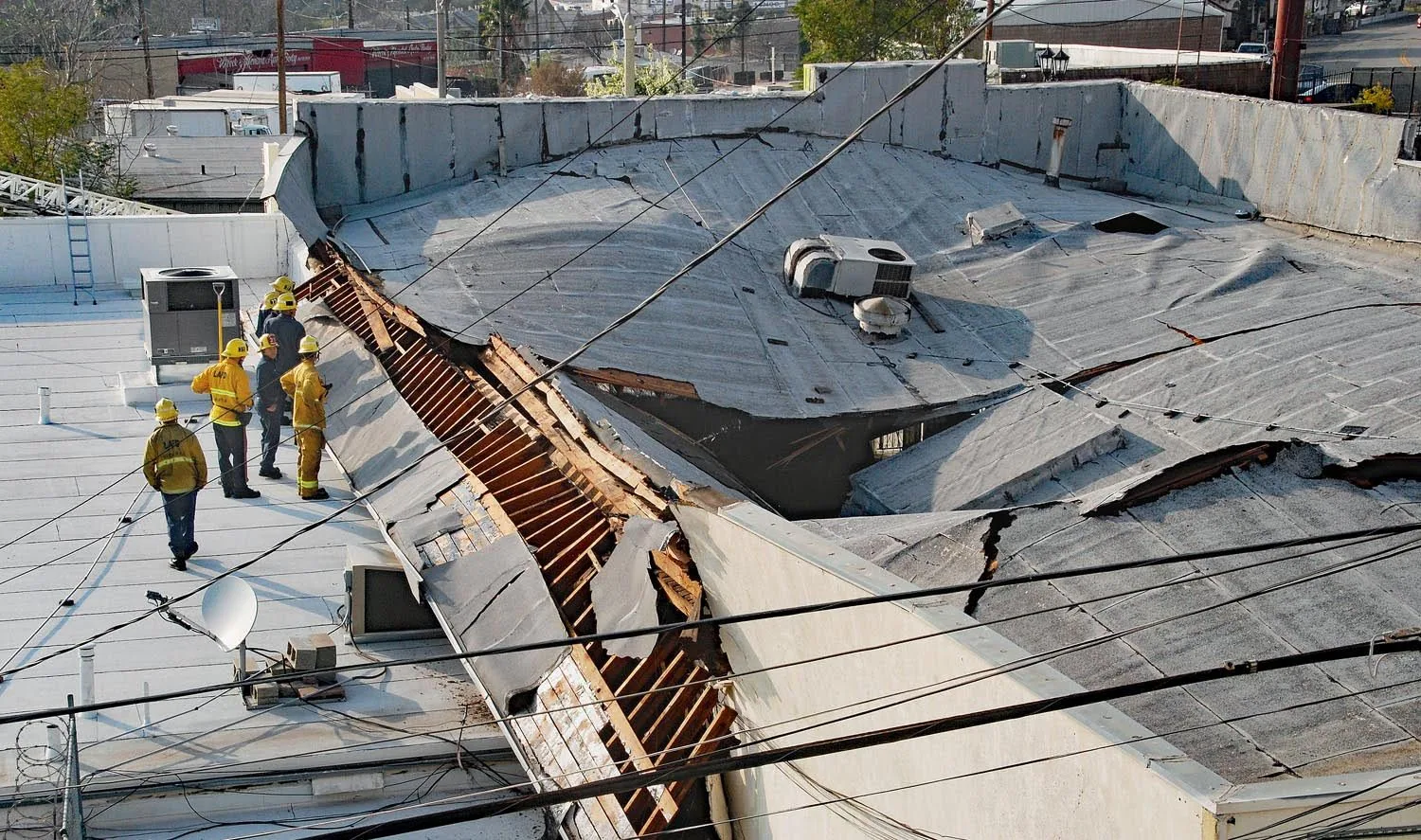
Uplift is strongest at corners and perimeters. That is where we look first, every time. A membrane lifted along a parapet, a coping cap sitting an inch proud, a fascia drip edge bent outward: each one is a door the next gust walks through.
Field membrane in the middle of the roof usually survives. The edge does not. Once the perimeter metal loosens, wind gets under the sheet and the sheet starts to flutter. Fluttering stretches the membrane and tears the seams. Stop the edge and you stop the chain.
We repair wind damage in order of how fast it spreads. Edges and corners first, open laps second, loose field attachment third, cosmetic items last.
Wind damage on a low-slope roof falls into four patterns. Knowing which one you have decides the repair.
We walk the roof, press on the membrane near the edges and look at the deck connections wherever the sheet has moved. A roof that shows billowing in one corner often has loose fasteners across the whole run, so the walk does not stop at the visible damage.
A third of Flagstaff's yearly moisture arrives with the monsoon, and thunderstorms peak in July and August. A monsoon cell brings a sudden downdraft, a few minutes of hard gusts and then rain that finds every opening the wind just made, and any ponding water left behind adds to the load.
Winter wind works differently. Gusts drive snow into drift lines behind parapets and mechanical wells, and then the thaw cycle lets the meltwater find the lifted edges. Freezing returns in late September, so the roof faces a long cold season before the next monsoon arrives. Adhesives that were applied in cold weather may not have cured fully, and edge details that look tight in October can open by February.
After either season we check the same list: edge metal, laps, penetrations and the first few feet of field membrane around corners.
Exposure depends on shape and position. A tall, open building catches more uplift than a low one tucked behind its neighbors.
Mike's Pike, in the Southside district, is mostly industrial, built of boxy metal, wooden and concrete buildings. On any boxy industrial building, the perimeter is the length of edge metal that has to stay tight. In Bellemont, along I-40 at roughly 7,100 feet and beside the Camp Navajo industrial park, a roof edge gets the same first look as one downtown.
Downtown, the older masonry buildings in the Railroad Addition have parapets that shelter the roof edge, but the parapet caps and counterflashing take the beating. A cap that lifts on a brick parapet lets water behind the wall. A retail roof along Butler Avenue that carries rooftop units and fascia has plenty for the wind to grab, so those details get checked early.
A wind repair has a fixed order. First we make the roof watertight again. That may mean a temporary dry-in over an open corner, which our emergency crews can place any hour of any day, holidays included.
Then we repair the attachment. Lifted adhered sheets are cleaned back to sound substrate, re-bonded and seamed. Mechanically attached sheets get new fasteners and plates at the correct pattern, with extra rows near corners and perimeters. Torn membrane is cut back to clean edges and patched with a welded or bonded repair that matches the existing system. Edge metal is reset on new cleats with sealant at every joint, or replaced where the metal itself is bent.
We close with a pull test on the attachment near the repair and a photo record for the file. If the survey finds that more of the roof is loose than the visible damage suggests, we say so in writing and price the larger fix separately. For systems like TPO and EPDM, the patch method differs, and we match it to the sheet that is on the roof.
If the damage is large enough to involve an insurer, the photos and measurements matter. We document the damaged areas, the repaired areas and the condition of the surrounding roof before work begins, so the scope is clear to everyone. Our claim documentation work covers that paperwork.
Wind repair also points at larger decisions. A roof with repeated edge failures may need new perimeter metal across the whole building, not another patch at the same corner. When the membrane is near the end of its life, a seam repair and edge reset may only buy a season, and a replacement may be the better spend. We lay out both, and the property manager chooses.
Look at the pattern. Wind damage clusters at corners, edges and the windward side, and it usually shows fresh creases, torn laps or metal that has moved. Normal wear spreads evenly across the roof as crazing, ponding stains or worn surfacing. If you see both on one roof, we mark each separately so the insurer sees only the storm items.
It can when the roof is tired. A sheet that spent a winter under snow load and freeze-thaw cycling can have weakened bonds at the edges. A sudden downdraft then works on the weakest point. We pull test attachment during every wind repair visit to see how much margin the rest of the roof has left.
Both, and the metal usually comes first. Loose coping and fascia let wind under the roof edge, so resetting or replacing them on new cleats is part of the fix. Where the metal is bent beyond reuse, we replace sections and seal every joint. A membrane patch under loose metal does not last.
We can place a temporary dry-in the same day, any hour, once the roof is safe to walk. Permanent work needs a dry surface and enough temperature for adhesives and sealants to cure, so a repair after a winter gust may wait for a clear day. Tell us the address and roof type when you call and we will schedule the first visit.
Cost follows access and length of edge, not the building name. Rooftop units mean extra flashing and curbs to check, and long perimeters need more metal and fasteners. After the walk we give a ranked list with each item priced as a patch or a full fix.
Browse the services, roof systems and building types we work with across Flagstaff and nearby Arizona communities.
A walk of the roof with photos, findings and a written scope.
Active leaks, storm damage and blocked drains get a fast response.
Roofing across Flagstaff and nearby Arizona communities.