
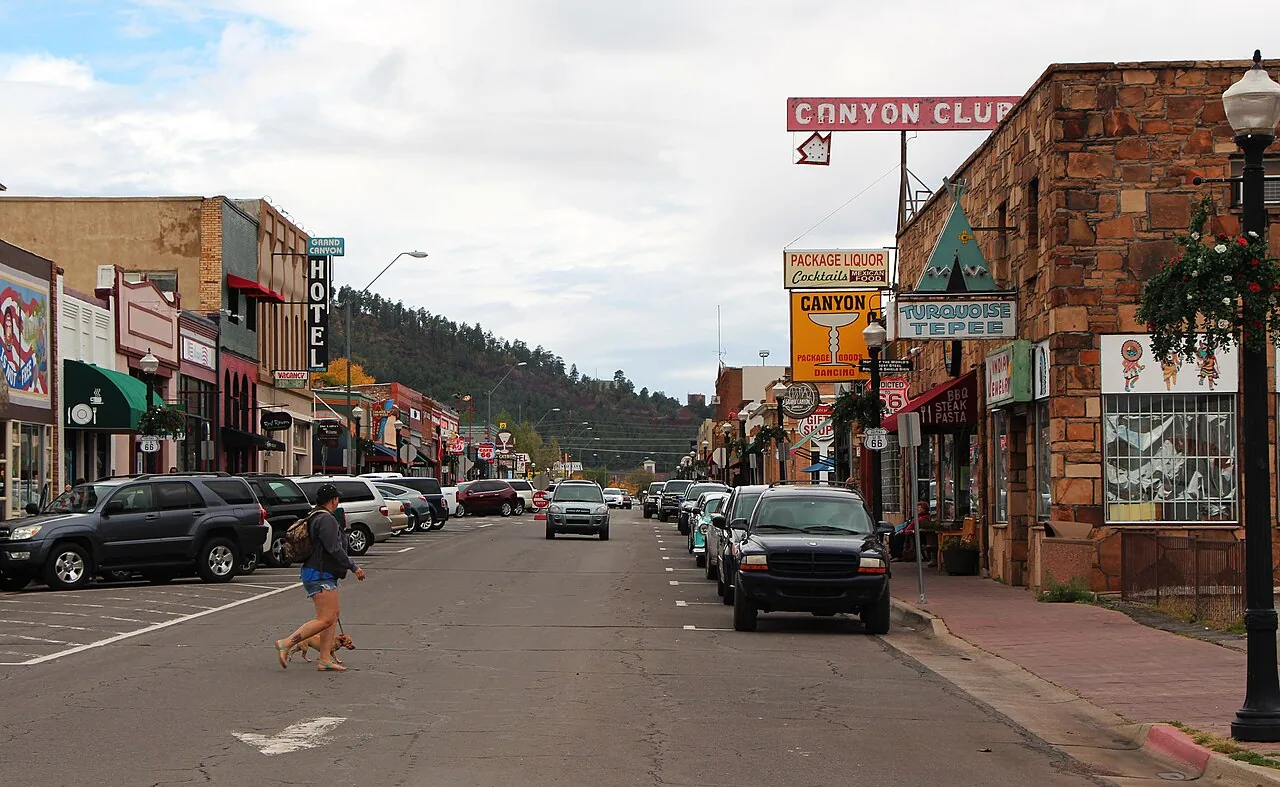
Tourists come for the train and go home again. The roofs stay. Williams is about 42 miles west of Flagstaff on I-40, at 6,916 feet, and tourism drives most of its economy. Lodging, dining and retail buildings carry that trade, and each one has a roof that has to survive the winter. Commercial Roofing Flagstaff inspects, repairs and replaces commercial roofs in Williams, AZ, and we start with the snow on the roof.
A town that lives on visitors cannot afford a closed building in peak season. The roof work has to be planned around the calendar, and the calendar starts with the weather.
Williams averages about 65 inches of snow a year, and most of it falls from November through March. That is less than Flagstaff, which averages about 90 to 97 inches, but it is still a long loading season for a flat or low-slope roof. Snow that sits for weeks on a roof gets heavier with every thaw and refreeze.
Flagstaff took 24.5 inches in some areas from its February 28, 2023 storm, and roofs failed under the load. The warning signs they gave were sagging ceilings, bowing trusses and severe leaks. Those signs apply to any building at this elevation. Check the ceiling before you check the membrane. A stain on a tile is a leak. A tile that has dropped or a seam in the drywall that has opened is a load problem, and it needs a different response. From the ground, rake the roof edge clear, keep people out from under the worst spot and get a structural look.
Williams Historic Business District was added to the National Register in 1984, and the downtown district covers six blocks. Older commercial buildings in a historic district raise questions about what is allowed on the roof and what has to stay as it is. We do not assume the roof type or age of any building there. The first walk records what is on the roof, and the owner decides what to do with that record.
Historic status can change the approval path, the materials and the schedule. A property manager with a building in the district should raise it at the start, so the scope reflects any limits before a crew is booked. Low-slope roofs behind a street-facing parapet often hide their drains from the sidewalk, which is why a walk on the roof matters more than a look from the street. We photograph each drain, each wall flashing and each rooftop unit curb so the owner has a record that holds up in any approval conversation.
The Grand Canyon Railway runs about 64 miles from the 1898 Williams Depot to the South Rim and carries about 225,000 passengers a year. Visitors need places to sleep, eat and shop, so lodging, dining and retail are the building uses a tourism economy points to. We plan around what each building does.
A restaurant roof carries kitchen exhaust, grease and rooftop fans. A hotel roof has guests under it and little tolerance for noise or leaks in season. A retail roof needs clear drains and tight flashing at every wall. Each use gets its own checklist on the walk. Kitchen exhaust means a look at grease buildup on the membrane. Guest rooms mean a check of the ceiling below for stains. Retail means a look at the loading and delivery edges, where foot traffic and hand trucks wear the surface. We write each finding with its location on the roof.
In a town where the snow season runs November through March, drains see a lot of meltwater and a lot of refreezing, and ice that plugs one sends the thaw sideways across the membrane. Ice forms in the drain throat and blocks the next flow. We open the drains and scuppers, check the slope toward them and flag any area that stays wet.
Flashing is the other weak point. Wall flashings and curb flashings pull away when ice forms behind them. A flashing failure lets water in at the edge long before the field leaks. We check each one with a hand probe and a close look. Sealant that has cracked in the cold gets cut out and replaced. Flashing that has lifted gets re-adhered or rebuilt. Metal that has bent gets straightened or swapped before the next freeze.
The walk picks the path. Failed seams and dry insulation call for repair. A tight membrane that has weathered may take a coating from our roof coating restoration work. A recover suits layers that are dry and still fastened. Wet insulation means replacement.
Price tracks roof area, system type, access and the state of the deck. Timing follows the visitor calendar and the weather. A busy tourist season and a short dry window leave a narrow gap, so a lodging owner who wants a new roof should book the crew well ahead. We plan phases so part of the building stays open when the scope allows it. Tear-off happens in sections, and each section is dried in before the crew leaves for the day. Guests and diners see staging in one area while the other stays quiet. The manager gets a daily note on what moved and what comes next.
Williams is the western end of the I-40 stretch we cover from Flagstaff. Bellemont and Parks lie on the way. A crew can service all three in one trip when the schedule allows. When winter is at its worst, crews do emergency roof repair and hold the permanent work for dry weather.
Book the walk in early fall and the work for the dry window in late spring or early fall. Flagstaff's July and August monsoon is the planning reference for summer storms, so leave room for it. We phase the work so the building stays in service whenever the scope allows, and we agree on staging and noise limits with the manager before the crew arrives.
It can. The district was added to the National Register in 1984, so approvals and materials may be limited. We record the existing roof on the first walk and give the owner a clear scope. The owner then confirms what is required before work starts.
Sagging ceilings, bowing trusses and severe leaks, the same signs Flagstaff officials listed after the 2023 storm. Doors and windows that stick are another clue. Call before you climb up. A loaded roof is unsafe to walk, and the structure may need a look first.
Not always. Grease attacks some membranes, so we look at the exhaust layout and the existing system. PVC is a common choice near grease because it resists it, and we confirm the choice against the building and the budget on the walk.
Send the address, say what type of roof it is if you know, and tell us when it was last walked, along with any earlier reports. Those details shape the drain, flashing and sag checks and tell us whether the trip can share a day with other I-40 stops.
Browse the services, roof systems and building types we work with across Flagstaff and nearby Arizona communities.
A walk of the roof with photos, findings and a written scope.
Active leaks, storm damage and blocked drains get a fast response.
Roofing across Flagstaff and nearby Arizona communities.