
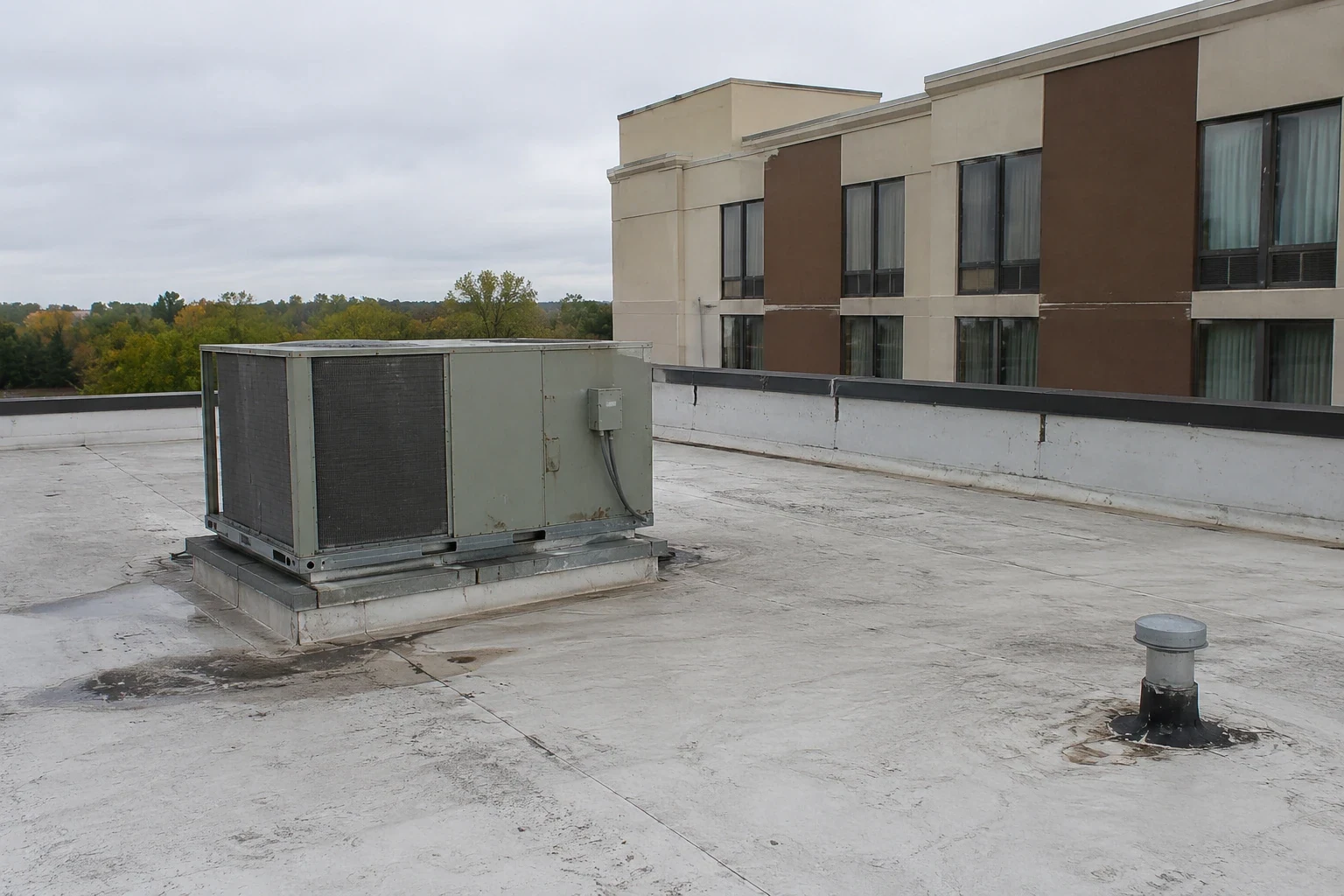
A hotel roof leaks into a bed, and the bed is sold for the night. A wet room goes out of service. A bad review follows. In Flagstaff, AZ, the snow total is 90 to 97 inches a year, and a leak in any season takes a room out of service.
Call ahead of the first big storm. Give us the hotel address, the roof type and your last walk date. We time the sag and drain checks, and any repair, to your occupancy calendar.
Most hotels stack guest rooms directly under the roof. A drip lands in a bed or a bathroom ceiling. A frozen drain over a corridor soaks the carpet. So the first job is to know which rooms sit under which roof section, and to rank the sections.
Snow is the load behind it. Flagstaff logged 35.9 inches in one day on February 21, 2019. The city's report on the February 28, 2023 storm counted several roof collapses and flagged sagging ceilings and bowing trusses. Housekeeping and front-desk staff should know those signs. A sagging ceiling in a room is a reason to move guests and call an engineer.
Occupancy data helps the plan. A manager who knows which rooms are booked next week can free the ones under a repair. We ask for the room map and the booking calendar, and we schedule around both. The aim is to keep every booked room usable.
In Coconino County, 16.6 percent of jobs sit in accommodation and food services, the largest sector. The Railroad Addition district downtown lists the Weatherford and the Monte Vista among its historic commercial buildings. Away from downtown, the airport technology park's Phase I includes a hotel, and the I-40 exits serve the highway side.
The roofs are not alike. Older downtown hotels sit in masonry buildings, so expect parapets, wall tie-ins and a long repair history. Newer hotels often run long low-slope or pitched roofs over corridor and room wings. Stacked rooms leak the way they do in an apartment building. A hotel kitchen adds the exhaust and grease issues of a restaurant.
Pools, spas and rooftop terraces on some properties add more roof types. A terrace has pavers or pedestals over the membrane, and a failed drain under them is hard to see. Walk those areas with the same care. Lift a few pavers, look at the membrane and clear the drain. Record the work.
Start at the valleys and the low points, where roof sections meet. Snow packs there and ice forms. Check each drain and overflow scupper. Test flow. Clear grit. Check canopies over entrances. Ice hangs there, and it falls on guests. Look at snow guards, heat cable and signs.
Then check rooftop units, exhaust vents and stair or lift penthouses. Every one sits on a curb or under a flashing. On the lee side a drift builds, then refreezes after dark. Every unit goes on the roof plan. Take the fall photographs from marked positions. The commercial roof inspection follows that order and closes with a photo report for the general manager.
Roof drains and scuppers must run free in winter and in the monsoon. Autumn is when they get cleaned. The first thaw is the time to look at them again. Where an iced main drain would back water up, overflow scuppers go in. Trapped water seeks the lowest edge detail, which on a hotel often sits over a room.
About 20 to 22 inches of precipitation falls each year, and the July and August monsoon delivers roughly a third. A monsoon downpour tests flashings the way winter melt tests drains and edges. Occupancy decides how costly each test is. Hard freezes start in late September, and the lowest reading on record is minus 30 degrees F.
Eave ice is a classic winter fault. It dams the melt and backs water under edge metal into the top-floor rooms. We fix the edge detail, add drains or heat cable at the refreeze zones and recheck after the next thaw.
Sun helps clear south slopes. Flagstaff averages about 78 percent of possible sunshine, so north-facing wings hold snow and ice for weeks. A hotel with a north-facing entrance sees the worst ice there. Put guards, heat cable and clearing on that side first.
Guests come first. Work is scheduled for late morning to afternoon, after checkout and before arrivals. Loud steps avoid early mornings and nights. Staging stays out of the entrance and guest parking. Rooms below the work are blocked. Housekeeping gets a daily list.
A clearing plan comes before any shovel. Only named crew members go up. Tools are plastic. Drains and canopies get cleared before the field. Close the entrance below before anyone clears the roof. Keep loads even. Fall protection and a marked route down are required for anyone on the roof.
Flagged hotels carry brand rules. A franchise or owner group may set rules for work near guests. We read those rules before the scope is written, follow the contractor steps they set and give the general manager a daily note. The note covers what was done, what is open and what happens next.
Fix flashings, valleys and curbs first. Insulation wet across wide areas calls for a commercial roof replacement in the slow season. Infrared scanning plus cores outline the wet area. A dry, sound roof can take a recover, but snow country leaves less margin for the extra weight.
On a historic hotel, match the materials to the masonry and keep the parapet details faithful. Record every repair with photos. A hotel with a good roof file can show lenders, brands and insurers exactly what was done and when.
Finish by running water through the drains and taking a new moisture reading. Record both against the baseline photos, and keep the set in the building file for brand audits.
Rank hotel roofs by the rooms underneath, then by age and snow exposure. Schedule replacements for the slow season. Walk each roof in fall and after the thaw. Owners with properties in Downtown Flagstaff and along the highway should use one file format. Ring us before the first storm with the property address and your last roof walk.
Hold deferred items on a list with a recheck date and a storm that bumps them up the order.
Move the guest, protect the room and call us. We trace the entry point, make it safe and photograph it for your records. The permanent repair is scheduled around occupancy.
Usually. Work in sections, block the rooms below and schedule loud steps for late morning to afternoon. Staging stays away from the entrance and guest parking.
Fit snow guards, run heat cable where ice builds and repair the edge flashing. Close the entrance before anyone clears the roof, and post a sign.
The slow season. Freezing temperatures return in late September, so finish early and book materials and crews well ahead. Winter work is for temporary fixes only.
Choose materials that suit the masonry, keep the parapet intact and photograph each step. Work with preservation rules where they apply. Avoid heavy sealant over old masonry joints.
Browse the services, roof systems and building types we work with across Flagstaff and nearby Arizona communities.
A walk of the roof with photos, findings and a written scope.
Active leaks, storm damage and blocked drains get a fast response.
Roofing across Flagstaff and nearby Arizona communities.