
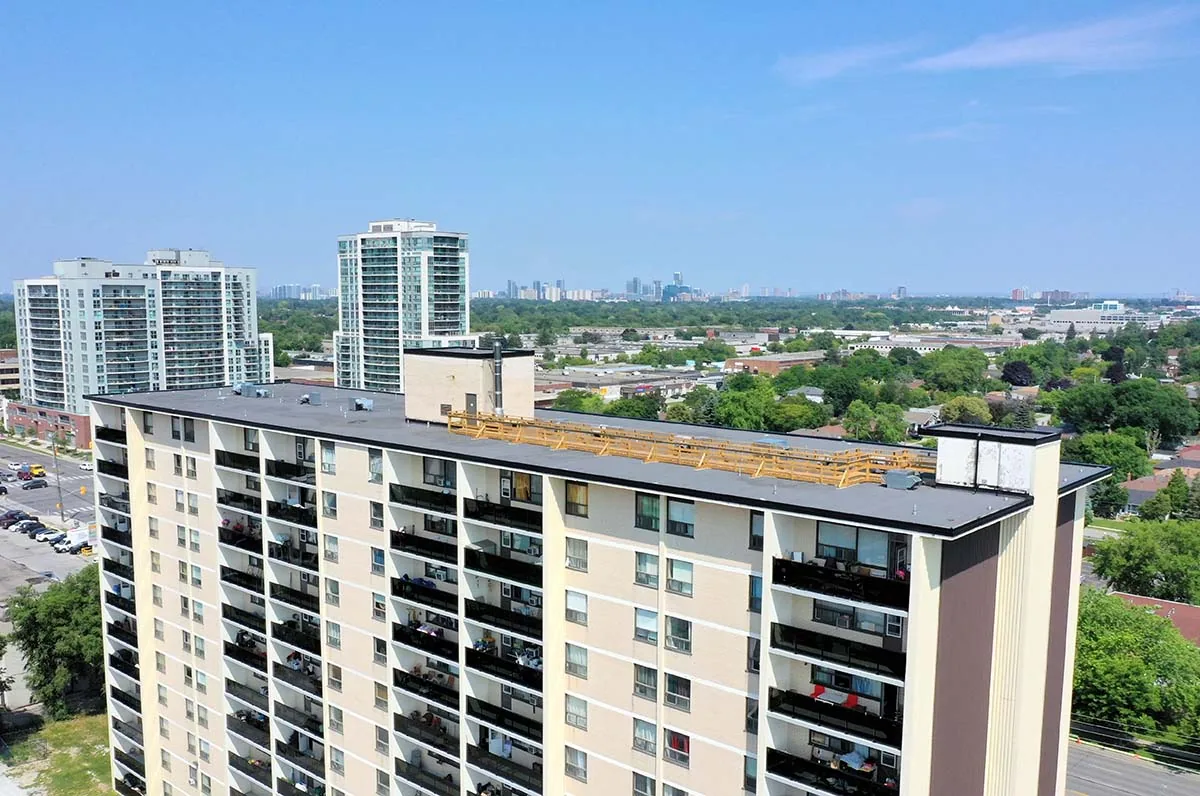
An apartment roof leaks into someone's home. A dripping ceiling in January is a call at midnight, a wet bed and a move-out threat. In Flagstaff, AZ, snow arrives at 90 to 97 inches a year, and ice dams at the eaves are how much of it turns into a leak. Water backs up behind the ice and runs into the unit below.
Book the walk before the first heavy storm. Give us the building address, the roof type and when anyone last went up. We book the sag and drain checks and write a short resident notice for you to post.
Multifamily buildings lose heat through the roof, and the heat melts snow from below. Water runs to the cold eave and freezes. The ridge of ice dams the next melt, and water finds its way under the edge into the top-floor units. Balconies and walkways add more edges, more drains and more places to freeze.
Snow is the load behind it. One day in February 2019 set the local record at 35.9 inches. When the storm of late February 2023 passed, the city counted several roofs down and told residents to watch for sagging ceilings and bowing trusses. A resident who sees a sagging ceiling should report it at once. The manager calls an engineer and us.
Falling snow and ice is a second hazard. A pitched roof can shed a slab onto a walk, a car or a child. Snow guards above entries and parking help. So does a clear walk plan: post signs, close the walk under heavy melt and tell residents where to park during storms.
Apartment roofs vary. Some are low-slope with a parapet and internal drains. Some are pitched with metal or shingles. Many are mixed: a pitched main roof with flat sections over balconies, stairs and entries. Each type holds snow in its own way. Flat sections gather drifts. Pitched sections shed sheets of snow onto walks and cars.
Stacked rooms with one roof overhead also describe a hotel, and a senior living building adds tighter resident safety rules. An apartment near Downtown Flagstaff neighbors the masonry business blocks that an 1897 ordinance required there. A newer building may insulate better but carry more roof details.
A complex in Southside, on the east side or along Butler Avenue takes the same snow, so the walk follows the same order. Large complexes have many identical buildings, which helps. A fix that works on one building often works on the others, and a defect on one is worth checking on all. We walk a sample first and then the rest.
Start at the eaves. Look for ice ridges, stained soffits and loose edge metal. Check valleys, where two roof sections meet and snow piles. Test each drain and scupper. Clear grit and ice. Look at attic or ceiling insulation and ventilation, since poor insulation melts snow from below.
Then check penetrations: vents, flues, skylights and units. Each has a flashing. Snow drifts on the lee side and refreezes. Mark each on the plan, and photograph from fixed points in fall. Our commercial roof inspection follows this order and gives owners a report they can use.
Keep roof drains and scuppers clear on flat sections and balconies. Balcony drains are small and freeze easily. Walkway scuppers dump water onto stairs. Check each in fall and after the first thaw. Add overflow paths where water would otherwise back into a unit.
Of the 20 to 22 inches of moisture Flagstaff sees in a year, the July and August monsoon delivers about a third. A downpour tests flashings and drains. Winter tests them with melt and freeze. Freezes come back in late September, and winter has dropped as low as minus 30 degrees F.
Thaw cycles do the slow damage on a multifamily roof. Snow melts by day and refreezes by night. Each cycle widens small gaps. We fix the cause: better insulation and ventilation, a corrected edge detail, added drains or heat cable at the refreeze zones. A bead of sealant over a gap that heat keeps opening will fail again.
Sun helps. With sun about 78 percent of the possible hours, south-facing slopes melt off first and north-facing ones keep their snow and ice longer. A north-facing balcony row is where ice lingers. Guards, heat cable and clearing go on that side first.
Residents live there. Give written notice before any work: dates, hours, what to expect and who to call. Keep walks, stairs and parking clear. Schedule loud steps for daytime. Protect balconies and patios below the work. Debris stays contained.
Snow removal needs a plan. Name who goes up. Use plastic tools. Clear drains and eaves first. Close the walks below before anyone clears the roof. Keep loads even. Whoever goes up wears fall protection and has a clear way down. Never let residents or volunteers on a snowy roof.
Move-in and move-out days need care. Avoid heavy staging near the leasing office or moving trucks. A named contact on site answers resident questions, and any change in schedule is posted the same day.
Fix edges, valleys, flashings and drains first. Where wet insulation spreads across wide areas, schedule a commercial roof replacement one building at a time. A moisture survey and cores show the extent. A recover suits a dry roof that can take another layer. Snow adds load, so the margin for extra weight is thin up here.
Tear-off is the chance to stop heat escaping through the roof. Add insulation and ventilation, and seal air leaks at the ceilings. A colder roof surface melts less snow, so fewer ice dams form. File the materials and methods with the building record.
Prove the finished work before the crew leaves site. Flood the drains and valleys. Probe seams and edge details with a blunt tool. Take a fresh moisture reading. Record all three against the baseline photos, and hand the manager a one-page summary for the owners.
Keep one file per building: roof type, age, last walk, open items and the units below. Rank by age, leaks and snow exposure. Spend on the worst first, and phase large projects in the dry months. Walk each roof in fall and after the thaw. Phone us ahead of the first storm and give the address plus the date of the last roof walk.
Put every deferred item on a list with a recheck date, so a small leak is not left sitting over a resident.
Heat escaping through the roof melts snow from below. Water runs to the cold eave and freezes, and the ridge of ice dams the next melt. Fix insulation, ventilation and the edge detail, not just the leak.
Give written notice with dates, hours, what to expect and a contact number. Keep walks and parking clear. A clear notice cuts repeat calls and complaints.
Temporary repairs can. Permanent work waits for dry weather, since adhesives and welds need it. Hard freezes start in late September, so finish before then when you can.
A trained crew with fall protection and a plan. Use plastic tools, clear eaves and drains first and keep loads even. Residents and volunteers should stay off.
Replace when wet insulation covers wide areas, seams open in rows or leaks keep returning to one spot. A moisture survey with a few cores shows how far the damage runs. Get both before you decide.
Browse the services, roof systems and building types we work with across Flagstaff and nearby Arizona communities.
A walk of the roof with photos, findings and a written scope.
Active leaks, storm damage and blocked drains get a fast response.
Roofing across Flagstaff and nearby Arizona communities.