
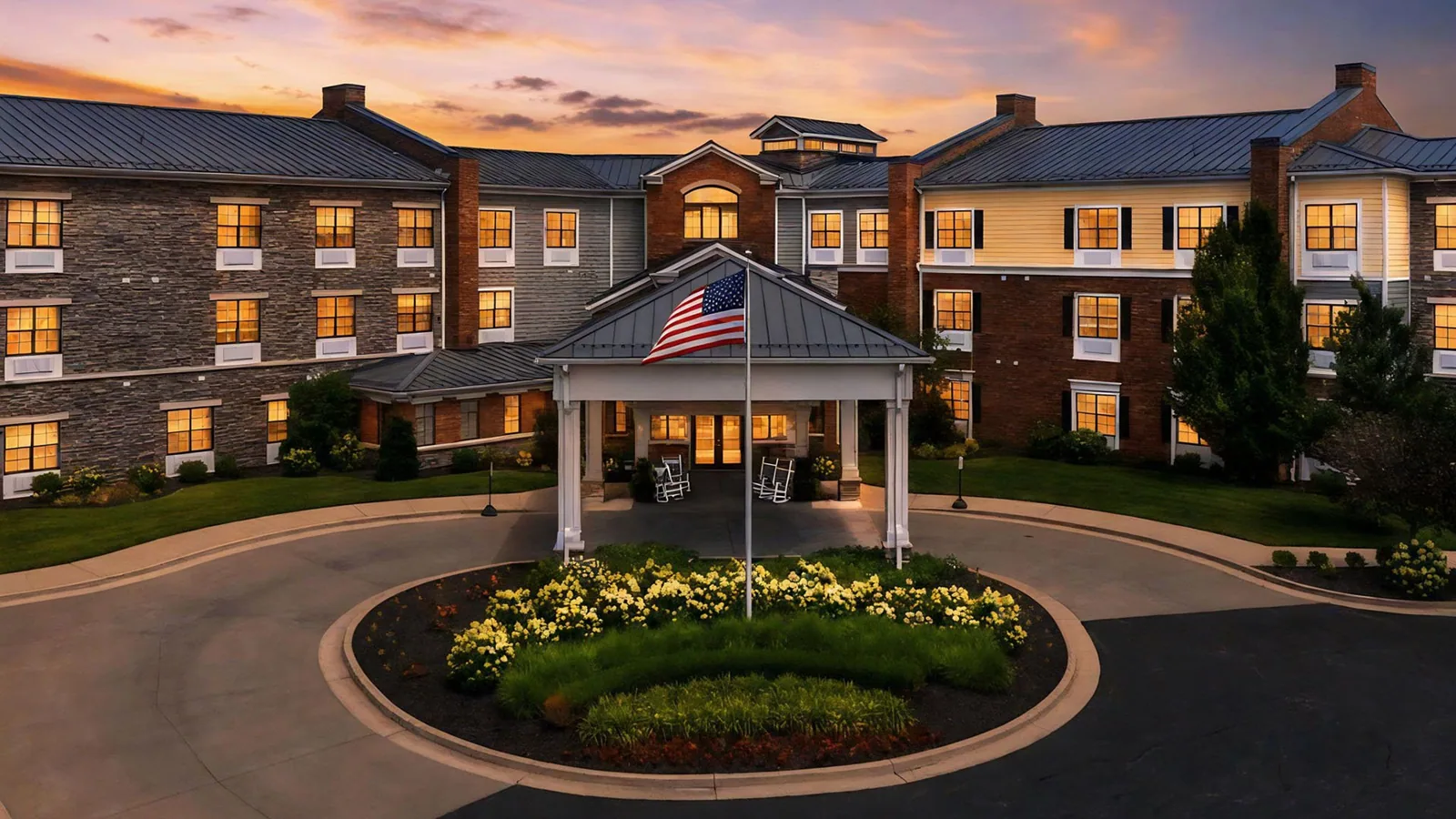
A senior living roof cannot fail in January. Residents live under it all day, every day, and a ceiling that drips or sags is a care problem before it is a repair problem. Flagstaff, AZ sits near 7,000 feet, and winter snow settles on wings, porches and covered entries that stay occupied through the whole storm. So the roof plan starts with the people below it. We check snow load, clear the drains, mark the routes and keep a crew on call. Then we fix what the walk finds, before the first heavy storm and not after it.
Property managers get a short list. What is sound, what is not, and what happens first.
Snow is the load. Rain is the nuisance. The February 28, 2023 storm piled 24.5 inches onto parts of Flagstaff within days, and officials counted several collapsed roofs afterward. Its warning list: sagging ceilings, bowing trusses, severe leaks. Where people sleep, each of those is urgent.
We treat each wing as its own roof. Residential wings, dining rooms, activity spaces and covered walkways carry different loads and drain differently. Drift builds behind parapets and next to taller sections. Where a low roof meets a tall wall, snow collects deeper than anywhere else on the building. During the fall walk, each drift line goes onto the plan. Then we know where to look first when the forecast turns.
Porte-cocheres and covered walkways deserve their own look. They carry snow that slides off taller roofs, and they sit over doors where residents, visitors and EMS crews pass. We check the framing, the attachment and the slope, and we recommend snow guards where sliding snow drops onto entries.
Structural flags look different from leaks. A sagging ceiling tile, a door that sticks, a crack that opens along a wall and a bowed truss are all signs of load. Night staff and maintenance crews are the likeliest to spot them. We give maintenance teams a one-page list of what to watch and who to call. The city and Coconino County also keep a joint phone line for reporting structural roof trouble after a big snowfall.
Our rule is plain. If it sags, call the structural line and call us. We make the area safe and keep people clear of the wing until it is checked. We do not move snow on a doubtful roof until we know what is under it. A snow and ice damage review follows every major storm, and the findings go in the building file with photos and dates.
Buried drains hold meltwater on the roof like a bathtub. Water has nowhere to go. It backs up, finds a seam and drops into a room. Flat-roof drains are the first thing we clear in early fall and the first thing we test again before the monsoon.
The monsoon adds a second job in July and August, when about a third of the year's moisture arrives. The same drains that hold snowmelt in March take those cells. Our drain and scupper work covers clearing, resetting, adding overflow openings and heat tracing where ice blocks the line. A parapet roof needs overflow scuppers so a blocked drain does not fill the wing like a basin. We record every drain by number, so repeat clogs show up in the log.
Hard freezes begin in late September, and Flagstaff has seen minus 30 degrees F. A long cold season means long freeze-thaw cycling. Water enters a small gap, freezes, expands and widens the gap. Repeat that all winter and a hairline crack becomes a leak path.
We look for it at seams, flashings, roof edges and around penetrations. Heat leaking from the building melts the snow above, and the water refreezes at the cold eave as an ice dam. Better insulation and ventilation help, and so do clear gutters and drains. We note staining on ceilings along exterior walls, which is often the first clue. A preventive maintenance visit in late fall catches most of it.
Ice that forms at edges can also fall. Icicles and sheets of ice slide off in a thaw and land on walkways. We note edges above doors and parking, and we recommend clearing them on a set schedule, with cones or tape to keep people back while it is done.
Senior living means work happens around residents. Noise, dust, fumes and foot traffic all matter. Our occupied building reroofing plan works in sections, closes each section at day's end and sets quiet hours. We keep entries, walkways and ambulance routes clear. We tell staff in advance which wing is open and when.
Our crews answer emergency calls at any hour. A leak over a resident room gets an emergency roof repair visit: stop the water, protect the room, record the cause. A permanent fix follows in the first dry stretch. The log shows each step. A community with several buildings keeps one log across all of them, whether the roofs sit in East Flagstaff or toward Fort Valley.
Reach us ahead of the first heavy storm and give us the property's address, what the roof is made of and the date anyone last walked it. Sag and drain checks get scheduled, the drift lines get marked and you receive a ranked list. A replacement inside city limits falls under the 2018 International Building and Energy Conservation Codes, as amended locally in 2019, and we check the requirements before pricing.
A care building tolerates little interruption, which is why a senior living roof shares drain checks and clear emergency routes with a hospital roof. Dining kitchens and mechanical rooms push exhaust and flues through the roof, and each penetration is a flashing to inspect before the first freeze. A cracked boot over a hallway ceiling can drip for weeks before anyone connects it to the roof. Residents' rooms also raise the questions an apartment roof does about noise and notice. A short list, a fall walk and a clear plan keep most problems small.
Remove snow when the building shows structural flags or when the forecast adds a second storm on top of a heavy pack. Call us before anyone climbs up. We check the roof type, the drift lines and the access route, then set a shoveling plan. Never send untrained staff onto a roof.
Sagging ceilings, bowing trusses, sticking doors and new cracks along walls. Move people out of that area and call. We recommend one trained staff member per shift know the list and the number to call.
Yes, in sections. Quiet hours get set, entries get covered and only one wing is closed at a time. Give us the meal times, therapy hours and visiting hours, and the schedule bends around them.
Before winter, after every major storm and before the monsoon. Roofs with trees nearby need an extra check after leaf fall. Keep a log with the date and condition of each drain.
Roof section by roof section: condition, needed repair, cost range, priority. Sections over resident rooms rank first. You can hand the list to an owner or a board without rewriting it.
Browse the services, roof systems and building types we work with across Flagstaff and nearby Arizona communities.
A walk of the roof with photos, findings and a written scope.
Active leaks, storm damage and blocked drains get a fast response.
Roofing across Flagstaff and nearby Arizona communities.