
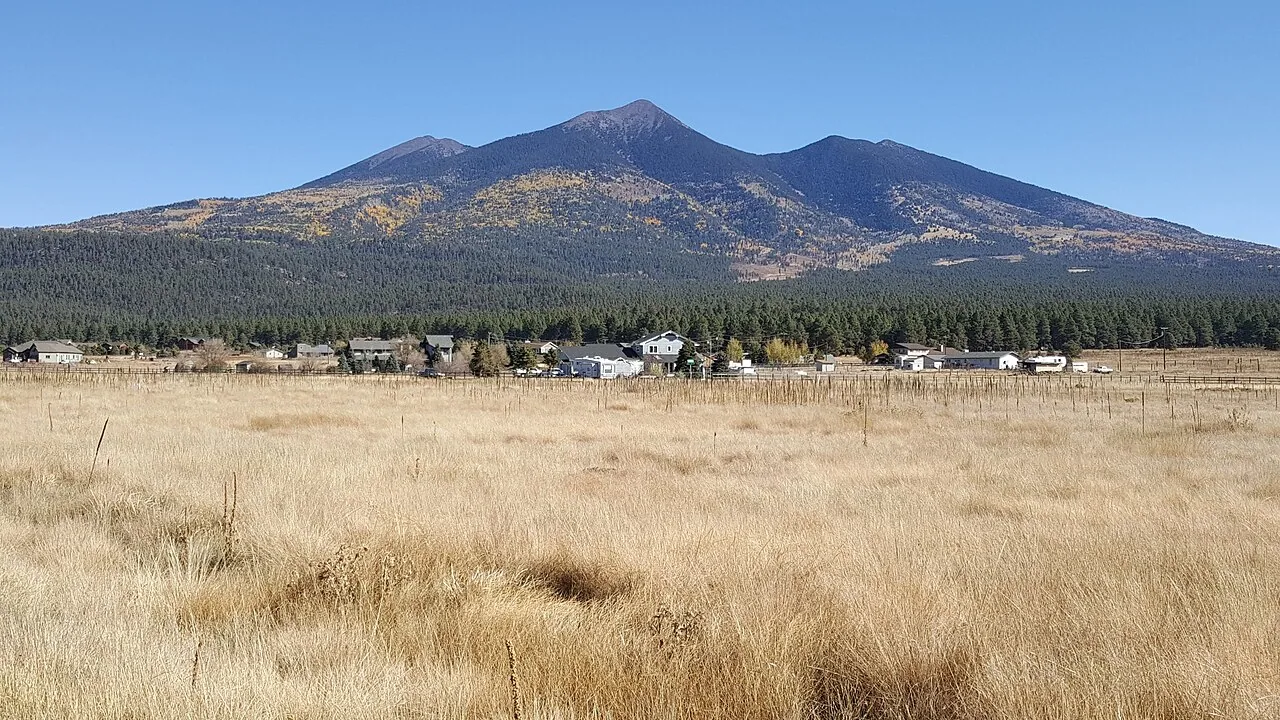
Older buildings can carry older decks. In Fort Valley, the area along Fort Valley Road and US 180 on the northwest side of Flagstaff, AZ, the museum campus alone holds buildings from the 1930s and 1950s, and Flagstaff's snow runs about 90 to 97 inches in an average year. Age changes the first question. Before we ask what the membrane is, we ask what the deck can hold. We walk the roof, check the sag from below and read the drains. Then we decide what the roof needs.
The Museum of Northern Arizona campus on Fort Valley Road covers about 200 acres, and US 180 runs through it. Its original lava rock building dates to 1936, and other campus buildings include a 1953 administration and library building and 1935 former dairy barns. US 180 to the Grand Canyon merges with Fort Valley Road just northwest of the city. Buildings from different decades usually mean different construction, and the museum campus shows how far apart that can run along one road. The same spread can show up on any commercial property in the district.
Distance matters in a spread-out district. Buildings sit apart, and a walk takes longer than on a dense block. We plan the route, bring the tools for the roof types on the list and group repairs by area. Owners with several buildings on a campus or a long frontage get one report with one photo set, so the roofs can be compared and ranked.
Older decks may be wood boards on heavy timber, old steel or early concrete. They carry less than modern work, and years of leaks may have softened them. Over the days after February 28, 2023, some Flagstaff areas took 24.5 inches of snow, and the city linked roof collapses to the load. Its list of warnings read: sagging ceilings, bowing trusses, severe leaks. In an old building, those signs deserve extra weight. If a ceiling dips, a beam bows or a door sticks, call a structural engineer. Our roofing scope starts after the engineer's findings are in.
Wood roofs hold moisture. A slow leak into a board deck can rot the board before a stain shows, and rot spreads along the grain. We probe the deck from above where we can and from below where we cannot. Softness, dark staining and a musty smell all mean water has been there a while. In those cases we scope the deck repair before we talk about the surface.
Flagstaff gets about a third of its yearly moisture from the monsoon, and July and August bring the thunderstorms. After the 2022 Pipeline Fire, which burned 26,532 acres north of the city, monsoon storms caused flash flooding. City staff say the burn opened new flood risks in the Schultz Creek watershed for neighborhoods along Highway 180. Flooding is a ground event, not a roof event. A roof still matters in it: heavy rain falls on the roof, drains must carry it away, and a clogged scupper puts more water at the foundation. We clear drains before July and check downspout discharge.
Downspout discharge deserves a second look. Water that lands at a foundation or flows toward a neighbor's lot adds to runoff in a storm. Extensions, splash blocks and clear underground lines carry it away. We trace each downspout from the roof to its outlet and flag any that dump at a wall.
Walk the roof in September. Clear every drain, scupper and gutter. Check the flashings at walls, chimneys and curbs. Probe the roof surface for soft spots. On older roofs, look at the edges for rot in fascia and sheathing. Check the eave for stains that show water running behind the gutter. Look inside at the ceiling, the roof structure and the wall tops. A drone roof inspection shows a spread-out property fast, and a hand walk confirms the findings. Photograph everything and mark the sketch.
Chimneys and stacks need their own look on older buildings. Masonry cracks, mortar washes out and the metal flashing at the base pulls away. A chimney with a bad cricket on its upslope side collects snow and melts it into the joint. We check the cap, the crown, the counterflashing and the cricket, and we photograph the base from several angles.
Two fires in 2022 burned land north of Flagstaff: the Pipeline Fire at 26,532 acres and the Tunnel Fire at 19,088. Because the city named new flood risk for Highway 180 neighborhoods, we judge a roof here by where its water ends up. After heavy rain, we clear the gutters and strainers and look at wood trim and fascia for water damage.
Where a fire has touched a property, a fire damage roof repair starts with a check for scorch marks, burn-through and melted membrane.
Repair fits a sound deck and dry insulation. A standing seam metal roof over a sound structure is a common long-life answer on older buildings, since it sheds snow and needs few penetrations. Replacement fits wet insulation, a failed membrane or a rotted deck. A core and a moisture scan decide. On a historic or character building, we also check what the work may change. Metal profiles, trim and details can be matched. The scope lists the cost drivers: area, access, deck repair, insulation and the number of penetrations.
Timing follows weather. At Flagstaff's elevation, near 7,000 feet, the working season runs from late spring through early fall. Temporary repairs hold through winter. We mark each one on the sketch with its date and the permanent work it waits for. Booking the permanent work early keeps it from landing in the rush of the first warm weeks.
Walk in September, ahead of the first hard freeze. Walk again after the first big monsoon cell. A preventive roof maintenance plan puts both on the calendar. Write a shoveling plan with plastic tools. Tell us where the building stands, what roof it carries and when someone last walked it, and we will book the sag and drain checks. Doney Park has its own runoff questions after the same fires, while the masonry roofs of Downtown Flagstaff carry the snow-load questions.
Budget by risk. Roofs with sag signs or rotted decks come first. Roofs with blocked drains or open flashings come second. Sound old roofs go on a yearly walk. That order puts money where the weight and the water are.
Years of leaks soften them, and they carry less than modern work. A sag check from below and an engineer's opinion come first when a ceiling dips.
A flood affects the ground floor and the site. The roof still matters, since drains and downspouts decide where the rain goes. Clear them before the monsoon.
Clear ash and debris from the roof and gutters, check for ember damage and look at wood trim. Do it before the next monsoon washes it into the drains.
Often. It sheds snow, needs few penetrations and lasts a long time when the deck is sound. The structure must carry it, and the details at walls and chimneys must be flashed with care.
A drone survey maps the roofs fast. We then walk any roof the images flag and confirm what we saw.
Browse the services, roof systems and building types we work with across Flagstaff and nearby Arizona communities.
A walk of the roof with photos, findings and a written scope.
Active leaks, storm damage and blocked drains get a fast response.
Roofing across Flagstaff and nearby Arizona communities.