
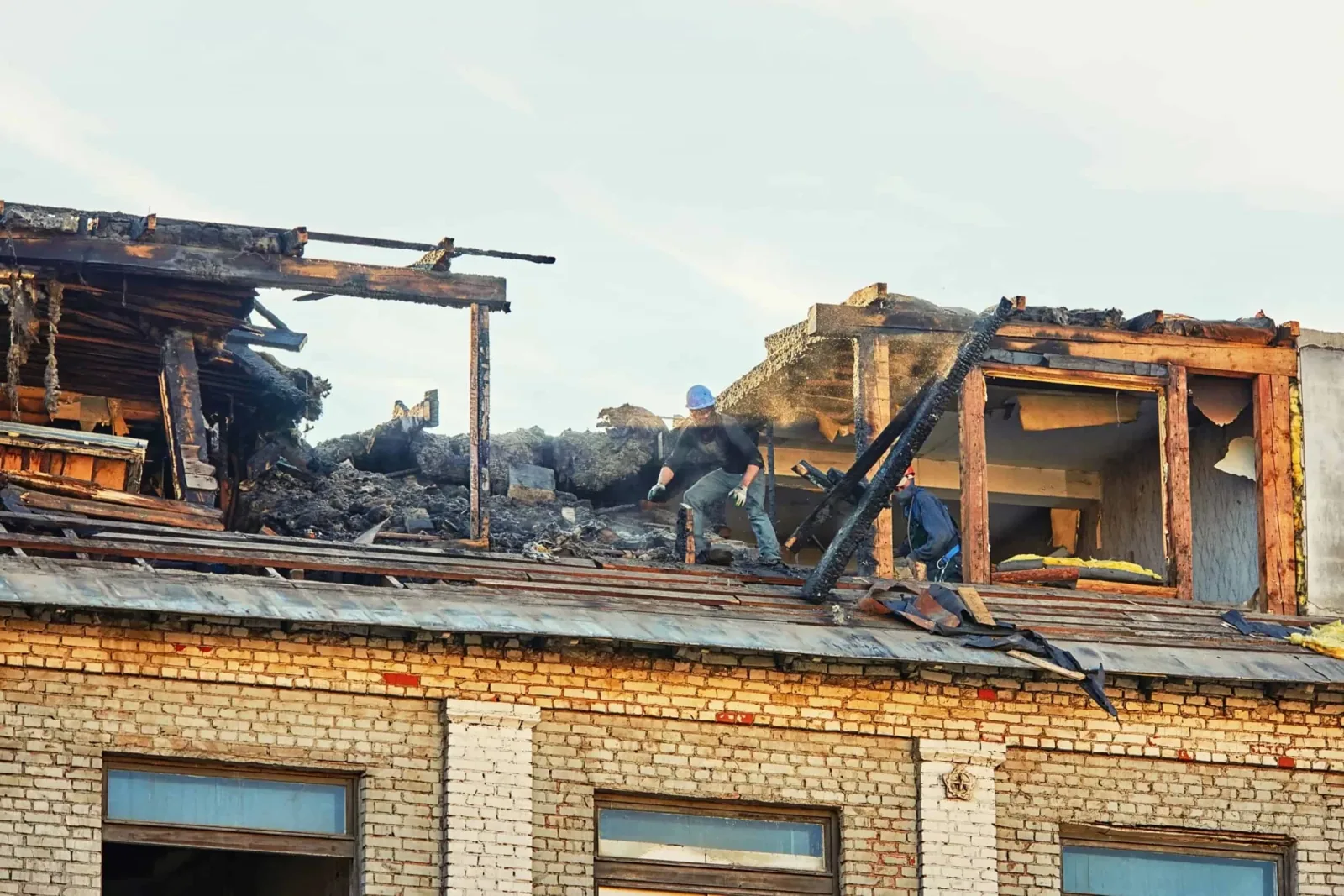
Fire damage to a roof is rarely just the burn. It is the burn, the water that put it out and the weeks of weather that follow while the deck sits open. Commercial Roofing Flagstaff repairs fire and smoke damage on commercial roofs in Flagstaff, AZ. The first job is a safe dry-in. The second is a clear picture of what the heat did to the membrane, the insulation and the deck beneath it.
Flagstaff has lived this. In 2022 the Pipeline Fire burned 26,532 acres and the Tunnel Fire another 19,088 acres north of Flagstaff. The fires were not the end of it. Monsoon storms then caused flash flooding on the burn scars. A roof that survived the smoke still had to survive the water.
After a fire, the roof is a hazard. Heat weakens steel and wood, and a deck that looks solid can give way under a person. We do not step on a fire-damaged roof until the structure is cleared by the fire marshal or an engineer.
Once the roof is cleared for access, we place temporary protection. Heavy tarps, sheet metal or temporary membrane cover open areas, and we secure them against wind and snow. Any hour, any day, this is the work our emergency crews handle first. Water is the second disaster after fire, and a storm in late February 2023 left 24.5 inches of snow in some areas within days, so an open deck cannot wait.
Every open area is photographed before the cover goes on. Those photos go to the owner, the adjuster and the engineer.
Cost at this stage is mostly access and materials: how much deck is open, how many tarps and fasteners it takes to hold them in wind, and whether a lift is needed. Temporary protection is priced separately from the permanent repair so the adjuster can see each step.
Different roof materials fail in different ways, and fire exposes every weak layer.
Damage extends past the visible burn. Heat travels along the deck and through insulation, so a char mark in one corner may hide softened material several feet away. We cut test openings, probe the insulation and check the deck underside before we set a repair boundary.
Sealants and adhesives also age fast under heat. A flashing joint that looks untouched may have lost its bond, so we check edge metal and curb details even when the burn is somewhere else on the roof.
Embers travel. They land on roofs, settle in drift lines behind parapets and mechanical wells, and burn into debris collected in gutters and scuppers. A roof with dry pine needles and litter around its curbs is a target. Debris clean-down before fire season is part of the maintenance walk on any roof near trees.
Ash is abrasive and chemical. It sits on membranes, clogs drains and traps moisture. The city has said the Pipeline Fire created new flood risk in the Schultz Creek watershed, which drains toward neighborhoods along Highway 180. Highway 180 merges with Fort Valley Road northwest of the city, so a building in Fort Valley has reason to keep its drains and roof edges clear. In Doney Park, the Tunnel and Pipeline fires were followed by monsoon flash flooding, and roof drainage there gets the same scrutiny.
Twenty-six homes in Timberline were lost to the Tunnel Fire. Commercial buildings near burn areas should be walked for ember pits, melted sealant and clogged drains after any nearby fire, even when no flames touched the building.
We sort fire damage into three outcomes. Local scorching on a sound roof is a repair: we cut out damaged membrane, replace insulation and flash back into clean material. Widespread heat distortion across a section is a partial replacement. Structural damage to the deck is a rebuild, and the engineer leads.
The insulation call is the one owners miss. Insulation that has seen heat or soot loses its rated performance, and wet board sits behind the snow and ice damage that follows and holds smoke odor. In many cases it must come out even when the membrane above looks salvageable. Smoke-soaked board also carries water after the fire hose, so we test for moisture across the area, using infrared where the roof is large.
We write the assessment up with photos and measured areas so the owner, the insurer and the engineer are all working from the same numbers.
Fire jobs involve more parties than any other roof repair. The fire marshal clears access. The adjuster inspects. The engineer reviews the deck. The restoration contractor handles interiors. We schedule around all of them and keep roof work from blocking the others.
Our claim documentation includes photographs, measured areas, material lists and a clear separation between fire damage and pre-existing wear. Insurers pay for the event, not for age, so that separation protects the owner. A building with deferred maintenance needs it spelled out.
Permanent repair starts only after the adjuster has seen the roof and the engineer has signed off. Until then, the emergency dry-in holds the building. If the damage touches storm or wind history, our storm damage work and a check for wind damage go in the same file.
As soon as the fire marshal or engineer clears the roof for access, any hour of the day. We cover open areas with heavy temporary protection and fasten it for wind and snow. The clearance is the limit, not our schedule. Call with the address and we will coordinate the access with the fire department.
Often, yes. Soot and heat degrade insulation and trap odor, and wet smoke-soaked board stays damp. We test for moisture and check the board for heat damage. If the insulation is compromised, we replace it before the new membrane goes down so the problem does not travel into the building.
Drains and edges. Ash clogs strainers, and heavy monsoon runoff arrives faster on a burn scar. The Pipeline Fire left new flood risks in the Schultz Creek watershed along Highway 180, so a roof in that area should have drains cleared, gutters opened and edge metal checked before July.
That depends on the policy and the adjuster's findings. We provide photos, measured areas and a damage separation that show what the fire caused and what was already worn. A clear record helps the adjuster set the scope. We do not promise an outcome, but we do make sure the evidence is complete.
Sometimes. If the fire damaged the roof but not the interior, work can proceed in zones while the business runs. Structural concerns, smoke odor and restoration crews often limit access. We build a phased plan around tenants and sequence work so the roof is closed in each zone before the next opens.
Browse the services, roof systems and building types we work with across Flagstaff and nearby Arizona communities.
A walk of the roof with photos, findings and a written scope.
Active leaks, storm damage and blocked drains get a fast response.
Roofing across Flagstaff and nearby Arizona communities.