
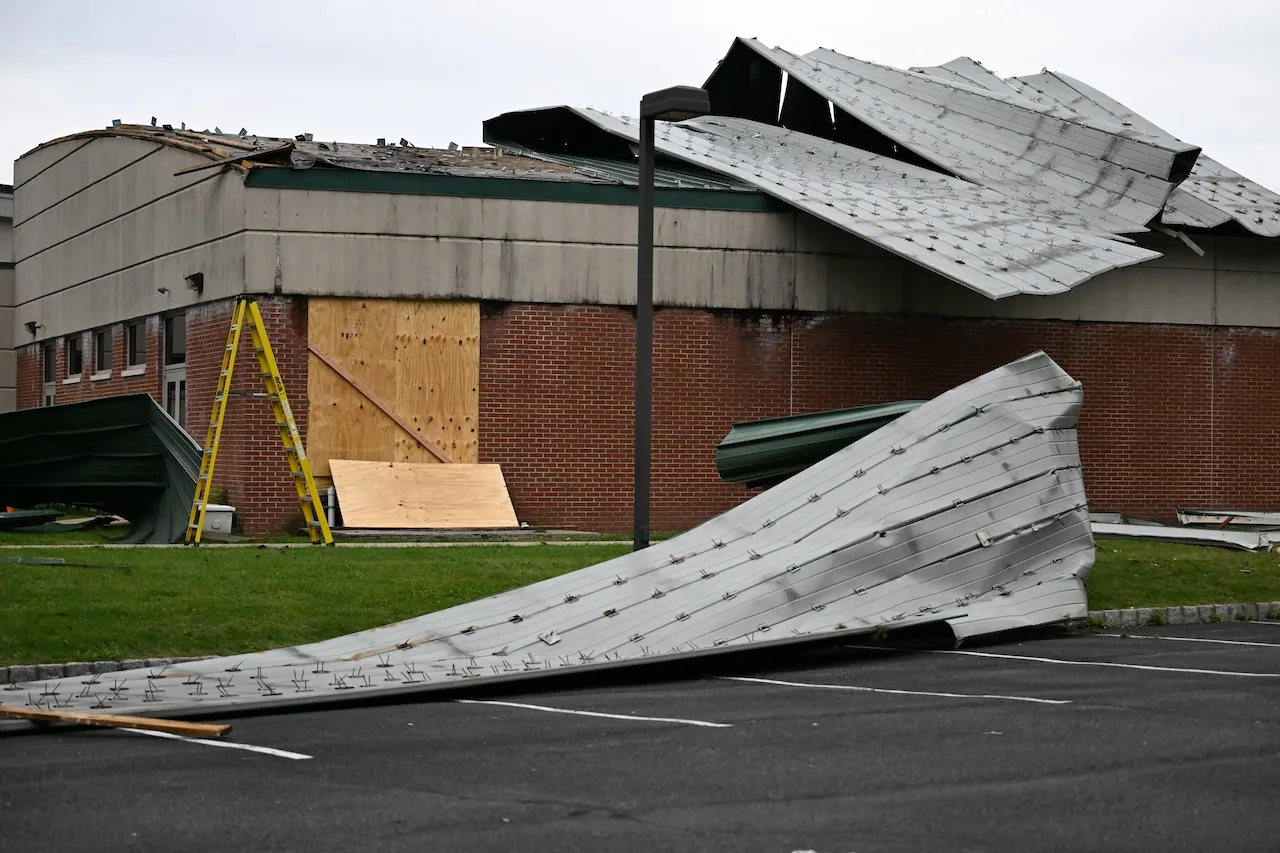
A storm is a load test. Flagstaff, AZ runs that test every year. Snow arrives by the foot, thaw follows and the monsoon dumps rain in July and August. The roof either holds or it shows where it is weak.
After a storm, do three things in order. Check the structure. Stop the water. Document the damage. We handle all three, and we keep the order, because a leak is a nuisance and a bowing truss is not.
Parts of Flagstaff were under as much as 24.5 inches within days of the February 28, 2023 storm. Several roofs failed under the weight, and the city said so publicly. Its warning signs started with sagging ceilings and ran through bowing trusses to severe leaks.
Check for those signs yourself. Look inside before you look up. Ceilings that sag. Doors that stick. New cracks in drywall. Trusses that bow. Sprinkler lines that dip. Any of these means the roof is carrying too much.
If the signs are present, clear the area and call. The city and the county jointly staff a phone line for structural roof signs once heavy snow has fallen. Call it. Then call us. We will not send a crew onto a roof that may fail.
Where the structure is in question, an engineer decides how much load can come off and how fast. We follow the engineer's plan.
Roof rakes and shovels come with rules. Pull snow from the edge with a long-handled rake from the ground where safe. Do not climb. Never cut into a drift near a sagging area. Falling snow slides off metal roofs without warning, so keep people and cars clear of eaves.
Once the building is safe, we stop the water. Drains come first. Melt runs to low points, and a frozen or packed drain sends it looking for a seam. We thaw drains with steam or warm water, never with an open flame, and we clear scuppers and gutters.
Then we find the opening. Snow load can tear flashing, lift edge metal and split seams. Drifts behind parapets and mechanical wells pile weight in one place. We look at those spots first.
A temporary seal stops the leak: a tarp, a patch or a sealed flashing. The seal buys time. Permanent repair waits for dry weather, because adhesives, sealants and welds need a clean surface. After a big storm, emergency roof repair and permanent repair run in sequence.
Interior protection helps. Move stock and equipment out from under active drips. Cover electronics. Use buckets and plastic sheeting to carry water to a drain. A few minutes of protection saves a floor, a ceiling and an inventory.
Snow damage is mostly load and ice. Load bends decks, pulls fasteners and crushes insulation. Ice builds ridges at eaves and drains and holds water against seams. Falling snow and ice from higher roofs can puncture membranes and bend edge metal.
We look for torn membranes at parapets and drifts. We check curb flashing, where snow piles against the unit. We look at gutters and downspouts for ice damage. We inspect skylights for cracked glazing and bent frames.
Repairs follow the damage. A torn sheet gets a patch. A bent coping run gets straightened or replaced. A crushed section of insulation gets cut out and rebuilt. Heavier ice damage moves into snow and ice roof damage repair.
Ice dams deserve a check. They form where heat leaks from the building and melts snow from below. The meltwater refreezes at the colder edge and builds a ridge that holds water back. We cut channels for drainage, never chip at the ridge, and we trace the heat source so the dam does not return.
Monsoon rain makes up about a third of what Flagstaff receives in a year. Thunderstorms peak in July and August. A single cell can unload heavy rain in under an hour.
Cloudbursts expose weak drainage. Water rises over low flashing, overtops parapets and finds every unsealed seam. Wind-driven rain gets under loose edge metal.
After a monsoon storm, we check drains, overflow scuppers, flashing height and edge metal. We scan for wet insulation if a leak appeared. We note the weather in the report, because it tells us which failure to expect next time. Wind-driven rain that lifts edge metal may call for wind damage roof repair.
Overflow is the quiet hero. A scupper set at the right height lets water leave when the main drain fails. We check the height of each overflow against the roof surface and fix any that sit too high. A cloudburst tests it in minutes.
Two 2022 fires, Pipeline at 26,532 acres and Tunnel at 19,088 acres, burned north of Flagstaff. Monsoon storms then caused flash flooding. City staff flagged fresh flood risk in the Schultz Creek watershed after the Pipeline Fire, with Highway 180 neighborhoods in its path.
For commercial owners along Highway 180 and in Doney Park, the roof is only half the problem. Runoff leaving the roof must have a safe path. Downspouts that discharge at a foundation can add to a flood. We check where roof water goes and recommend extensions, splash pads or diverters.
Flood debris can also clog drains and sit on membranes at lower roof levels. We clear it and check for puncture damage.
Every storm job ends with a record. We photograph damage before we touch it. We note date, weather and location on the roof plan. We list what we repaired and what remains open.
The record serves the owner and the insurer. It shows the roof's condition and the cause of the damage. It supports the claim and the scope. That file also supports roof insurance claim assistance when a carrier is involved. We write down the roof as found. Dated photographs back every line.
Owners near Fort Valley and Doney Park can call for a post-storm walk. Send the address and the roof type, and we will schedule the structure and drain check first.
The file keeps growing. After repairs, we add photographs of the finished work and a note on what to watch. The next storm report starts from there, and the owner sees how the roof changes.
Look inside. Sagging ceilings, bowing trusses, sticking doors and new drywall cracks are the warning signs city officials listed after the February 2023 storm. If you see them, clear the area and call the city and county line. We will not send a crew onto a roof that may fail until an engineer clears it.
No, not without a plan. Walking a snow-covered roof is dangerous, and shoveling can damage the membrane. Hire a trained crew with fall protection, and have the load assessed first. We clear drains and drifts where the structure allows.
It stops the water. It does not fix the cause. Permanent repair needs dry weather and clean surfaces. We tell you how long the temporary seal should hold and when to schedule the permanent work.
Within a few days, or the same day if a leak appeared. Drains, scuppers and flashing show damage quickly. Waiting lets the next storm find the same weak point.
Dated photographs, the roof plan with damage marked, the weather that day and our repair list. The same file supports the claim, the warranty and the sale. Keep a copy off site.
Browse the services, roof systems and building types we work with across Flagstaff and nearby Arizona communities.
A walk of the roof with photos, findings and a written scope.
Active leaks, storm damage and blocked drains get a fast response.
Roofing across Flagstaff and nearby Arizona communities.