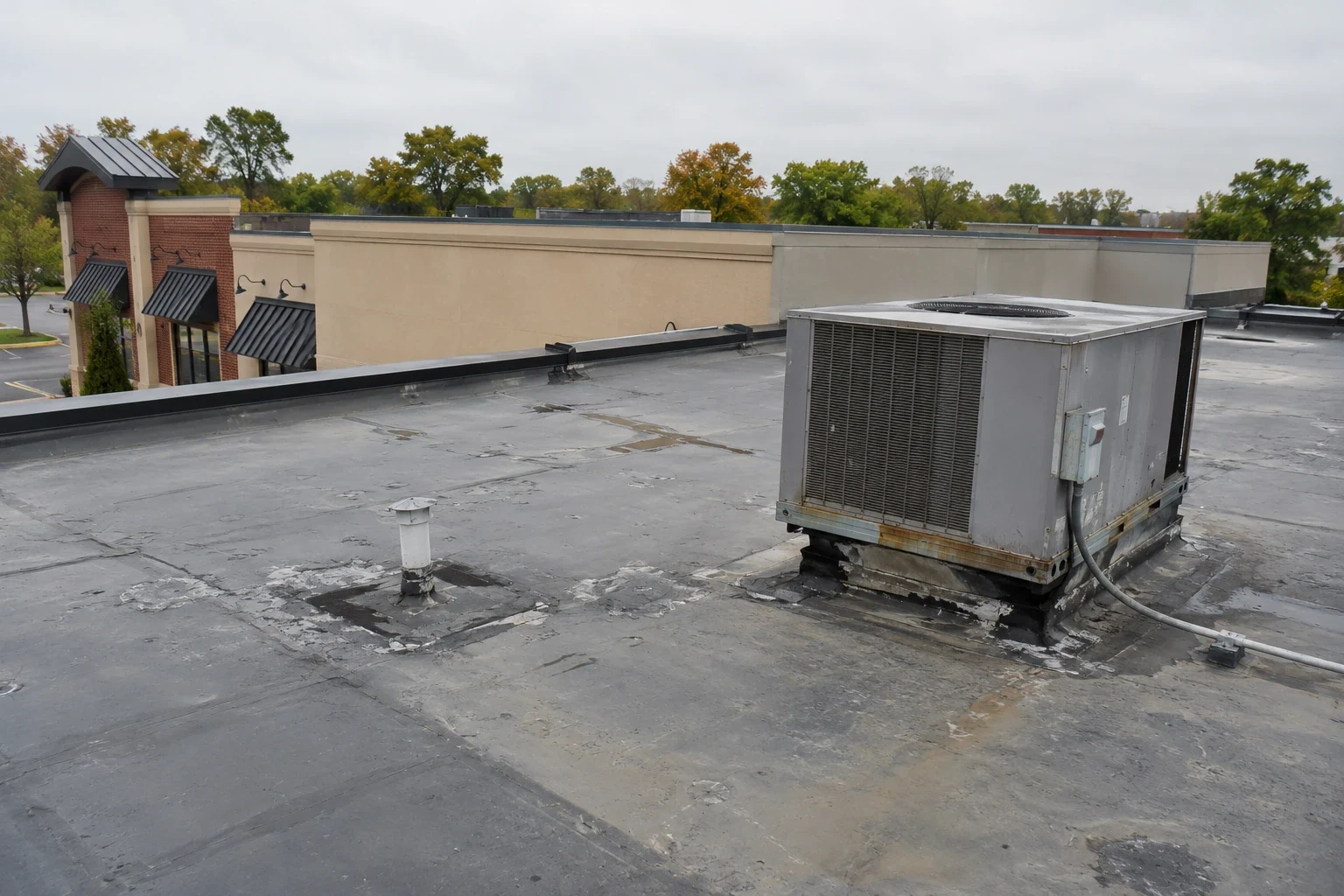
A restaurant roof melts snow where the kitchen is. Hood fans throw heat and grease. Snow around them melts, runs to the cold edge and freezes into a ridge of ice. Meltwater stacks up behind that ridge and slips under the flashing. In Flagstaff, AZ, where snow piles up for months, any rooftop kitchen exhaust can set off this chain.
Phone us before the first big snow of the season with the restaurant's address, what covers the roof and when it was last walked. We fit the sag and drain checks around your service hours.
Kitchen exhaust leaves a film on the membrane. Some sheets soften under it. Dirt sticks to it. Water pools on it. In winter, the same exhaust melts snow unevenly and builds ice at the edge. A restaurant roof needs a cleaning plan as well as a snow plan.
The load is real too. February 21, 2019 set the one-day mark at 35.9 inches. After the storm that began February 28, 2023, the city named sagging ceilings, bowing trusses and severe leaks as overload signs. A drooping ceiling tile over the dining room is a structural flag. Clear the area and call an engineer.
Fire safety is the other reason to keep the roof clean. Grease that builds on a roof near a hood fan is fuel. Fire codes treat it seriously, and so do insurers. We photograph the condition during every walk, tell you when a cleaning is due and keep a record of what was done.
Accommodation and food service leads Coconino County jobs at 16.6 percent, and a good share of that work happens under restaurant roofs. Downtown, in the Railroad Addition Historic District, older brick buildings hold restaurants under parapets and built-up roofs. Newer buildings on Butler Avenue, old Route 66 and near the interstate exits tend to have flat roofs with rooftop units.
A restaurant inside a hotel shares its hotel roof, and a grocery deli puts grease on a grocery store roof too. A restaurant roof carries kitchen heat and exhaust on top of the weather.
Older downtown restaurants may share walls with neighbors. A roof leak at a party wall can wet two businesses, and a parapet gap can feed water into a shared wall. We trace the entry point, mark it on the plan and share the finding with both owners when asked.
Start at the exhaust. Check each hood fan curb for cracked sealant, loose fasteners and grease buildup. Look for a drip tray or grease containment, and make sure it works. Clean residue from the membrane around the fan with a method the sheet tolerates.
Then check the drains and the roof edge. Test flow. Clear grit and ice. Look for ice ridges at eaves and canopies. Check the flashing at walls and units. Mark everything on a plan, and photograph from fixed points. Cracked or rotted fan curbs get repaired or rebuilt as part of rooftop equipment curb and support work.
Go inside and study the kitchen ceiling and the dining room. Stains, drips and sagging tiles mark where water has traveled. Set them against the exhaust path and the roof plan. Most restaurant leaks make sense once those three line up. Photograph each with the date.
July and August monsoon cells hit a restaurant roof with about a third of the year's precipitation. Summer cloudbursts probe curbs and flashings. Winter melt probes drains and edges. Freezes come back by late September, and the all-time low is minus 30 degrees F.
Ice hanging over the front door puts customers at risk. Add snow guards and heat cable where ice builds. Close the entrance before anyone clears the roof. Fix the edge detail so water has a clear way off the roof. A restaurant that loses a day to a leak loses more than the repair costs.
The sun helps. With sun about 78 percent of possible hours, south-facing edges shed snow quickly while north-facing ones keep ice much longer. A north-facing front door gets the heaviest ice load above it. Put guards and clearing on that edge first.
Decide who clears snow before the storm hits. Plastic shovels protect the sheet. Drains and the drift behind a hood fan or wall come first, and snow comes off in even strips. Crews on a restaurant roof wear fall protection and keep an exit path free. Never push snow onto a patio or entrance without closing it.
Roof repair works around service. Loud steps move to mornings before opening or to closed days. Staging stays out of the delivery door and parking. Hood fans may need to be shut off for a short time, so we plan that with the kitchen manager. Each section is closed in before the crew leaves.
Patios and outdoor seating add a rule. Close the area below before any roof work or snow clearing, and put up barriers. Falling ice, tools or debris can reach a patio quickly. We set the zone, post a spotter and keep it clear until the work is done.
Fix curbs, seams and flashings first. Where grease reaches the roof, consider a sheet that resists it, such as PVC. Insulation soaked over a broad area points toward commercial roof replacement. Cores and a scan mark how far the wet goes.
Add walkway pads to the service path. Add grease containment at each fan. Raise curbs above the drift line. Log the materials and methods in the building file. A small roof with a good file costs less over time than one repaired by guesswork.
Test the finished repair. Run water at the drains. Probe the seams around the fan curbs. Take new moisture readings. Log each result next to the baseline photos so the next visit has a starting point.
Clean the roof around the exhaust on a schedule. Walk in fall and after the thaw. Rank your restaurants by age, exhaust load and snow exposure. Owners with several sites in Downtown Flagstaff and along the highway should keep one file format. Call before the first storm with each address and its last walk date.
Hold one page per restaurant roof with the type, age, last cleaning, last walk, open items and next step. Update it after each storm, so the next one finds you ready.
Heat and grease crack sealant and soften some membranes. Snow melts there and refreezes at the edge, backing water under flashing. Rebuild the curb flashing, clean the surface and add grease containment.
Small repairs can. Large work waits for mornings or closed days. We stage away from the delivery door and shut hood fans only after planning with your kitchen manager.
One that resists grease and oils. PVC is a common choice. The right sheet depends on the exhaust load and the roof, so we look at what vents before recommending.
Put guards along the eave, run heat cable at the spot where ice forms and correct the edge detail. Block the entrance first when someone has to clear the roof.
Match the schedule to the exhaust. Many kitchens need a check each season. We look at the surface during every walk and tell you when a cleaning is due.
Browse the services, roof systems and building types we work with across Flagstaff and nearby Arizona communities.
A walk of the roof with photos, findings and a written scope.
Active leaks, storm damage and blocked drains get a fast response.
Roofing across Flagstaff and nearby Arizona communities.