
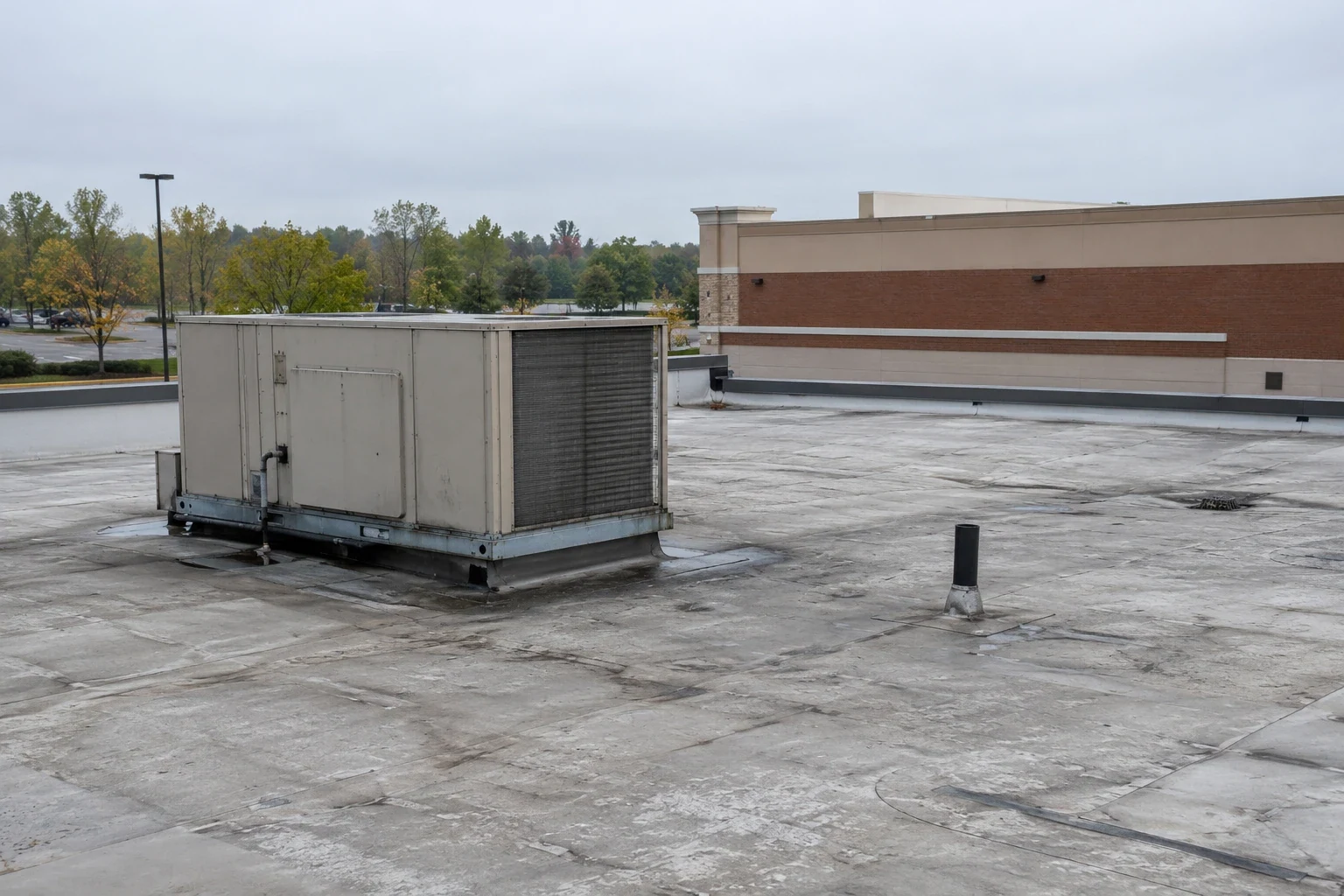
A grocery roof carries the refrigeration plant, and the plant makes ice. Condensers throw heat, melt snow and send water to the cold edge, where it refreezes. Drifts pile against the units. A frozen drain turns the next thaw into a leak over the produce aisle. Flagstaff snow totals 90 to 97 inches a year, so that is a winter routine.
Get the walk done ahead of the first big storm. Tell us which store, what the roof is and when it was last walked. Sag and drain checks get booked around deliveries and store hours.
Water over food is a safety event. A leak over open cases or a prep area can mean lost product and a health report. The plan lists what sits under every section and puts the sections over open cases and prep areas first.
Snow adds the weight. The one-day snow record is 35.9 inches, set February 21, 2019. After the late February 2023 storm the city reported several roof collapses and named sagging ceilings and bowing trusses among the warnings. A sagging ceiling over a sales floor is a structural flag. Clear the area, call the manager, then call an engineer and us.
Records protect the store. A dated photo of the roof, the leak and the repair shows an inspector or an insurer what happened and when. We write it up the same day: location, cause, product affected, work done and next step. The store keeps the copy.
A grocery store roof holds condensers, compressors' vents, exhaust fans and makeup air. The equipment is heavy and spread across the roof. Refrigerant lines and conduit cross the membrane. Each crossing is a penetration. Grocery stores line corridors like Butler Avenue, where Aspen Place at the Sawmill listed Whole Foods as its lead tenant in 2014.
A grocery roof has the wide field of a big-box store and the bakery and deli exhaust of a restaurant. Both loads land on one membrane.
Weight sits where the plant sits. Condensers and racks rest on rails or stands that spread load across the deck. When a stand shifts or the deck under it sags, the whole assembly tilts. We look at the supports and the roof under them, and report any movement to the owner and the refrigeration contractor.
Start with the equipment. Look at each condenser curb, stand and line. Check for loose fasteners, cracked sealant and damaged insulation on refrigerant lines. Ice on coils cuts capacity, and snow around a unit blocks airflow. Clear drifts and look for water running under the base.
Then check the drains. Test each one. Clear grit and ice. Find drift lines. Mark overflow scuppers on the plan and check their height. Each fall, shoot the roof from the same fixed positions. A commercial roof inspection runs in this sequence and returns a photo report to the store manager.
Look at the roof edge by the dock. Trucks, canopies and parapets make drifts and ice there. Check the edge metal, the drain nearest the dock and the flashing at the canopy. A leak by the dock can run along the deck and show up in the receiving area, where product waits in carts.
Precipitation totals 20 to 22 inches a year, with July and August monsoon storms supplying about a third. A downpour tests curbs and flashings. Winter melt tests drains and edges. Freezing starts in late September, and the lowest temperature on record is minus 30 degrees F.
Condenser heat opens bare patches in the snow. Water runs to the cold zone and freezes in a ridge. That ridge dams the next melt and backs water under flashings. We find the warm and cold patches after a storm, add drains or heat tape at the refreeze zones and repair the edge detail.
South-facing slopes shed snow first. Flagstaff averages about 78 percent of possible sunshine. North-facing sides hold snow and ice for weeks. A store with a north-facing dock sees the worst ice there. That side gets its clearing, snow guards and drain checks first.
Write the snow removal order ahead of the storm. Limit access to named, trained people. Keep to plastic shovels. Open the drains and drift lines, then the lanes between condensers. Keep loads even. Roof crews need fall protection and a marked way down. Close the entrance below before anyone clears the roof.
Repair crews schedule around truck deliveries and open hours. Noisy work waits for the early morning or the hours after closing. Materials are staged away from the receiving dock and the customer lot. Refrigeration contractors coordinate with us when lines or units must be supported or shut off. Each section is closed in at the end of the shift.
Tell the receiving manager and the store director before the work starts. A short plan names the sections, the hours and the contacts. The crew checks in daily and reports any change the same day.
Fix curbs, seams and flashings first. Wet insulation over wide areas points to a commercial roof replacement. A moisture survey and cores show the extent. Where grease or oil reaches the roof from bakery or deli exhaust, consider a sheet that resists it, such as PVC.
Plan the equipment. A replacement is a chance to raise curbs above the drift line, add walkway pads along service paths and tidy refrigerant line supports. Specify a system that tolerates cold, movement and ice. Keep a record of materials and methods in the building file.
When the job ends, run water at the drains, take new moisture readings and log both beside the fall photos.
Give each store a roof file with its type, age, last walk, open items and the spaces below each section. Rank by contents first, then age, then snow exposure. Spend on the worst first. Owners with stores across Butler Avenue and Lone Tree Road and the rest of the city should use one format. Phone in your address and last walk date ahead of the first storm.
Park deferred work on a short list that names the recheck month and the snowfall that moves it up.
Condensers give off heat that melts snow in patches. The water runs to cold areas and refreezes. That ridge blocks drains and backs water under flashings. Add drains or heat tape at the refreeze zones.
Cover product, close the area and call us. We trace the entry, make it safe and document it with photos for your records. The permanent repair is planned around deliveries and store hours.
Rarely. Sections are opened one at a time, the sales floor stays protected and staging sits clear of the dock. The loudest steps happen before opening or after closing. Refrigeration contractors coordinate with us when lines need support.
A trained crew with fall protection. Clear the drifts around the units first. Use plastic tools and avoid hitting coils or lines. Never let store staff on a snowy roof without training.
Replacement fits when wet insulation keeps spreading, seams open in rows or patches fail again and again. A survey and cores size the wet area. Get both before you decide.
Browse the services, roof systems and building types we work with across Flagstaff and nearby Arizona communities.
A walk of the roof with photos, findings and a written scope.
Active leaks, storm damage and blocked drains get a fast response.
Roofing across Flagstaff and nearby Arizona communities.