
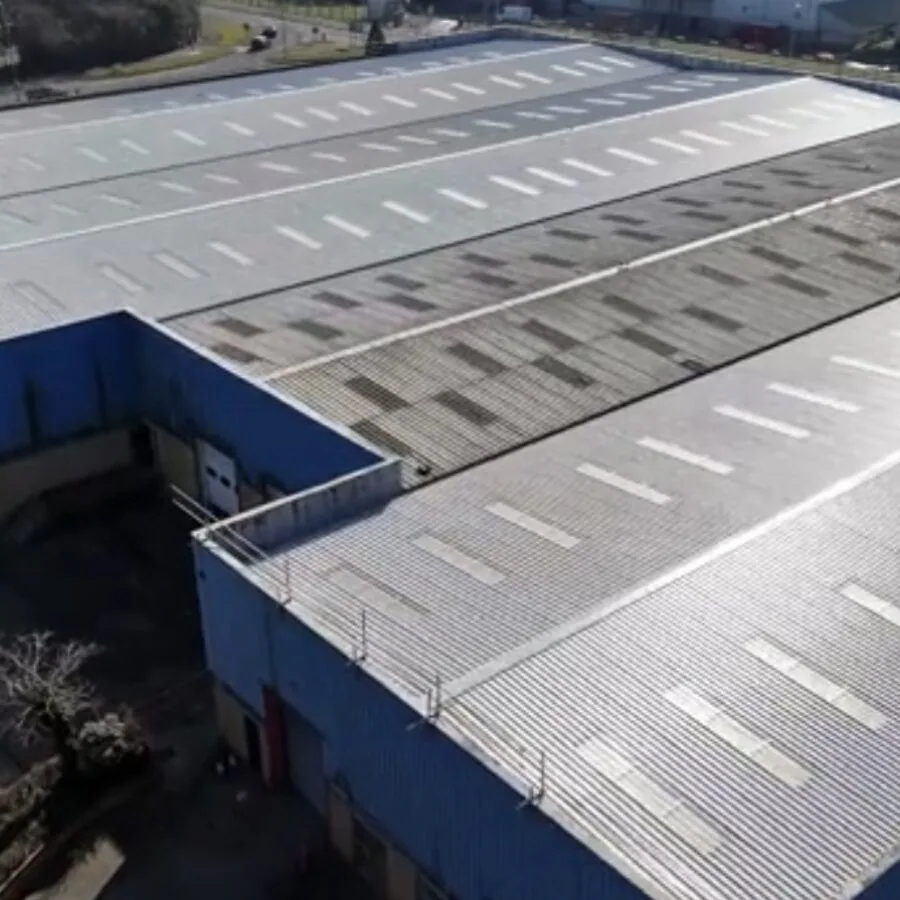
A big-box roof is one wide span with a lot of snow on it. The deck is long, the supports are few and the drains are far apart. When the thaw comes, water has a long way to travel and a lot of places to freeze. In Flagstaff, AZ, that span carries 90 to 97 inches of snow a year, and the sales floor sits right under it.
Get us up there before the first heavy storm. Give us the store address, the roof type and the date someone last walked it. We fit the sag and drain checks around trading hours.
Big boxes are built for open floor. That means long spans carrying snow with little help from interior walls. The local one-day snowfall record is 35.9 inches, set in February 2019. Several roofs collapsed after the late February 2023 storm. Officials asked owners to watch for sagging ceilings and bowing trusses before the leaks showed up.
Store staff should know that list. A sagging ceiling grid, a stuck door or a new crack over the sales floor is a structural flag. Clear the area, keep customers out and call the manager. The manager calls an engineer and us. Roofing work cannot fix an overloaded structure.
Weight shifts during a storm. Wind blows snow off the windward side and piles it on the lee side, so one half of a roof can carry far more than the other. Uneven load is harder on the structure than an even one. We note which side holds snow and recommend clearing in a pattern that keeps the load balanced.
Large retail clusters near the I-40 exits, and Butler Avenue is one of them. The Butler Avenue exit on I-40 is exit 198. Aspen Place at the Sawmill, with Whole Foods as its lead tenant as of 2014, sits on that corner, and Flagstaff Mall in East Flagstaff is a single-story center with 62 stores. Each box has its own roof, its own age and its own history of repairs.
Where many tenants share one roof, the problem turns into shopping center roofing, and a grocery store adds refrigeration load on top. Big boxes often have both a large field and heavy rooftop equipment.
Dock edges and garden centers add more roof types. A garden center canopy, a loading dock roof and a main box roof can all meet at different heights. Each junction holds snow and ice, and each is a leak path. We mark every junction on the roof plan and check them first.
Start with drains. A big roof can have many. Test each one. Clear grit and ice. Look for overflow scuppers and check their height. Then check rooftop units. They are the largest source of penetrations. Look at curbs, sealant, panels and condensate lines. Snow drifts on the lee side, then freezes.
Walk the parapet and the dock edge. Check coping, counterflashing and edge metal. Find the drift lines on the plan. Photograph everything from fixed points in fall. Our commercial roof inspection gives the store manager a report with photos and a ranked list.
Look inside as well as outside. Stains on ceiling tiles, damp corners and rust on sprinkler heads tell you where water has been. Compare them with the roof plan. Most leaks make sense once the interior map and the roof map sit side by side. Photograph both with dates.
A third of Flagstaff's 20 to 22 inches of yearly moisture comes with the July and August monsoon, and a wide roof gathers a lot of it fast. A downpour tests drains and flashings fast. Winter melt tests them over weeks. Nights drop below freezing from late September on, and Flagstaff has recorded minus 30 degrees F.
Ice forms first on eaves and canopies, the cold edges of a heated box. A ridge of ice dams the next melt and backs water under edge metal. Over a sales floor, a drip lands on stock and shoppers. We fix the detail at the edge and the drain, then recheck after the next thaw.
Sun and wind matter here. Sun shines about 78 percent of the possible hours, so south slopes clear early. North-facing parapets and canopies keep their snow and ice longer. On a box with a north-facing dock, that dock edge ices up worst. Plan guards and clearing for that edge first.
Settle the snow removal plan before the storm arrives. Decide in advance who is allowed on the roof. Plastic blades only, because metal cuts the sheet. Start at the drains and the drift zones. Keep loads even. Every person on the roof wears fall protection and knows the way down. Never push snow onto an entrance or a cart corral without closing it first.
Roof repair works around store hours. Loud steps move to early mornings or after close. Staging stays out of customer parking and fire lanes. Holiday weeks stay clear. Each shift ends with the roof closed in, so an overnight storm never meets an open deck.
Several trades share the roof, so one set of site rules covers all of them. Crews wear fall protection, keep tools tied off and mark open edges. Store staff stay clear of the work zone. A contact on site answers questions during the job and reports any change in the schedule the same day.
Fix curbs, seams and flashings first. Where wet insulation runs across wide areas, plan a commercial roof replacement. Moisture mapping and cores show how far the wet runs. A recover works only on a dry roof that can carry another layer, and with this much snow the spare capacity is small.
On a wide flat field, single-ply sheets are a common pick. A welded sheet such as TPO suits a wide, flat field, and the attachment pattern matters in wind and snow. Add cover board where foot traffic is heavy. File the materials and methods in the store's roof record.
Prove the finished roof with water at the drains and a new moisture reading. Log both against the baseline scan.
Give each store a roof file: system type, age, last walk, open items and drift lines. Rank stores by age, wetness and snow exposure. Budget a replacement for the worst before it fails. Owners of several boxes along Butler Avenue and Lone Tree Road and the I-40 corridor should use one format. Ring us before the first storm. Have the address and last walk date ready.
Each deferred item carries a recheck date on the list, so nothing small gets forgotten until the next storm.
A sagging ceiling grid, a door that sticks, a new crack or a drip in a new spot. City officials listed these after the February 2023 storm. Clear the area, keep customers out and call an engineer and us.
Usually. Work in sections, protect the floor below and stage away from parking. Loud steps move to early hours or after close. We close the roof in each shift.
One with training, fall protection and a written order of work. Work from the drains outward, keep the load balanced and leave metal blades in the truck. Do not let store staff on a snowy roof without training.
Curbs shift, sealant cracks and drifted snow packs against them. Check each curb in fall and clear drifts after each storm. Update the plan whenever a unit is added or moved.
Replace when wet insulation spreads over wide areas, seams open in rows or repairs keep coming back to one section. A moisture survey and a few cores make the call clear.
Browse the services, roof systems and building types we work with across Flagstaff and nearby Arizona communities.
A walk of the roof with photos, findings and a written scope.
Active leaks, storm damage and blocked drains get a fast response.
Roofing across Flagstaff and nearby Arizona communities.