
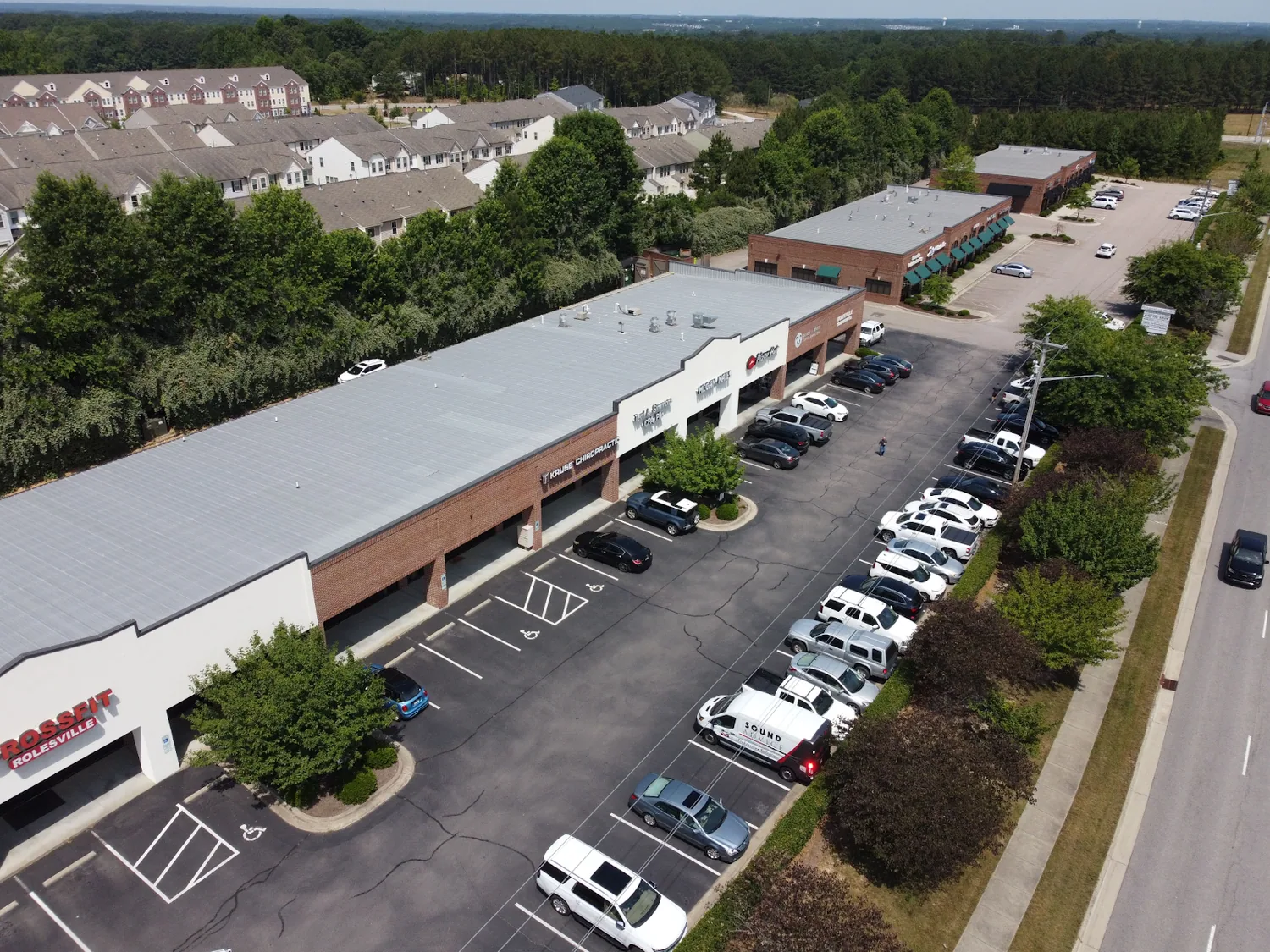
A strip center roof has one long drift line behind the parapet. Snow packs there, the drains sit in it and every tenant shares the result. When the thaw comes, one frozen drain can wet six storefronts. In Flagstaff, AZ, where winter parks snow on roofs for months, a strip center runs that risk from the first storm to the last thaw.
Phone ahead of the season's first big snow with the center's address, the roof material and the date it was last walked. The sag and drain checks go on our schedule, and tenants get a short note from us.
Retail roofs are shared. A leak over one unit may start in another. A drain that serves four tenants can fail all four at once. So the first job is to find the entry point and the path, not just the stain. We trace water along the deck with moisture scans and mark the result on a plan.
Snow is the load behind it. The single-day record of 35.9 inches came on February 21, 2019. After the storm of February 28, 2023, the city's list of overload signs began with ceilings that droop and trusses that bow, then severe leaks. A tenant who spots a sagging ceiling tile clears the area and tells the manager. The manager brings in an engineer and us.
Tell tenants what the roof is doing. A short notice before winter, with the drain plan and a contact number, cuts repeat calls. After a leak, send the date, the cause and the repair. Tenants who get facts fast tend to report the next drip sooner.
Flagstaff Mall, opened in 1979, is a 347,000 square foot single-story center with 62 stores. Butler Avenue, where Aspen Place at the Sawmill sits, carries more retail near the I-40 exit. Downtown has older storefronts with parapets and brick walls. We measure and draw each roof on its own plan before pricing anything.
A large single tenant brings the questions of a big-box retail roof, and a restaurant pad brings grease and exhaust like a restaurant roof. Many centers hold both inside one roof line.
An older center can carry several roof ages under one line, since sections often get replaced one at a time. The join between an old section and a new one is a favorite leak spot. We mark every join on the plan and check it first on each walk. A newer sheet welded to an older one can pull at the seam when temperatures swing.
Walk the parapet line. Check coping, counterflashing and sealant. A gap lets water into the wall, where it freezes and spalls. Test every drain and overflow scupper. Clear grit. Find the drift lines behind the parapet and around units.
Then check rooftop units and vents. Tenants add them over time, and each addition is a new curb and a new leak path. Update the roof plan with every change. Look for cracked sealant, loose panels and ice-damaged lines. A curb that cracks or settles needs curb and support repair before the next unit gets added.
Clear roof drains and scuppers twice a year, and test them. A drain that serves many units is the single point of failure for a strip. Add an overflow scupper at the right height, so water has a second way out. Mark the drain locations on a card at the roof hatch, so a snow crew knows where to dig first.
About a third of Flagstaff's yearly moisture comes with the July and August monsoon. A cloudburst tests flashings and drains in minutes, and winter melt tests them over weeks. The first freeze returns in late September, and the coldest recorded night hit minus 30 degrees F.
Ice forms along eaves and over storefront canopies. It hangs over entrances and falls in sheets. Add snow guards, heat cable and a clearing routine. Close the walk below before anyone clears the roof. A fall of ice onto a customer is a claim you can prevent.
The sun helps. Sun shines about 78 percent of possible hours here, which strips snow off south-facing slopes while north-facing ones stay loaded for weeks. A center with a north-facing storefront row sees the heaviest ice at its canopy. Plan clearing and guards there first.
Settle the snow plan before the storm arrives. One named person leads, and plastic shovels protect the sheet. Drains and the drift line behind the parapet go first, and the removal stays balanced across the roof. Roof crews need fall protection plus an exit path that stays clear. Never push snow off the roof onto a walk without closing it first.
Roof repair works around business hours. Loud steps move to early mornings or after closing. Staging stays out of customer parking and fire lanes. Tenants get notice with dates, hours and a contact. A single point of contact keeps the center running.
Holiday season changes the plan. Avoid roof work in the busiest weeks, and keep a crew on call for emergencies. A leak during a sale is a bigger problem than the same leak in January.
Fix curbs, seams and parapet flashings first. Where wet insulation covers a wide stretch, a commercial roof replacement is the likely answer. Cores and a moisture scan map the damage. A recover over a dry, sound roof can work, though a deep-snow site leaves little spare capacity for another layer.
Divide the scope into common-area roof work and tenant items, so each lease carries its own share of cost. File the materials and methods with the building records. Owners with centers across Butler Avenue and Lone Tree Road and downtown should use a single format across the whole portfolio.
Warranty paperwork needs a read before work. Snow removal and tenant equipment can void coverage if done wrong. Log every visit and every change, and keep the file where the next manager can find it.
Walk the roof in fall and after the thaw. Log every leak with date, unit and cause. Rank centers by age, drift exposure and tenant impact. Spend on the worst first. Put the next walk on the calendar before you leave the roof. Before the first storm, call with the address of each building and the date of its last roof walk.
The lease decides, and the entry point decides the facts. We trace the water, mark the entry on a plan and photograph the shared detail. That record lets the manager and the owner sort out responsibility.
Add snow guards at eaves over entrances, use heat cable where ice builds and fix the edge detail. Close the walk before anyone clears the roof. Clear on a routine, not only after a complaint.
Usually. Work in sections, stage away from customer parking and move loud steps to early hours or after close. Tenants get notice with dates and contacts.
Each new unit, vent or line adds a penetration. Update the roof plan with every change, and have the curb flashed before the equipment sets. That keeps a leak path from being built into the roof.
When wet insulation spreads widely, seams open in rows or one section keeps leaking after repairs. A moisture survey and a few cores show the extent. Get both before you decide.
Browse the services, roof systems and building types we work with across Flagstaff and nearby Arizona communities.
A walk of the roof with photos, findings and a written scope.
Active leaks, storm damage and blocked drains get a fast response.
Roofing across Flagstaff and nearby Arizona communities.