
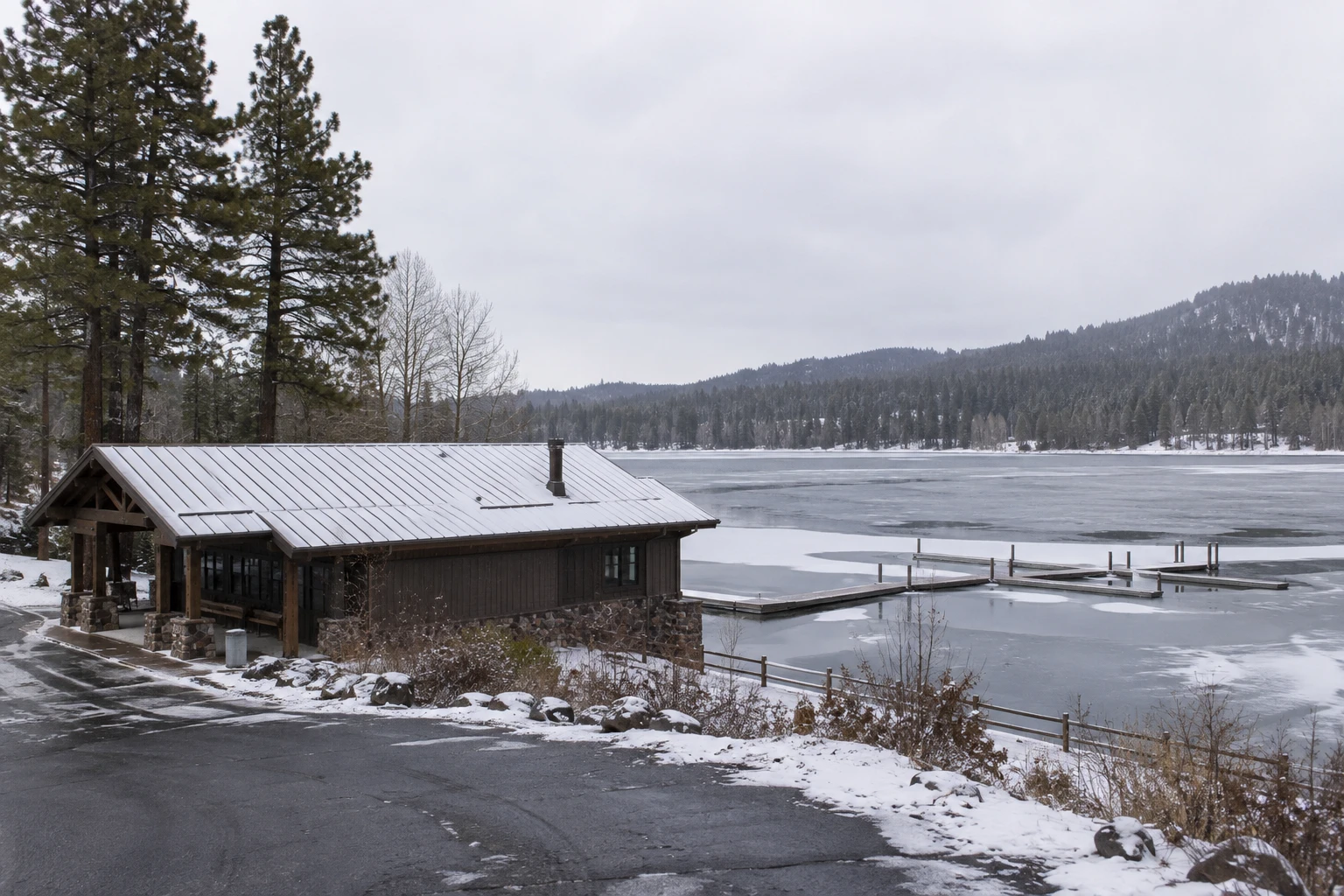
Public-use roofs fail in the off-season, when nobody is looking. Upper and Lower Lake Mary are reservoirs southeast of Flagstaff, at about 6,895 feet, and facilities at both lakes are maintained under the Coconino National Forest. Commercial Roofing Flagstaff works on commercial roofs in the Lake Mary area, AZ, reached by the I-17 exit 339 ramp at Lake Mary Road, a northbound exit toward Mormon Lake. A seasonal building of any kind fills in one season and sits under snow in another.
The roof plan follows that pattern. Close the building well, check it in winter and open it right.
A building with a visiting season needs three roof visits, not one. A closing walk in fall clears drains, tightens flashing, resets edge metal and records the roof's condition before snow. A winter check, by a caretaker or by us, looks for sag signs, ice ridges and frozen drains. A reopening walk in spring repairs what winter opened.
Each visit adds to a dated photo record. When a leak appears at reopening, the record shows whether it began in the last storm or the one before. That record matters for owners who answer to a board, an agency or an insurer.
Our preventive maintenance calendar sets those visits in advance. The owner does not have to remember that a fall walk is due the week before the first hard freeze.
Hatches and doors deserve a line in the closing list. A roof hatch left unlatched lets wind drive snow into the stair, and a skylight dome with a crack fills with ice. We check latches, domes and curbs on the walk and mark any that need work before the building shuts.
Planning starts from Flagstaff, where a year brings 90 to 97 inches of snow and one day in 2019 (February 21) set a record of 35.9 inches. The Lake Mary reservoirs sit at about 6,895 feet, close enough that a roof here should be planned for heavy snow. We map drifts and check drains and sag on the specific roof instead of relying on a single figure.
By March 2, 2023, the storm that arrived February 28 had left 24.5 inches in some Flagstaff-area neighborhoods. The city tied several collapses to snow load and published a warning list: sagging ceilings, bowing trusses and severe leaks. A building shut in February has nobody inside to spot them, so a caretaker should look weekly.
City and county staff jointly answer a phone line about structural roof trouble after heavy snow. A sagging ceiling is the cue to call the line and an engineer before any roofing starts.
A building maintained under a public agency, as the facilities at both lakes are under the Coconino National Forest, can carry rules that a private building does not. Purchasing steps, insurance requirements, safety standards and approvals set the schedule as much as weather does. We ask at the first call who approves the work, what documents they need and when funding opens.
That information changes the plan. A job that needs approval in spring and a purchase order in early summer can still be built in fall, if planning starts early. A roof that fails in February can be dried in at once, with a temporary measure, while paperwork moves toward the permanent repair.
We write scopes in a form that procurement can use: measured areas, quantities, systems named by type, cost drivers listed and options priced separately. The condition report from the first walk is the base document.
Cold in Flagstaff has reached minus 30 degrees F, and the first freeze returns each late September. A roof near the lakes cycles through the same freeze and thaw. Meltwater refreezes at the eave and builds a ridge that holds the next thaw behind it. A drain that freezes turns the roof into a pond.
We reduce the risk with a short list. Clear and test every drain and scupper. Add heat trace to lines that freeze. Reset edge metal so water leaves cleanly. Seal flashing with products that stay flexible in the cold. Mark slide paths over doors and walkways and add snow guards where a slide could injure someone.
When the cold still wins, our snow and ice damage repair work finds what opened, repairs it and records the cause so the same failure does not repeat.
The right system depends on the building. A standing seam metal roof sheds snow and resists wear, and it needs snow guards and a slide plan. A welded single-ply membrane such as TPO suits a low-slope roof with good drainage. A metal roof retrofit can go over an old roof where the framing is sound and avoids tear-off.
Moisture testing decides the path. Dry insulation keeps a coating, a recover or a retrofit on the table. Wet insulation comes out. We test before we recommend, and we price every option with its cost drivers: access, equipment, tear-off depth and the weather window.
Roof work fits between late spring and early fall, and the July and August monsoon breaks that window into pieces. With about a third of Flagstaff's yearly moisture arriving in the monsoon, large jobs are booked early.
On agency work, durability and ease of repair weigh as much as first cost. A system that a small crew can patch in cold weather, with materials that are easy to stock, beats a specialty system that needs a distant crew. We name those trade-offs in the options so the decision-maker sees them.
The route from I-17 runs along Lake Mary Road toward Mormon Lake, so a trip can serve nearby owners. Happy Jack sits on Lake Mary Road, and the same exit points toward Mormon Lake, which lets us group visits into one run. Emergency calls come in at any hour, and an active leak gets a temporary dry-in once the roof can be walked.
With a fall closing walk. That walk clears drains and gutters, tightens flashing and edge metal, probes seams and photographs the roof. Then a caretaker checks ceilings and doors weekly for sag signs. A spring reopening walk repairs what winter opened, and the dated photos show when each problem began.
Whatever the managing agency requires: purchasing steps, insurance certificates, safety plans and approvals. We ask at the first call who approves the work and what documents they need. We supply measured areas, quantities, system types and priced options in a form that procurement can use.
Yes, with a temporary dry-in. We cover the open area, secure it for wind and snow and document it as temporary. The permanent repair follows when approvals and funding are in place, and the photo record from the dry-in supports the request.
Plan as though they do. Flagstaff takes 90 to 97 inches in a year, and the Lake Mary reservoirs sit at about 6,895 feet. The actual load depends on the building's shape and drifts. We map those on the roof and use Flagstaff's record as the planning ceiling.
Much less. A walk takes a few hours, and the work it triggers is small: cleared drains, sealed flashing, reset edges. A repair after a winter leak involves wet insulation, a larger area and a crew traveling in poor weather. Cost drivers differ by roof, and we list them after the walk.
Browse the services, roof systems and building types we work with across Flagstaff and nearby Arizona communities.
A walk of the roof with photos, findings and a written scope.
Active leaks, storm damage and blocked drains get a fast response.
Roofing across Flagstaff and nearby Arizona communities.