
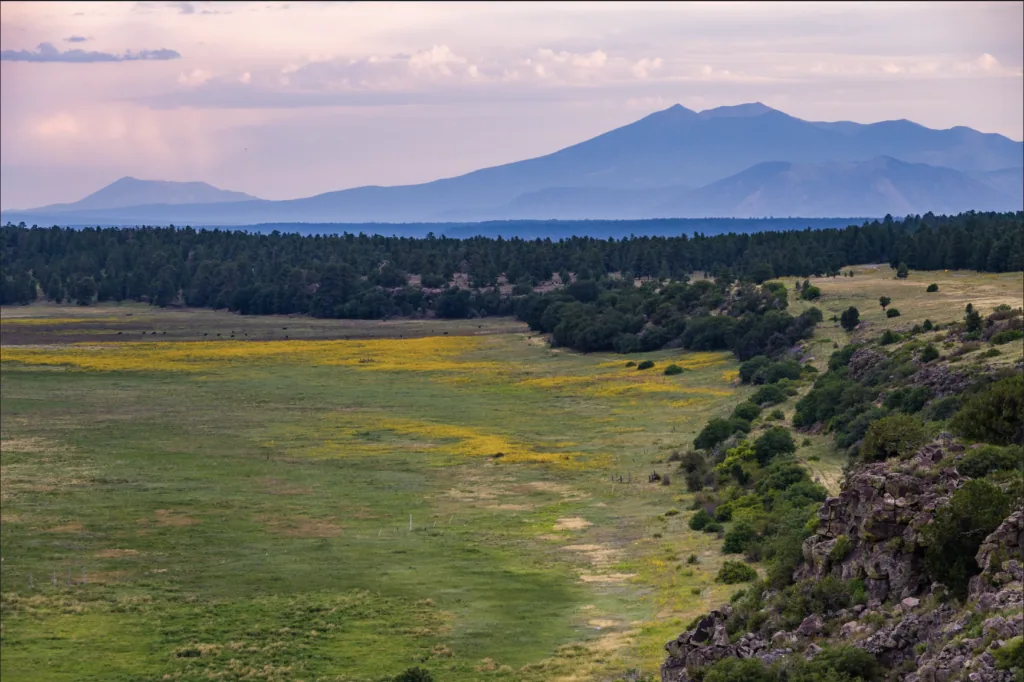
Mormon Lake sits at 7,136 feet, a little above Flagstaff, and a roof there is planned for a long cold season. Commercial Roofing Flagstaff works on commercial roofs in Mormon Lake, AZ, an unincorporated community in Coconino County with 90 residents in 2020. Mormon Lake Lodge is the community's main business, and its schools belong to the Flagstaff Unified School District. A roof in a place this small has no margin: one clogged drain, one open seam, one missed sag reading and the owner learns about it from a ceiling.
So the plan is simple. Walk the roof before the snow, check the load during it and repair what it opened after.
Mormon Lake is a small community at about 7,136 feet. Few residents means few passersby, and a commercial building can sit quiet for days. Guests come and go, and the roof works through every day of the year.
That setting calls for four habits. Look at the roof on a schedule, not by chance. Keep drains and gutters clear before snow falls. Measure sag when the snowpack is heavy. Keep a temporary dry-in plan ready for a leak that opens in a storm.
We build those habits into a preventive maintenance program with fall, post-storm and spring visits, so the owner does not have to remember each one.
The first walk records what the building actually has: the roof system, the age, the attachment and the drainage. From that record we write a ranked list: fix now, watch, or wait. Lines are tagged patch or fix, and the price notes list what moves cost: reach, equipment, how deep the tear-off goes and the next dry window.
Flagstaff's hard numbers are the nearest reference: a 35.9 inch single day on February 21, 2019, inside a normal year of 90 to 97 inches. Mormon Lake is slightly higher, so those figures are the starting point for a roof there. We confirm what a specific roof carries by mapping drift lines and checking drains and sag.
After the late February 2023 storm, Flagstaff officials reported roof collapses under snow load. The signs to watch from inside are a dipping ceiling, a bowing truss and a leak that turns severe. In a building that is not used all winter, those signs can develop with nobody present, so a caretaker or manager should look for them each week.
Flagstaff and Coconino County staff a shared phone line for structural roof concerns after heavy snow. If you see sagging, call that line and an engineer before any roofing work, and call us for the roof side.
Flagstaff sees its first freeze in late September and has dropped to minus 30 degrees F, and a roof at 7,136 feet is planned for that cold. A roof in the same high country cycles through freeze and thaw all winter. Meltwater runs under the snow, reaches the roof edge and refreezes, building a ridge of ice that traps the next thaw behind it.
That ice finds the weak points. A lap with a thin bond lifts. A flashing joint opens a hair and widens. A drain freezes and the roof ponds. By March the damage is visible on a ceiling.
We reduce the risk in three steps. Clear and test drains in the fall. Add heat trace where lines freeze each year. Seal flashing and edge details with products that stay flexible in the cold. Our snow and ice damage repair work picks up what winter still manages to open.
Ice also hangs. Icicles and ice sheets at an eave let go without warning, and they land on walkways, entries and parked cars. Where the walk finds a roof edge over a door or a path, we recommend snow guards or a relocated walkway, and we mark the spot so staff know to keep clear.
A lodge or a guest building is a different kind of roof customer. A leak over a guest room takes the room out of service. A leak over a dining area stops service. A leak over a kitchen can cost a day of sales.
So priorities follow use. Roofs over occupied rooms rank first. Roofs over storage rank later. We write those priorities into the repair list, so a limited budget goes where a failure would cost the most. The same ranking applies to hotel roofing and restaurant roofing.
We schedule around guests. Noise, fumes and debris stay away from rooms and patios. Each section is closed watertight at day's end, and the crew keeps the work zone clear of walkways.
Rooftop equipment on a hospitality building adds its own list: kitchen exhaust fans, water heater vents and heating units, each with a curb or boot that needs flashing and a seal that survives the cold. We check each curb and each penetration, since a failed boot over a guest room is a leak waiting for the next thaw.
The working season is short. Late spring through early fall is the window, interrupted by the July and August monsoon, which supplies roughly a third of Flagstaff's annual 20 to 22 inches of precipitation. Adhesives, welds and sealants need dry surfaces and workable temperatures, so major work is booked early.
Distance adds planning. A crew from Flagstaff brings the lift, the bin and the materials in one load, so staging happens ahead of the trip and the forecast gets confirmed first. Storm calls are taken at any hour, and a leak is covered first with a temporary dry-in while the permanent fix waits for a dry window.
An owner with a second building in Happy Jack or Lake Mary can have both roofs walked in a single outing.
Plan as if it does, with one adjustment. Flagstaff's yearly average of 90 to 97 inches is the working reference, and Mormon Lake is a little higher at 7,136 feet. The adjustment is the roof itself: we map drifts, check drains and watch for sag, and Flagstaff's record sets the ceiling for the plan.
Ceilings for sagging or new stains, doors and windows for sticking, and wall tops for new cracks. After the 2023 storm, Flagstaff officials pointed to dipping ceilings, bowing trusses and severe leaks. If one shows, keep people out, get an engineer in and bring us in for the membrane.
Often, yes. We work in sections, close each one watertight every evening and keep noise and fumes away from guest areas. The best timing is the quieter season, when fewer rooms are booked, and we plan with the manager around events and arrivals.
Our line stays open all day and night, and a leak in a storm gets a temporary dry-in once a crew can stand on the roof. Distance and winter roads can add time, so we stage crews and materials before forecast storms when we can, and we book the permanent repair for a dry window.
On a drain that freezes every winter, yes. Heat trace keeps a channel open through the thaw, which prevents ponding and ice ridges. It costs little next to a leak. We install it with the right cable and controls and test the system in fall before snow arrives.
Browse the services, roof systems and building types we work with across Flagstaff and nearby Arizona communities.
A walk of the roof with photos, findings and a written scope.
Active leaks, storm damage and blocked drains get a fast response.
Roofing across Flagstaff and nearby Arizona communities.