
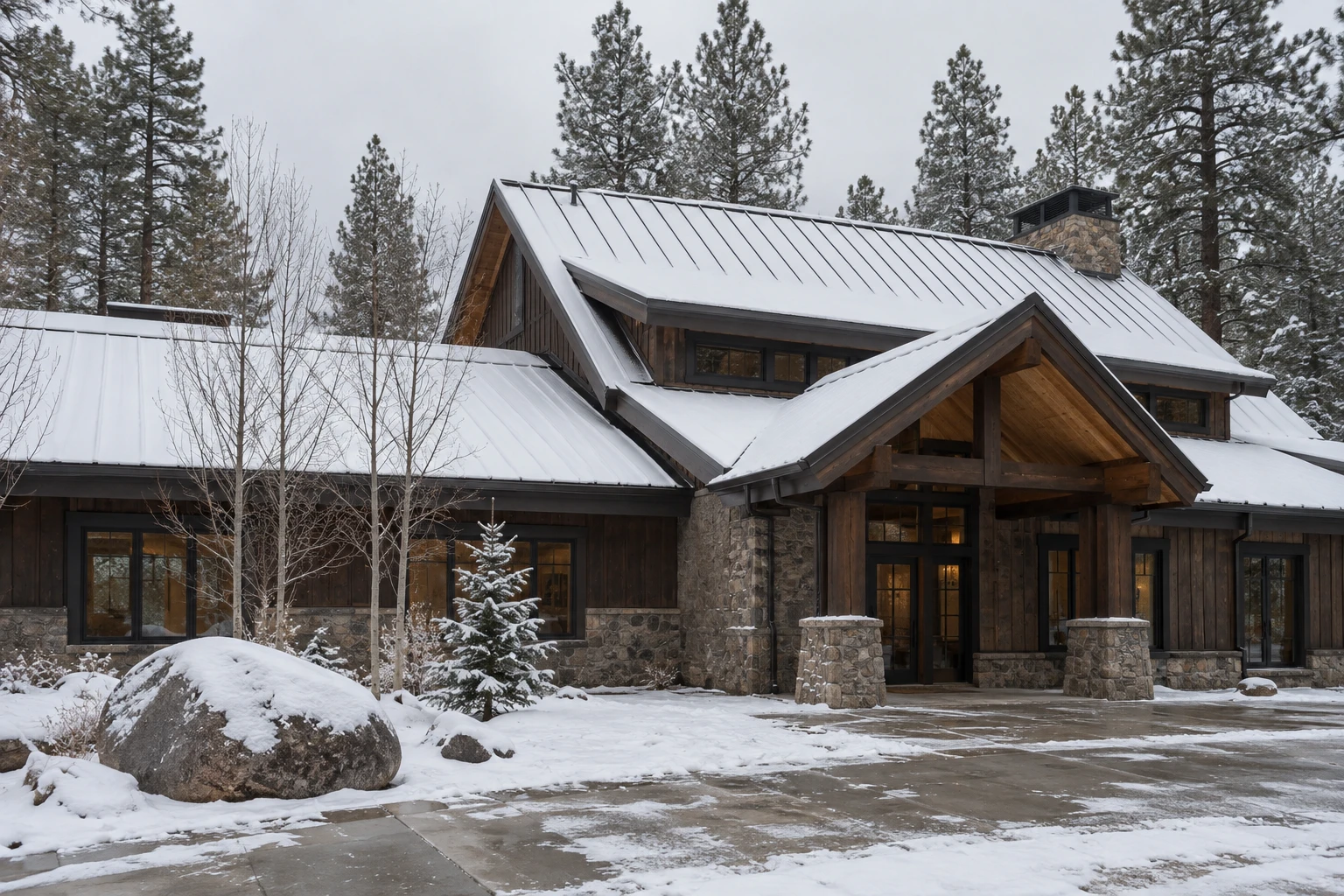
Altitude does not forgive a weak roof. Happy Jack sits at 7,493 feet on Lake Mary Road southeast of Flagstaff, in the Mogollon Rim region of Coconino County, about 500 feet above the city. Commercial Roofing Flagstaff works on commercial roofs in Happy Jack, AZ, an unincorporated community and campground area that peaked at about 500 people. The community also hosts the Lowell Discovery Telescope.
We plan roofs here from the heaviest winter in the service area. The first check is the load, because a deck that sags under snow cannot be fixed with a surface repair. The second is the drain.
The city's snow record, 90 to 97 inches a year near 7,000 feet, is the floor for planning up here. Happy Jack stands higher, at 7,493 feet, so no roof there is planned for less than the city's load. The actual load on a given roof comes from mapping drifts and checking drains and sag, and we do not rely on one number.
In Flagstaff, minus 30 degrees F is the record low, and the first freeze arrives in late September. A roof on the Rim faces a long cold season too. Expect freeze-thaw cycles, ice at the edges and a short window for roof work, which needs dry surfaces and workable temperatures.
Flagstaff's late-February 2023 storm had 24.5 inches down in places by March 2, and officials counted roofs failing under the weight. Their checklist for owners was a ceiling that sags, a truss that bows, a leak that gets worse. Those signs apply at any height.
Spring is a second load. A slow melt on a roof that ponds puts water weight on a deck that carried snow all winter. We schedule the spring walk after the thaw, not before.
Small buildings of any kind, whether restrooms, shelters, storage, service sheds or a few commercial structures, share one risk: a small span can still fail under a drift.
We check each type for its own weak points. A metal roof needs a fastener check, seam sealant and a snow slide plan over doors and paths. A low-slope roof needs drains, flashing and a sag reading. A small shed with a thin deck needs its structure looked at before anything is added to the surface.
Because the buildings are small, the repair is often cheap. A roof that is cleared, sealed and fastened before winter costs a fraction of one that leaks through March. A standing seam metal roof or a metal roof retrofit suits many small buildings where a longer service life is the goal.
Condensation is the quiet problem in a cold small building. Warm interior air meets a cold metal panel or deck and drips back down, and the drip looks like a roof leak. We check the underside of the roof for rust staining and wet insulation, test whether the vent path works and separate real leaks from condensation before recommending any roof repair.
Happy Jack hosts the Lowell Discovery Telescope, and a building with instruments under its roof is the clearest case where a leak costs more than a stain. A roof over equipment like that gets a stricter plan, because the damaged item is an instrument and not a ceiling tile.
For any building with sensitive equipment under the roof, we change the process. We map the equipment, plan tarps and drains over it and schedule work for dry windows. Temporary protection goes up before the old roof comes off, and we keep the open area as small as the work allows. A commercial roof inspection before winter identifies the weak points while there is still time to fix them.
Moisture detection helps too. An infrared moisture survey finds wet insulation before it shows inside, which matters most when what sits below is costly to replace.
High elevation concentrates three winter problems. Ice builds a ridge at roof edges and holds meltwater behind it. Drains freeze and turn a thaw into a pond. Snow on smooth metal slides all at once, and it lands on whatever sits below.
The fall walk addresses each one. We clear and test drains and scuppers and add heat trace where lines freeze. We look at edge details, because a poor edge makes an ice ridge worse. We mark slide paths over doors, walkways and vehicles, and we recommend snow guards where the risk is real.
Through the winter, an active leak gets a temporary dry-in at any hour, as soon as the roof is safe underfoot. In spring, we repair what the cold opened, using the snow and ice damage repair approach and documenting each fix.
Lake Mary Road is the way in. A crew from Flagstaff hauls the lift, the bin and the materials together, and winter roads can slow the convoy. We stage supplies ahead of a forecast storm and book larger jobs between late spring and early fall, though the July and August monsoon cuts into that window. A monsoon thunderstorm can halt a job without warning, since about a third of Flagstaff's yearly moisture arrives that way.
Owners near Lake Mary and Mormon Lake are on the way, which lets one run reach several roofs. A maintenance program sets the fall and spring walks in advance, which keeps the calendar from slipping.
On small jobs, access drives cost more than roof area does. A short roof that needs a lift, a bin and a long crew drive can cost nearly as much as a longer roof near town, so we bundle tasks into one package. The walk records every driver: access, equipment, tear-off depth and the weather window.
Plan at least as heavy as Flagstaff, where the yearly snowfall of 90 to 97 inches is recorded near 7,000 feet. The actual load depends on the roof's shape, drifts and structure. We map drift lines, check drains and measure sag, and we tell the owner when a roof needs an engineer's review.
Yes. Fasteners back out, sealant dries and snow slides in sheets. A short fall walk covers fasteners, laps, edges and slide paths. It costs little and prevents most winter failures. We also check the structure, since a small roof can sag under a drift.
The process. We map the equipment, plan temporary protection before tear-off and keep the open area small. Work is scheduled for dry windows, and we use moisture detection to find leaks early. A leak over equipment is more costly than a stain, so the roof gets stricter care.
Usually, with planning. Lake Mary Road is the route, and winter conditions can add time. The emergency line runs all day and night, and an active leak gets covered first, once the roof is safe to stand on. Permanent repairs wait for a workable window.
When the structure is sound and the old roof is worn, often yes. A retrofit adds a new standing seam system over the old one, avoids tear-off and sheds snow well. It needs framing that carries the load and snow guards over entries. We check both on the walk.
Browse the services, roof systems and building types we work with across Flagstaff and nearby Arizona communities.
A walk of the roof with photos, findings and a written scope.
Active leaks, storm damage and blocked drains get a fast response.
Roofing across Flagstaff and nearby Arizona communities.