
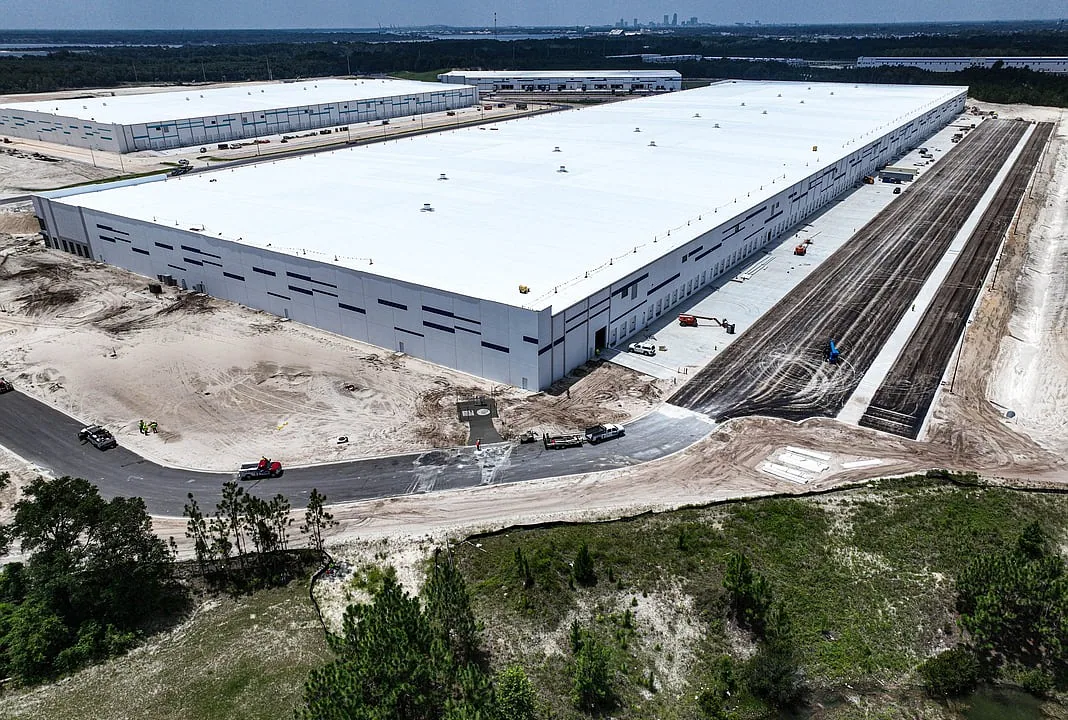
Snow decides a warehouse roof here, and a wide, low-slope deck holds a heavy pack. A Flagstaff, AZ warehouse sits at 7,000 feet, where the average winter leaves feet of snow on it. The deck holds that weight for weeks. Then the thaw sends it to drains that may be frozen shut. So the first check is not the membrane. It is the deck, the drains and the drift lines. Walk them before the first heavy storm, not after.
Ring us with the warehouse address, what covers the roof and the day it was last walked. The sag and drain checks get planned from that call.
A warehouse roof is a long span with few supports. That is cheap to build and unforgiving under snow. The February 28, 2023 storm put 24.5 inches of snow on some parts of Flagstaff, and the city later reported roofs collapsing under that load. Its signs of trouble were sagging ceilings, bowing trusses and severe leaks.
Treat those as structural flags, not leak complaints. A door that sticks in winter and frees in spring may be a roof that bends under load. We note it, tell the owner and recommend an engineer where the signs are real. Roofing work does not fix a structure that is overloaded.
A heavy winter leaves snow and ice roof damage. Know what that looks like before the first storm: cracked membrane at drift lines, torn flashing at walls, bent edge metal and ice-damaged drains. Photos of the roof in fall make winter damage easy to prove.
Five industrial parks cluster near I-40 and I-17 in Flagstaff. Southside and Mike's Pike hold metal and concrete industrial buildings. Bellemont, about 11 miles west-northwest on I-40, includes Camp Navajo, an industrial park and munitions storage site run by the Arizona Army National Guard. Camp Navajo's igloo storage structures and Mike's Pike's boxy buildings give two very different roof problems on one highway.
Metal buildings are common. Their panels shed snow in sheets, and that load lands on whatever sits below. Low-slope membrane roofs hold snow in place. Both need a plan for what comes off and where it goes. A distribution center roof adds dock doors and long walls that collect drifts.
Owners of flex industrial buildings, with office frontage and warehouse behind, carry two roofs under one name. The office side often has a flat roof and a mechanical well. The warehouse side has the long span. Treat them as separate roofs in the file, because they hold snow and fail in different ways.
Do the walk early in September, ahead of the first freeze. Clear every drain and scupper. Look at the seams, the edge metal and the flashings. Find the drift lines behind parapets, rooftop units and any taller wall. Snow piles there deepest, so the deck there carries the most.
Pull a few fasteners on metal roofs. Loose screws let panels move, and moving panels open the laps. Mark weak areas on a plan. Then take photos from fixed points, so next year's walk compares like with like. A commercial roof inspection runs in this same order and ends with a written report.
Check roof drains and scuppers twice. Once in fall, for leaves and grit. Once after the first thaw, for ice. Drains in a mechanical well or against a parapet are the worst. Snow packs there and freezes. Heat tape or a cleared path keeps one outlet open when the rest ice over.
Of Flagstaff's yearly moisture, one share in three arrives with the summer monsoon, and July and August bring the thunderstorms. A drain that clears snowmelt in March must also handle a downpour in July. A clogged drain does neither.
The thaw cycle is the other problem. Snow melts by day and refreezes by night. Water runs under the snow, reaches a cold edge and freezes into a ridge of ice. That ridge dams the next melt, and water backs under the edge metal. We look for ice ridges at eaves, scuppers and valleys, and we fix the edge detail, not just the leak.
Sun helps. The city logs about 3,475 hours of sun a year, 78 percent of what is possible, so south-facing slopes clear fast and north-facing ones stay loaded. A roof that sheds from one side and holds on the other has uneven load. We note which side holds and plan the shoveling there.
Someone will remove snow from the roof sooner or later. Write a shoveling plan before that day. Name who goes up, which areas to clear first and what tools are allowed. Metal shovels cut membranes. Roof rakes help for low edges. Leave a thin layer of snow on the roof surface rather than scraping to the sheet.
Drains and drift areas get cleared first. Loads stay even, because shoveling one side of a roof and leaving the other can stress the structure. Where the building lacks a safe tie-off, add tie-off points. A crew on a snowy warehouse roof needs fall protection and a way down.
Repair fits a sound deck, dry insulation and damage in one place. Replace once wet insulation spreads, seams open in rows or the sheet is simply worn out. Core samples and a moisture survey tell us which. An infrared moisture survey maps the wet zones from above.
Single-ply sheets such as TPO work on many warehouses. Metal roofs may need a retrofit with new fasteners and sealant. Whatever the choice, check snow retention. Snow guards on a metal roof keep sheets of snow from dropping on trucks, doors and people below.
Put the walk, the drain clear and the shoveling plan on the calendar before October. Fix weak edges and loose panels while the weather is dry. Budget for the roofs that fail the sag check first. Owners of several buildings along I-40 and in Mike's Pike should rank them by span, age and drift exposure, then spend in that order.
Keep the file simple: one page per roof with the type, the age, the last walk, the drift lines and the open items. Update it after every storm. When the next heavy snow comes, you will know which roof to worry about first and which one can wait. Cost goes where the risk is.
The framing sets the limit, and the roof covering does not change it. If you see sag, bowing or sticking doors, call an engineer. We check the roof and flag what looks structural.
Only with a plan. Plastic tools only, a thin layer left on the sheet, and drains and drifts cleared before anything else. Keep the load even and use fall protection.
Frozen snow seals gaps. Thaw opens them, and ice ridges back meltwater under edge metal. Fix the edge and the drains, then recheck after the next thaw.
Often yes. Snow sliding off a metal roof can hit trucks, doors and walkways. Guards hold snow in place until it melts.
Late spring through early fall. Freezing temperatures return in late September, so finish before then and book the fall walk early.
Browse the services, roof systems and building types we work with across Flagstaff and nearby Arizona communities.
A walk of the roof with photos, findings and a written scope.
Active leaks, storm damage and blocked drains get a fast response.
Roofing across Flagstaff and nearby Arizona communities.