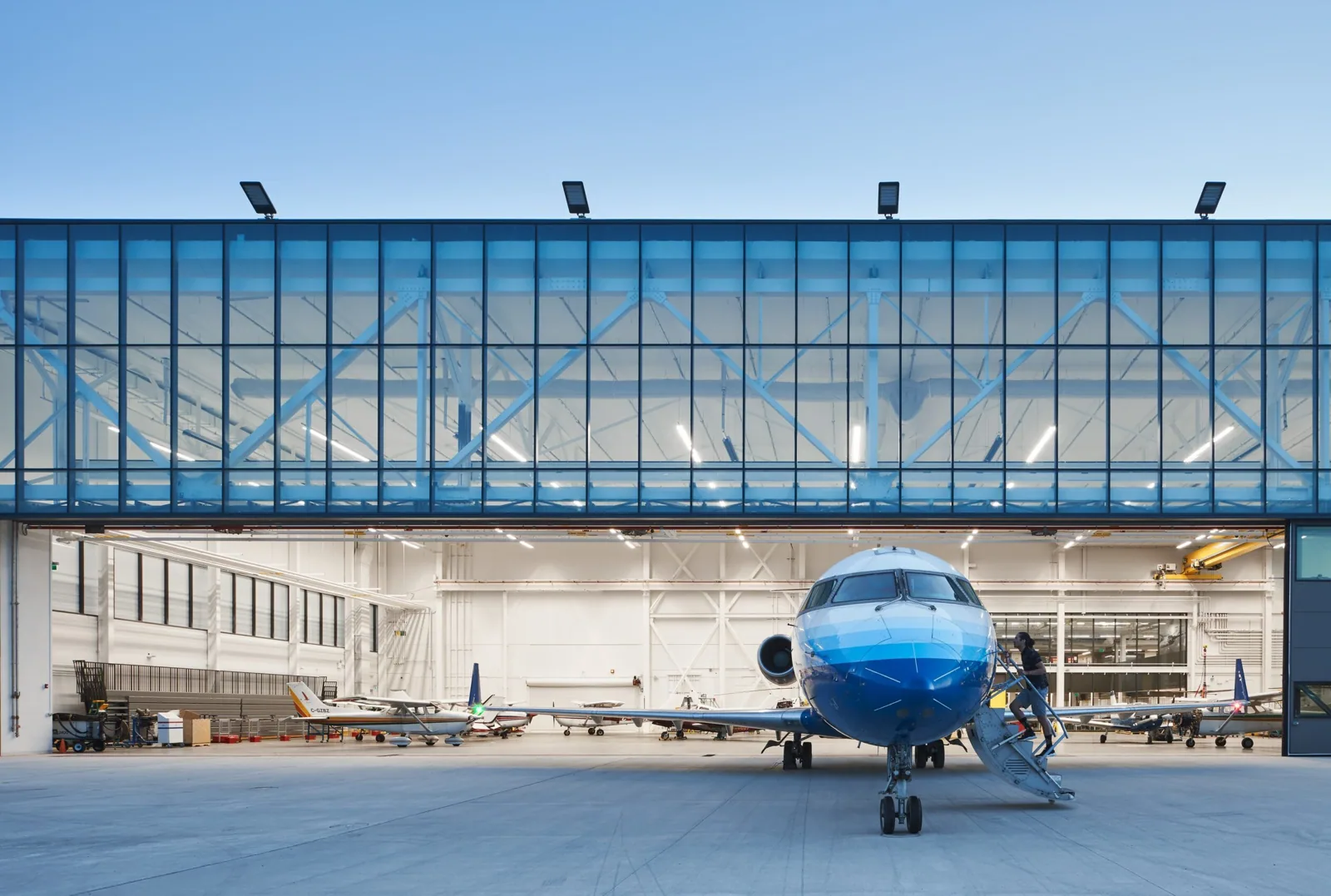
A hangar is a roof on stilts. The span is long, the walls are few and the door opening takes up most of one side. Snow weighs the same on a hangar as on any other building, and no interior wall shares the load. Winter drops 90 to 97 inches of snow on Flagstaff, AZ, and the hangars at Pulliam Airport, 5 miles south of the city, sit at 7,014 feet. A leak or a sag over parked aircraft and shop equipment is a serious event. The plan starts with the structure, moves to the door heads and the drains and ends with a written file that says what is sound and what is not.
A clear-span roof depends on its trusses or rigid frames. Nothing else holds it up in the middle. Late February 2023 left up to 24.5 inches in places, and the city reported roofs failing under that weight afterward. Its warning list opened with sagging ceilings and bowing trusses. A hangar with a bowed truss is a hangar to clear.
We look up. Check the line of the bottom chord, the connections at the columns and the gap at the top of the walls. Look at the door track and the door header, since they carry a lot of weight and deflect first. If the door binds, the frame is moving. Call for help. The city and Coconino County also staff a shared line for structural roof worries after a heavy snow. Our snow and ice damage review starts with the frame.
Heat leaking up from the hangar floor causes its own trouble. A heated hangar with a poorly sealed roof sends warm air into the assembly, melts snow from below and refreezes it at the eave. The ice then blocks the gutter and sends water back under the panels. We flag air leaks and recommend sealing them, and we repair the damage the ice has done.
The big door is the weak spot. A wide opening means a long header, and water finds the joint where the roof meets it. Ice forms on door tracks and canopies. Snow slides off the roof onto the apron, right where aircraft taxi and tugs move. We check the flashing at the header, the seals along the door and the edge metal above the opening.
Slide zones matter. Snow can drop onto a tug, a fuel truck or a person. Snow guards hold the pack on a sloped roof. We mark the zones above doors and aprons and advise on cones or rope-offs during a melt, and we tell the ramp crew which doors to keep clear until the roof sheds its load. For metal roofs, we also check fasteners and panel laps. Where a long-span roof is standing seam metal, we inspect clips and seam locks for movement. Where panels are tired, a metal roof retrofit may avoid a tear-off.
Hangar roofs collect a lot of water. It runs to gutters or interior drains. A blocked line under snow backs up and finds a way in. Summer brings the other load. July and August thunderstorms drop a fast, heavy share of the year's 20 to 22 inches. Gutters see heavy loads in short bursts.
Hard freezes start in late September and the town has seen minus 30 degrees F. Ice blocks gutters and downspouts, and meltwater refreezes at the eave. We clear lines in fall, check the fall of each gutter and add heat cable at any spot that ices up again. A leak over an aircraft is a big problem, so we also look at the floor drains and the grade outside the doors, since water that pools at the threshold gets in under the door.
Airfield work has rules. Escorts, badging, equipment height limits and debris control all apply, and the airport sets them. Loose fasteners, tools and bits of membrane are hazards to aircraft, so we control debris with tarps, magnets and sweeps. We plan crane and lift positions with the airport, and we schedule noisy work around flight operations and tenant hours.
Ask the owner when aircraft are in and out. We plan work in sections and keep each one watertight at day's end, so nothing is open when a front moves in. Hangars on the field and in the airport technology park area each have their own access terms, and we plan to whatever the airport sets. Emergency response runs around the clock, and a leak over a stored aircraft gets a make-safe visit first: stop the water, cover the aircraft or help move it, and record the cause for the insurer and the owner.
A crane and its delivery trucks need a clear way to the building. Trucks come in off I-17 or I-40, and I-17 exit 337 puts them on John Wesley Powell Boulevard toward the field. From there they follow airport roads to the hangar. We plan the route, the timing and the escort with the airport office before anything rolls.
Hangar roofs come in several types. Metal panels are common, and so are low-slope membranes on flat sections. Each has its own failure points. Metal fails at fasteners, laps and ridge caps. Membranes fail at seams, flashings and drains. A commercial roof inspection identifies the system, checks each detail and records the findings.
When a roof reaches the end of its life, the choices are repair, restoration or replacement. A coating can extend a sound metal or membrane roof if the substrate is dry and clean. A recover can save a tear-off if the structure carries the weight. Replacement follows the code in force. Flagstaff works from the 2018 building and energy codes with local changes made in 2019. We confirm what applies before pricing.
Call before the first heavy storm. Send the hangar address, roof type, door size and the date of the last walk. We schedule the sag and drain checks, mark slide zones and give you a ranked list. For owners with several buildings, such as a base of operations with a hangar, an office and a maintenance shop, the same file covers every roof.
A neighboring building type shares part of the problem. A flex industrial building has the same open span, and a National Guard armory brings access rules much like an airfield. On a base, military installation roofing follows base procedures, and those set the schedule.
Look for a bowed bottom chord, gaps at wall tops, binding doors and new cracks. If you see them, clear the building and call. We recommend one trained person per shift know the list.
Often, with planning. We cover or move aircraft, work in sections and close each at day's end. Tell us the flight schedule and we will fit around it.
Tarps, sweeps, magnets and a clean-up check at the end of each shift. We follow the airport's rules for access and equipment height.
The opening is wide, the joint is long and the header deflects with load. Flashing and seals wear at that joint first.
Each roof section, its condition, the repair, a cost range and a priority. Sections over aircraft rank first.
Browse the services, roof systems and building types we work with across Flagstaff and nearby Arizona communities.
A walk of the roof with photos, findings and a written scope.
Active leaks, storm damage and blocked drains get a fast response.
Roofing across Flagstaff and nearby Arizona communities.