A weld is only as good as the day it was made. Sika Sarnafil is a maker of welded thermoplastic roof membranes, and the whole system relies on heat-fused seams. Freezing arrives in Flagstaff, AZ by late September and the record sits at minus 30 degrees F, so the calendar decides when a seam can be made or fixed. That fact shapes every Sika Sarnafil roof here. We keep roofs on these systems repaired and maintained. Seams get tested, flashing gets read, and the forecast picks the repair day.
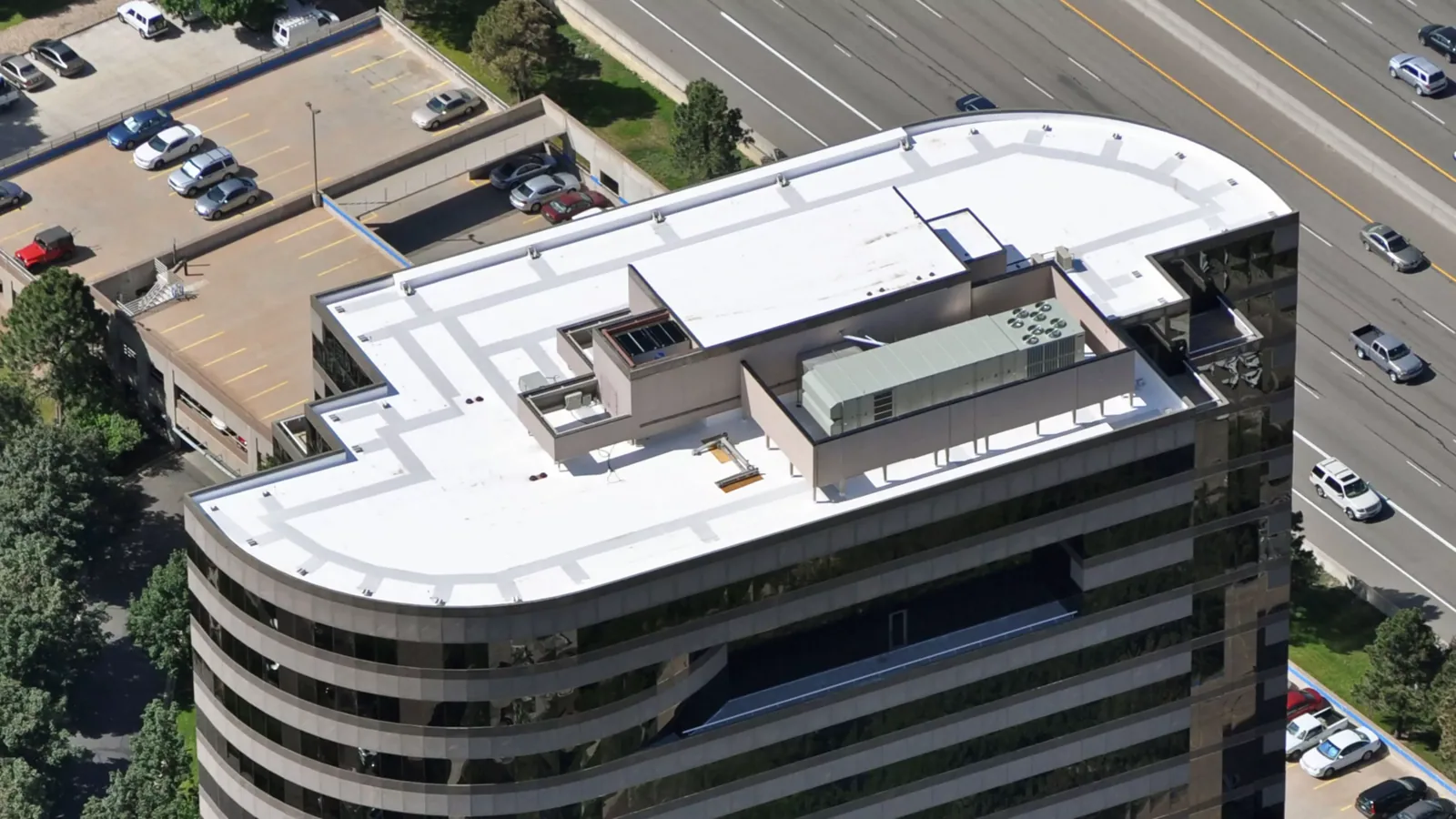
Thermoplastic membranes, most often PVC, arrive in rolls. Installers lap the edges and weld them with hot air, so the seam becomes one piece with the sheet. Flashings are often made of the same material, formed to fit curbs, pipes and corners and welded in place. Some systems add a reinforcing layer of fabric or fiberglass for strength. The sheet sits over insulation and can be fully adhered, mechanically fastened or ballasted. Welded roofs have few seams that rely on glue or tape. That is the strength of the system, and also the reason welds must be checked.
Thermoplastics stiffen in the cold. A sheet that bends easily in July may crack at a fold in January. Hot-air welders need a dry, clean surface and a safe working temperature. Wind steals heat from a weld. Frost and ice ruin it. On a Flagstaff winter day, most seam work waits. Fall and spring give the workable windows. We test welds with a probe, looking for gaps at the edge and cuts that do not fuse. We also check for cracking at folds, corners and flashing bends. A seam failure repair in spring beats a patch in a blizzard.
Installation season matters as much as repair season. A new welded roof wants dry weather and moderate temperatures, and the schedule should reflect it. A roof started in late fall risks cold welds, short days and an unfinished perimeter when the first storm arrives. We plan replacements for the warm months and close in every section each evening, so a sudden cell cannot reach open insulation.
Roofs collapsed in the city after February 28, 2023, when a storm left 24.5 inches of snow in some areas by March 2. Sagging ceilings, bowing trusses and severe leaks were the signs it told owners to watch. The membrane does not carry that weight. The deck does. Snow drifts against parapets and mechanical wells and thaws into drains that may be iced over. A sheet that ponds under ice stresses at the seams. We mark each drift line, clear the drains in fall and look at the deck under the heaviest drifts. Shoveling uses plastic tools. Metal shovels cut thermoplastic membranes.
Ice dams are the winter pattern to watch. Heat escaping through a poorly insulated roof melts snow from below, the water runs to the cold edge and refreezes, and the ridge of ice backs water under the sheet or the edge metal. The cure is air sealing and insulation at the source, plus clear drains and gutters. We look at the edge for stains and wet board, because a dam that has formed once will form again.
Probe every seam on the fall walk. Look for dull spots, gaps at the edge and cuts across the weld. Check the flashings at curbs, walls and pipes, where the sheet bends and the stress is highest. Look at the walkway pads and the paths to rooftop units. Foot traffic grinds the sheet at the same few spots. Press the surface near the drains. Note any chalking, discoloration or brittleness. A reflective sheet fades with sun, and Flagstaff gets about 78 percent of the sunshine it could, near 3,475 hours a year. Photograph each finding and mark the sketch.
Chemical exposure is the other check. Grease from kitchen exhaust, oils from industrial vents and solvents from process fans can soften the sheet around a discharge. Look for staining, blistering and soft spots near each outlet. Industrial vents are the usual source, and any building with a kitchen exhaust adds another. We check the area around each vent and add protection or a resistant sheet where wear shows.
A weld repair needs a clean surface and the right material. Dirt, oil and age can stop a weld from taking. Old sheet that has lost plasticizer may need a special approach. We clean the area, test a small weld and peel it to see how it bonds. Then we cap the seam or patch the hole with matching material. For a roof where the sheet has turned brittle across the field, patching stops being worth it. A PVC roof at that stage calls for replacement planning. Chemical-resistant types such as KEE roofing are worth a look near grease or solvents.
Flashing repair is the most common job. A flashing welded at a curb corner takes the most stress as the roof moves. We cut out the failed piece, clean the substrate, form a new flashing from matching sheet and weld it to the field with overlap on every side. A termination bar at the top and sealant along the top edge close the detail. We probe the finished weld before the crew leaves.
The Museum of Northern Arizona sits on about 200 acres along Fort Valley Road, with US 180 running through the campus. Its lava rock museum building dates to 1936, alongside a 1953 administration and library building and former dairy barns from 1935. Buildings from 1935 to 1953 each get read for what is on the roof now, not for what the date suggests. The city names new flood risk from the Pipeline Fire in the Schultz Creek watershed, with Highway 180 neighborhoods near Fort Valley affected. Drainage on any roof there matters in a monsoon. We read each roof by its own terms. A drone roof inspection maps a spread-out campus fast.
Schedule weld repairs for fall and spring. In the months between, a temporary patch stops the water and goes on the sketch. Walk the roof and clear the drains before the first October storm. If a leak opens in January, our emergency roof repair crew arrives around the clock to stop the water. A full replacement is drawn to the 2018 IBC and energy code as amended locally in 2019. Duro-Last also sells PVC, and Versico sells TPO and EPDM, so an owner comparing them should look at the roof under the sheet.
Keep the file. A welded roof has a clean history: weld tests, repair dates, photographs and core logs. When the sheet reaches the end of its life, that file tells you when and why.
Only as a temporary patch. Welds need a dry, clean surface above freezing. We stop the water with a patch, mark it and schedule the weld for a workable window.
A probe slips into the seam, or the edge lifts. Dull spots and gaps along a weld are warning signs. We test and photograph each one.
It does, with dirt and sun. Cleaning restores part of it. Flagstaff has about 3,475 hours of sunshine a year, so the surface sees a lot of ultraviolet light.
Only after a sag check and with plastic tools. Metal blades cut the sheet. Leave a few inches on the surface and never chip ice at a drain.
When the sheet is brittle across the field, insulation is wet in wide areas or welds fail in rows. A core and a moisture scan show the answer.
Browse the services, roof systems and building types we work with across Flagstaff and nearby Arizona communities.
A walk of the roof with photos, findings and a written scope.
Active leaks, storm damage and blocked drains get a fast response.
Roofing across Flagstaff and nearby Arizona communities.