
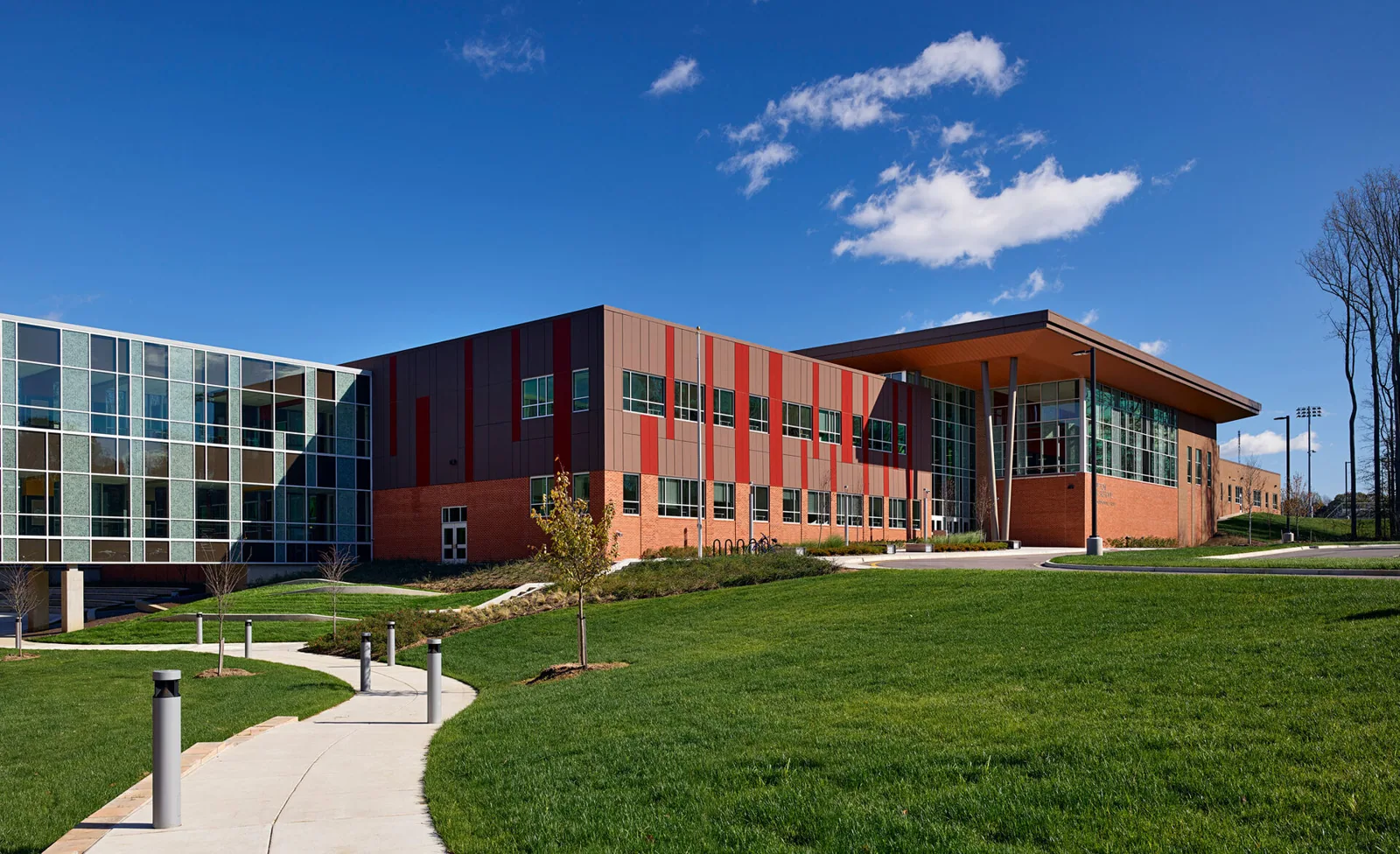
A school roof has two deadlines. The first is the first heavy storm. The second is the first day of class. A district in Flagstaff, AZ meets both deadlines every year, because the city stands near 7,000 feet and a normal winter leaves 90 to 97 inches of snow. Gyms, cafeterias and auditoriums have wide spans that carry snow with nothing underneath to help. Replacement work must fit a summer break of a few weeks. So the plan has two tracks: check load and drains before winter, and schedule big projects early enough to finish before students return.
Facilities directors need a list a board can approve. Here is how we build one.
Wide, open rooms have long spans. A gym, a cafeteria or an auditorium has a roof carried by trusses with no interior walls. Several school-sized roofs could face the same load that brought down roofs after the late February 2023 storm, which had left 24.5 inches in some areas by March 2. The city's three signs: sagging ceilings, bowing trusses, severe leaks.
Staff should know the signs. Look up in a gym. Is the ceiling level? Do doors stick? Are there new cracks at wall tops? If so, clear the room and call. The city and county share a line for structural roof concerns, and it belongs on that card too. We give each campus a one-page card with the signs and the numbers to call. Each major storm brings a snow and ice damage review.
Campuses grow in pieces. A main building gets a wing, then a gym, then portables, then a covered walkway. Each piece has its own roof, age and drainage. Each section gets walked, and the file records its system, age, drains, equipment and condition. We sort sections into replace, repair and watch groups.
Flagstaff Unified School District had 1,590 employees in 2017, one of the largest payrolls in the county. The number of roofs behind that payroll is a separate question. Nothing is assumed. We count, measure and photograph. The file shows each campus, each building and each section with a cost range and a date range. A school roof is rated on the same scale as every other, so a board can compare campuses fairly.
A nurse's office on campus is not a hospital, but it shares one rule with healthcare systems: sections over rooms where students need care get walked first. The inventory marks those rooms. Kitchens, boiler rooms and server closets get the same flag, because a leak over equipment costs more than a leak over a hallway.
At the drain, a thaw becomes either a nuisance or a leak. A drain buried under snowpack lets melt spread into a pond. Afternoon storms in July and August carry a third of the year's precipitation. The first freezing nights come in late September, only weeks after school starts, and the low on record is minus 30 degrees F.
Every fall the drains are cleared and tested, and roofs without overflow openings get them. We set heat cable at the spots that ice up each year. Entrances and bus loops need extra care. Snow and ice sliding off a roof onto a walk is a student safety issue. We mark slide zones and recommend snow guards or covered walkways where needed. Our drain and scupper work ends with a drain log by number, so staff see what was done.
Trees matter on campuses. Needles and leaves from nearby pines collect in drains and gutters, and ice and snow bring branches down onto roofs. We note every tree near a roof edge, trim recommendations go to the district's grounds crew and the drain schedule tightens for roofs near trees.
Summer is the working window. Students and staff are gone, access is easy and noise limits relax. The window is short. A project that starts late can collide with the first day of school. We build the schedule backward from the return date, with a buffer for weather, and split large roofs into phases that can each be finished and made watertight.
Flagstaff weather limits the window. Freezing returns in late September, and afternoon monsoon storms arrive in July and August, so work plans include a rain plan. Material lead times matter too. Membrane, insulation and metal can take weeks to arrive, so approvals have to come early. The queue lists projects for the coming summer with approval dates, bid dates and start dates. Spring approvals give a June start. For work that must proceed during the year, our occupied building reroofing plan uses protected walkways and quiet hours.
Weather days are built into the schedule. A crew cannot weld, adhere or cure in rain, and a front can close a week. We keep a buffer of days, tie in each section nightly and leave nothing open. If the buffer runs out, we tell the district early, so the principal and the facilities director can adjust before school starts.
The board-ready product is a ranked list with cost ranges, a map of campuses and a one-page summary for each. The summary says what the roof is, how much service it has left, what repair or replacement costs and what happens if the district waits. A facilities director can take the board through the list in minutes.
Any replacement is scoped against the 2018 building and energy codes and the 2019 amendments adopted in Flagstaff. The scope states the code basis, so the board and the architect read the same assumptions. The record also helps with bond planning, with insurance and with maintenance budgets. It matches the approach for public agencies, which share procurement steps, and it can feed a roof capital plan that runs several years.
Call before the first heavy storm. Give us the campus list, roof types and last walk dates. We then book the sag and drain checks, rank the sections and return cost ranges. Early fall is best. The walk finds what summer did and what winter will test.
Campuses in East Flagstaff and out in Leupp, where a K-5 school belongs to the Flagstaff Unified School District, get the same method. After each storm, we check the highest-risk sections first and send the facilities director a short summary. When the thaw is over, a second walk updates the list. Northern Arizona University, at 21,550 students on its Flagstaff campus in fall 2023, shows how many buildings one owner can have to keep track of. A district tracks fewer buildings, but the discipline is the same.
A trained crew after inspection. Staff should not go on the roof. We check the structure first and set a clearing order. We also close the area below while work is under way.
In spring. Material lead times and bidding take weeks. Approval in April or May gives a June start and a safe finish before students return.
We check roofs over occupied spaces first, make leaks safe and send a short report. The district decides whether classes proceed. Our response runs around the clock.
On a sound membrane with dry insulation, a coating can add years. Moisture scans decide. Wet insulation rules it out.
They are in the inventory as their own sections, with their own age and condition. We check them each fall.
Browse the services, roof systems and building types we work with across Flagstaff and nearby Arizona communities.
A walk of the roof with photos, findings and a written scope.
Active leaks, storm damage and blocked drains get a fast response.
Roofing across Flagstaff and nearby Arizona communities.