
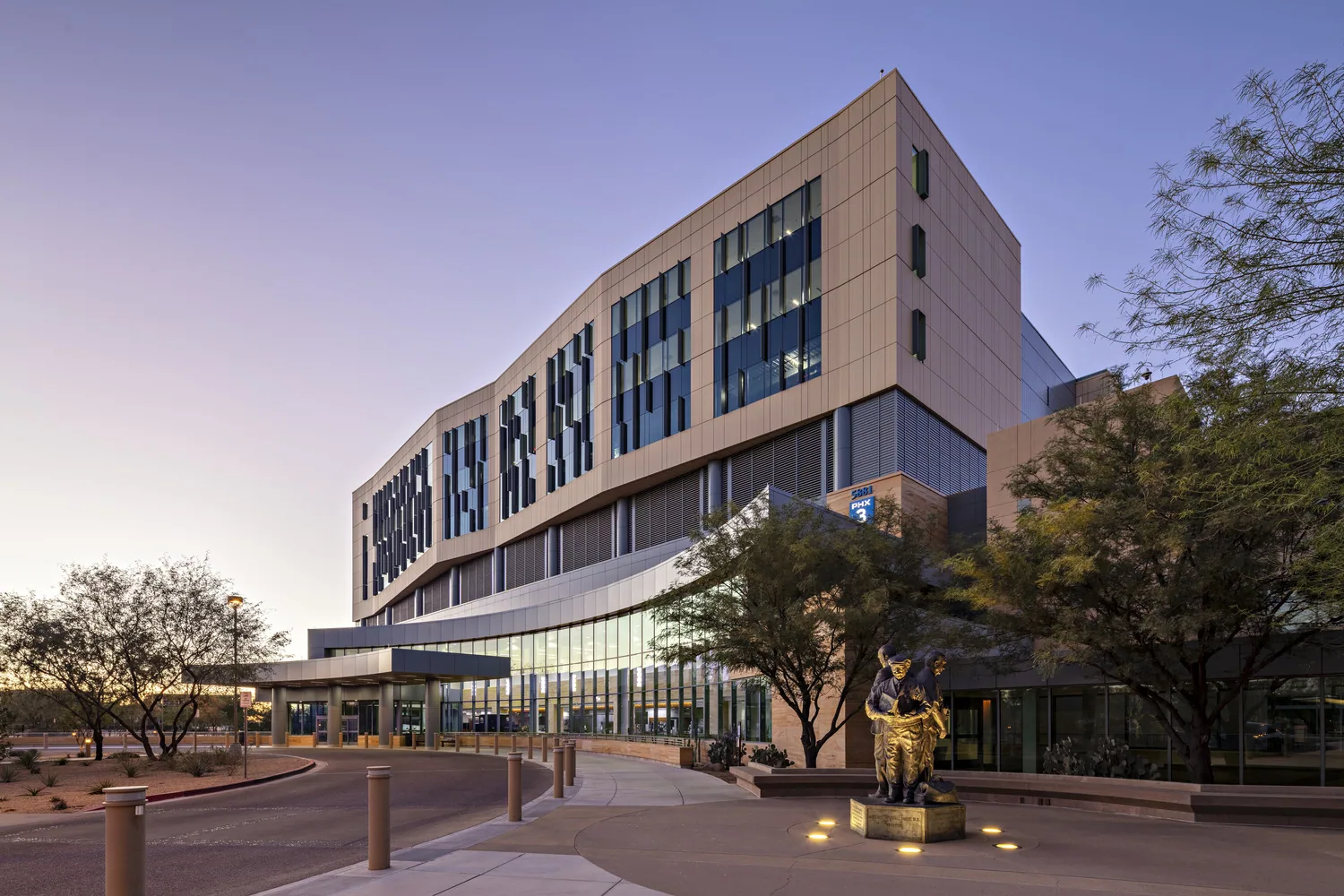
A hospital cannot close for snow. Patients arrive, surgeries run, and a roof leak over a clinical room is an operational emergency. Flagstaff, AZ stands near 7,000 feet and takes 90 to 97 inches of snow in an average year, so a health system here plans for winter every year. Flagstaff Medical Center opened in 1936 as a Level I trauma center and is one of the area's largest employers, and health care provides 11.4 percent of Coconino County jobs, second only to accommodation and food service. The roof plan has to match that standard. We rank sections by what sits under them, check load and drains before winter and keep a crew on call.
The aim is simple. No wet ceiling over a patient and no surprise at the budget meeting.
Not every roof section carries the same risk. A roof over an operating room, imaging suite, pharmacy or patient floor outranks a roof over storage. We map the roof against the floor plan and mark each section by what is below. The highest-risk sections get walked first, scanned most often and repaired first.
Snow adds urgency. The late February 2023 storm left 24.5 inches in some areas by March 2, and afterward the city's warning list for owners read: sagging ceilings, bowing trusses, severe leaks. Facility teams should know those signs. A facility manager who sees any of them has a second call to make besides ours, the shared city and county line for structural roof concerns. A snow and ice damage review follows every big storm, starting with the clinical wings.
A leak over a clinical room is too late. We look for moisture before it drips. An infrared moisture survey locates wet insulation, and a core sample confirms what the scan suggests. Scans run on a schedule over the highest-risk sections, in fall and spring, and the results go in the building file.
We also check the details that let water in: flashing at walls and penthouses, curbs under air handlers, penetrations for exhaust and drains. Heavy mechanical loads mean heavy foot traffic, so walk routes need pads. Hospitals grow in phases, and every tie-in between an old roof and a new one is a leak risk and a drift trap. We mark each tie-in on the plan and look at it first after a big storm.
Rooftop equipment on a hospital includes chillers, air handlers, exhaust fans and generators, and they run all year. Vibration works on curb flashing, and heat from exhaust softens membrane near discharge points. We inspect each unit on its own and record staining, softened sheet and cracked sealant by location. I-40 and I-17 meet near the city, and delivery of parts and cranes for a major repair follows those routes, so we plan access with the facility team in advance.
Under a deep snowpack, a clogged drain makes the first thaw a flood on the roof. Of the 20 to 22 inches of precipitation Flagstaff gets in a year, the July and August monsoon brings about a third. Freezing weather returns in late September, and minus 30 degrees F is on the record books. Ice blocks drains and gutters, and melt refreezes at edges.
We clear drains in fall and test them before the monsoon. We add overflow openings and heat cable where ice builds each year. Entrances and ambulance bays get special attention. Ice and snow sliding off a roof onto an entry is a patient safety issue. Slide zones get marked, and snow guards or covered walkways are recommended where the roof design allows them. Each drain gets a number and a line in the log, so repeat clogs show up.
Roof work near clinical space needs a plan. Dust, fumes and noise all matter. Fresh-air intakes can pull odor into patient areas, and vibration can affect sensitive equipment. We locate intakes, coordinate shutoffs or covers with the facility team and schedule loud work for quiet hours. Where an infection-control risk assessment is required, we supply the roof-side information: work area, duration, debris path and barriers.
Our occupied building reroofing approach works in sections and closes each one at day's end. Cold-applied and low-odor methods are preferred near air handlers, and open-flame work is avoided unless the facility approves it and sets a fire watch. Emergency response runs around the clock. A leak over a clinical room gets a make-safe visit: stop the water, protect the room, document the cause. Then we return in the next dry window.
A health system holds many building types. A hospital, a clinic and a medical office each have different roofs, loads and access rules. The inventory lists every section with its age, system and condition, and the budget year uses it to rank spending across the campus. A hospital roof is walked more often than an office roof.
Health buildings across town, from Downtown Flagstaff to East Flagstaff, get the same method. Every building gets its own walk, whatever its size or age. For systems with sites in more than one town, the same file format works for every building, which makes comparing roofs simple and keeps the board's view clear.
Other public owners face the same pressure with different rules. School districts plan around summer breaks, and public agencies plan around procurement. A health system plans around patients. The inventory is the same, and the ranking changes with the consequence of a failure.
Call before the first heavy storm. Give us the building list, roof types and last walk dates. We will build the inventory, rank sections by clinical risk and schedule the sag, moisture and drain checks. Any replacement is specified to the 2018 building and energy codes, with the 2019 Flagstaff amendments.
Repeat the cycle each year. The walk in fall prepares the roof for winter, and the walk in spring checks what the freeze did. Over time the file shows which roofs age fastest and where money goes furthest. A facility director who keeps the file current can answer a board question in minutes, which matters more than any single repair.
Budget season goes smoother with the list in hand. Each line has a cost range, a date range and a reason, so a finance committee can approve what is urgent and schedule the rest.
At least twice a year, in fall and spring, plus after major storms. Roofs with a leak history need more. We set the schedule by section and keep the results in the building file.
Yes, with planning. We coordinate quiet hours, intake covers and debris paths with the facility team, and we work in sections. Some work waits for scheduled downtime.
Clear the area, call us, and call the city and county structural line. Do not wait for a stain. We make the space safe and check the structure before staff return.
Yes. Older roofs have older systems and often more patches. We rate each wing separately and give extra attention to tie-ins between old and new roofs.
A ranked list, cost ranges, dated photos and a short summary per building. The format works for budget hearings and audits.
Browse the services, roof systems and building types we work with across Flagstaff and nearby Arizona communities.
A walk of the roof with photos, findings and a written scope.
Active leaks, storm damage and blocked drains get a fast response.
Roofing across Flagstaff and nearby Arizona communities.