
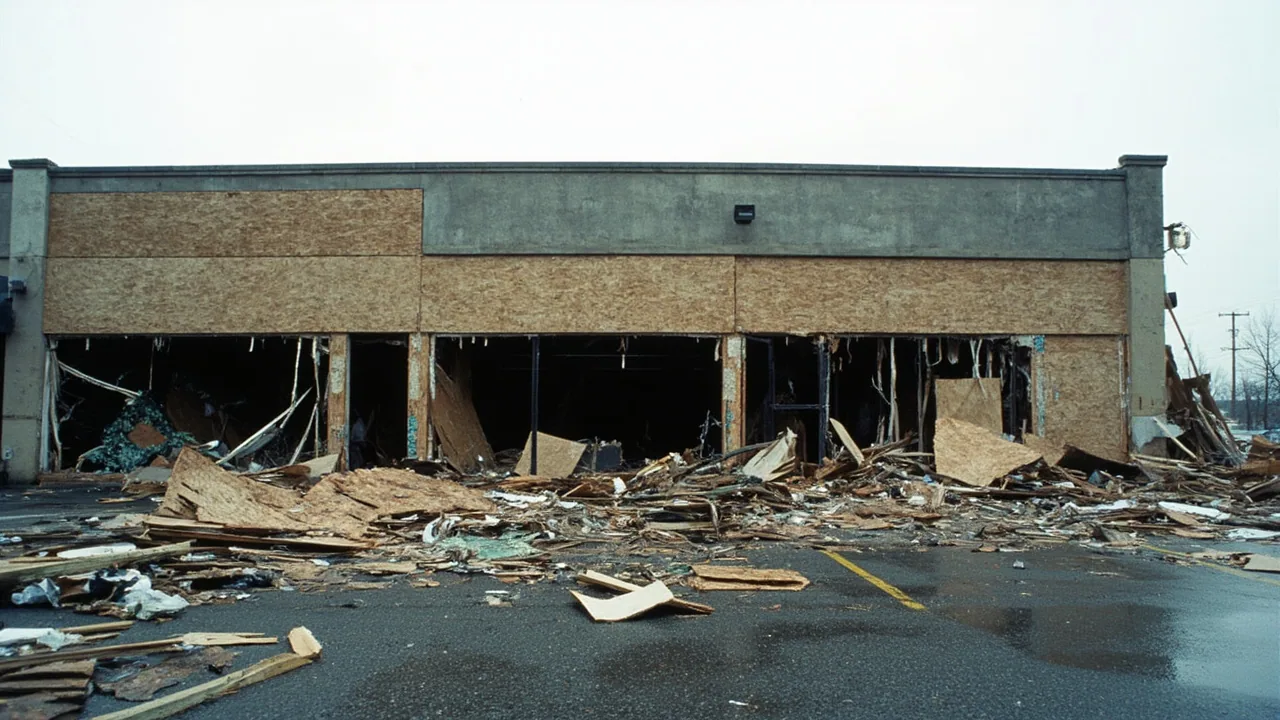
A snow claim is a question about load, not a question about wind. Did the roof carry more than it should, and did it fail because of the snow or because it was already weak? Snow runs 90 to 97 inches in an average Flagstaff, AZ winter, so a roof here is always carrying something. When a claim comes in, the file has to separate the storm from the age of the building. We document the structure, the surface and the moisture in that order and write the findings so an adjuster or a restoration contractor can use them without us in the room.
A clean file moves a claim. A vague one stalls it.
Safety and structure come first. City officials reported several roof collapses once the February 28, 2023 storm had left 24.5 inches in some areas, and their warning signs were sagging ceilings, bowing trusses and severe leaks. A claim on a building with those signs begins with the frame, not the membrane.
We look from the floor and from the edge, with a drone where the roof is unsafe. We note sag, bowed members, cracks at wall tops, sticking doors and displaced ceiling tile. We mark the areas that must stay clear. Where the structure is in doubt, an engineer looks before a crew goes up. The city and Coconino County also staff a line for structural roof concerns, and an adjuster's file should note whether the owner called it. The snow and ice damage review follows this order.
The first visit records the roof as it stands. We photograph each section from set positions, mark observations on the plan and number each photo. Snow and ice stay where they are until they are photographed, and we note depth, drift lines and any ice at edges. The date and time go on every image.
We look at the field, the edges and the penetrations. Torn seams, punctures from falling ice, displaced flashing, crushed vents, bent edge metal and damaged gutters all get a location and a size. A drone inspection covers areas that are unsafe or buried. Each item is described in plain terms. Photos carry a scale reference, and a wide shot pairs with each close-up so the position is clear to a reader who was never on site.
Interior evidence belongs in the file too. Stained tile, buckled drywall, mold-prone areas and wet carpet below a roof opening are photographed with the room name, the date and the moisture reading. The interior record connects to the roof plan by section number, so a reader can follow the water from the roof to the room. We do not scope interior repairs, but the link between the roof defect and the interior damage is part of the picture.
Snow damage often shows up as water. Melt finds seams, flashings and drains, and it travels along the deck before it drops. The stain on a ceiling can sit far from the opening. We trace the path back from the stain and probe the likely entry points.
An infrared moisture survey maps wet insulation, and cores prove what the scan shows. Results go on the plan with core locations and photos. A dry core under a stained ceiling points to a different cause than a wet one. Freezing weather arrives again in late September and the record low is minus 30 degrees F, so a small opening can widen across a winter of freeze and thaw. We record the pattern and separate fresh damage from older wear.
Not every defect on a storm roof came from the storm. Old repairs, worn surfaces, ponding stains and aged sealants predate any event. We record those too, in their own category, so the claim covers what the storm did and the owner understands what remains.
Evidence of age includes weathered edges on cuts, dirt in cracks, staining and growth in old breaks, and layers that show repeated repair generations. Sun reaches the roof about 78 percent of the time it possibly could, near 3,475 hours a year, so UV wear belongs in the picture. Evidence of a fresh event includes clean fracture faces, recent displacement and ice marks in a consistent direction. A dated pre-storm report is the best evidence of starting condition. Where none exists, we record the starting point now, so the next event has a baseline.
Ice dams leave their own marks. Staining along eaves, damaged gutters, lifted edge metal and stained soffits point to repeated freeze-thaw at the edge. We map them, photograph them and record how far up the roof the water traveled. That map helps the adjuster tell a single storm from a pattern that has built up over several winters.
Policies expect the owner to protect the property from further damage. The dry-in is part of the record. We photograph the roof before and after temporary work, list materials and labor and note the time. A storm damage roof repair visit starts with that record, and our emergency roof repair response runs around the clock.
In winter, temporary work has limits. Adhesives and sealants do not cure in the cold. We use mechanical fasteners, tarps and temporary membranes that hold under snow, and we check them after each storm. Temporary work must not destroy evidence. We photograph before covering, label samples and keep a visit log. If a carrier wants to inspect before permanent work, we hold the repair and document how the cover performs.
Snow removal for a claim needs its own record. If a crew clears snow to reach a damaged area or to reduce load, the file notes the depth removed, the method, the areas cleared and the date. Clearing can change what an adjuster sees, so photographs before and after are required. Where a roof is unsafe to walk, we say so, document from the edge and plan the clearing with an engineer's advice.
A scope an adjuster can price is a scope that moves. We list work by roof section, with quantities, materials and methods. Flagstaff's adopted codes are the 2018 IBC and 2018 energy code, amended locally in 2019 under City Code Title 4. A replacement follows those editions where they apply. Code-driven upgrades, such as insulation levels, are listed separately from damage repair, with the requirement cited.
We also give alternatives where they exist, such as repair versus replacement of a section, with the cost of each. For a multi-building loss, the same format applies to every roof, which suits a property management company or a general contractor running a restoration program. After the 2022 Pipeline and Tunnel fires, monsoon flash flooding followed, and the city flagged new flood risk for neighborhoods along Highway 180 near Fort Valley, a reminder that roof damage and ground water damage are separate losses with separate evidence.
By evidence on the roof: fresh faces, recent displacement and ice marks versus weathering, dirt and repeated repairs. A dated pre-storm report settles most disputes. We record both categories separately.
Yes. We use fasteners, tarps and temporary membranes that hold in cold. Permanent adhesive work waits for dry, milder weather. Everything is logged with photos.
We stop, clear the area and bring in an engineer. No crew goes on a doubtful roof. The findings report states what was seen and what must be checked.
Yes. Each roof has its own section list, and the totals roll up for the loss. The format is the same for every building.
No. Roof water and ground water are separate losses. We document the roof and the drains, and we note where grade directs water toward walls.
Browse the services, roof systems and building types we work with across Flagstaff and nearby Arizona communities.
A walk of the roof with photos, findings and a written scope.
Active leaks, storm damage and blocked drains get a fast response.
Roofing across Flagstaff and nearby Arizona communities.