
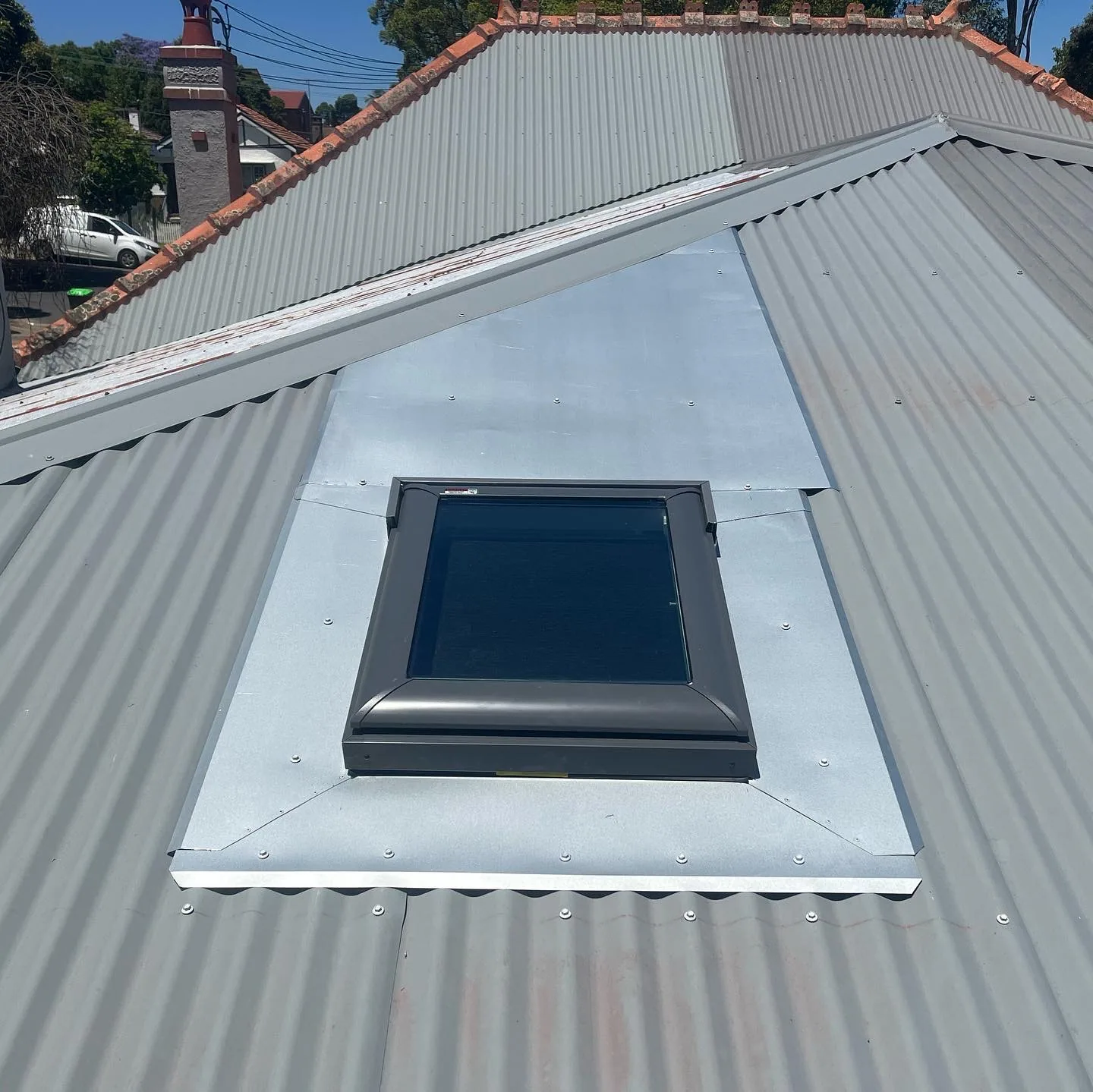
Every hole in a roof is a bet against water. Skylights, pipes, vents, conduit and sign posts all cut the membrane, and flashing is what keeps the bet from losing. In Flagstaff, AZ the odds are tougher. Snow buries the flashing, thaw pushes water up against it and freeze-thaw cracks the seal.
Most small leaks start at a penetration. We check them first, fix the weak ones and set a schedule to look again. A pipe boot costs little. The ceiling it protects costs more.
Flashing must stand above the water line. In summer, that is the depth of a cloudburst pond. In winter, it is the depth of the drift. A skylight curb or pipe boot too low for either will leak when water or snow reaches the top.
Snow here arrives by the foot, and it stays for months. One storm in late February 2023 put as much as 24.5 inches on parts of Flagstaff. Wind piles that snow against curbs, walls and units. A drift up to the top of a low curb melts into the curb joint on the first warm afternoon.
We measure curb height against the roof surface and the drift line. Where height falls short, we raise the curb or add a cricket to move water around it. The same height rule governs rooftop equipment curbs and supports. Higher is safer, to a point.
Flashing is also a matter of layers. The base flashing laps onto the field membrane, and the counterflashing laps over the base. Water must cross each lap going down. We check that every lap shingles in the right direction and that terminations are sealed and fastened. A lap that faces the wrong way is a funnel.
A skylight has three weak points: the glazing, the curb and the joint between them. Each fails differently.
Glazing cracks under snow load, ice impact or thermal stress. Plastic domes yellow and craze in strong sun, and Flagstaff gets about 78 percent of possible sunshine at 7,000 feet. The curb flashing opens at the corners. The seal between dome and curb dries and splits.
We inspect all three. We press the seal, probe the flashing and look at the glazing from inside and out. We check the interior for condensation and staining on the frame, because condensation can look like a leak. A commercial roof leak repair aimed at the wrong cause wastes money.
Repairs range from resealing to replacing the dome or the full unit. When we replace, we flash the curb with the same material as the roof and set the new unit on a sealed base.
Safety is part of the job. A roof with skylights needs guards or covers so a worker or a visitor cannot step through. Snow hides the dome, which makes a winter walk dangerous. We mark every skylight on the roof plan and set screens or railings where the owner wants them. We never step on glazing.
Small penetrations get small flashings. A rubber pipe boot sits over a vent stack. A metal collar surrounds a conduit. A pitch pocket holds a cluster of pipes. Each ages in its own way.
Rubber boots crack in the sun. At 7,000 feet, ultraviolet light is strong, and a boot can split in a few seasons. Metal collars loosen as the roof moves. Pitch pockets shrink and open as sealant dries. Cold makes every one of them stiffer and more brittle.
We check each penetration, and we replace boots that show cracks. We reseal collars and refill pockets. Where several small penetrations sit close together, a liquid-applied flashing seals them in one layer. It avoids a pile of small flashings that each need watching.
Sign posts, antenna masts and small supports need their own flashing and a way to move. A rigid post through a membrane that expands and shrinks will tear it. We use boots or boxes with room for movement, and we check them at each visit. Where a post is no longer used, we remove it and patch the opening.
Seals fail in the thaw cycle. Water enters a hairline gap, freezes, expands and widens the gap. The next thaw lets in more. By spring, a crack is a path.
Hard freezes begin in late September, and winter lows have reached minus 30 degrees F. A roof sees many cycles in a season. We replace brittle sealant in fall, before the first hard freeze. We use sealants rated for the cold and apply them on dry surfaces.
Spring checks find what winter opened. We look for cracks at terminations, gaps at laps and lifted edges. Quick repairs in April prevent July leaks, when the monsoon tests the same flashing with a flood. An open seam at a collar or curb calls for flashing failure repair.
Roofs with heat cable around penetrations need extra care. Cable must be clear of the flashing and tested each fall. A failed cable leaves a cold spot where ice builds. We note cable sections that do not warm and recommend repair or replacement.
Penetrations leak heat. Warm air from the building escapes around pipes and curbs and melts snow from below. Meltwater refreezes at the colder edge and builds ice around the penetration. The ice lifts flashing and opens seals.
The fix is air sealing and insulation at the penetration. We note the signs: bare roof around a pipe in a snowy field, icicles, damp insulation. Then we seal the gap and add insulation. The layers around the opening are part of roof insulation and cover board work.
Pipe insulation is part of the fix. A hot pipe through the roof radiates heat into the flashing and the surrounding snow. A sleeve of insulation keeps the heat in the pipe and the flashing cooler. It is a small step that saves a seal.
A retail roof collects rooftop units, vents and signs over its life, and each addition is a new penetration. That holds near Butler Avenue and Lone Tree Road, and it holds across the park from downtown in East Flagstaff, where Flagstaff Mall stands. Historic buildings in the Railroad Addition, such as the Weatherford Hotel and the Monte Vista Hotel, deserve a walk for any stacks, chimneys or skylights on the roof.
Owners in Butler Avenue and Lone Tree Road and East Flagstaff can ask for a penetration walk. We map every opening, check its flashing and rank the weakest. A map helps at every turnover and every repair.
High enough to clear the deepest water and the typical drift line. Local drifts push that height past a standard rule of thumb. We measure the curb against the drift line and raise it or add a cricket where it falls short.
Not always. Cold glass and warm air make water on the inside. A stain that grows only after rain points to a leak. A stain that appears on cold, dry mornings points to condensation. We check both before we recommend a fix.
Rubber boots wear out sooner than the roof. UV light and cold crack the rubber. We check boots each fall and replace those that show cracks. A new boot costs far less than a wet ceiling.
Yes. A liquid-applied flashing can cover a cluster in one layer, which avoids many small flashings that each need checking. We reinforce the corners and check adhesion before we finish.
Heat escapes around the pipe. Seal the gap and add insulation at the penetration. Left alone, melt refreezes and lifts the flashing.
Browse the services, roof systems and building types we work with across Flagstaff and nearby Arizona communities.
A walk of the roof with photos, findings and a written scope.
Active leaks, storm damage and blocked drains get a fast response.
Roofing across Flagstaff and nearby Arizona communities.