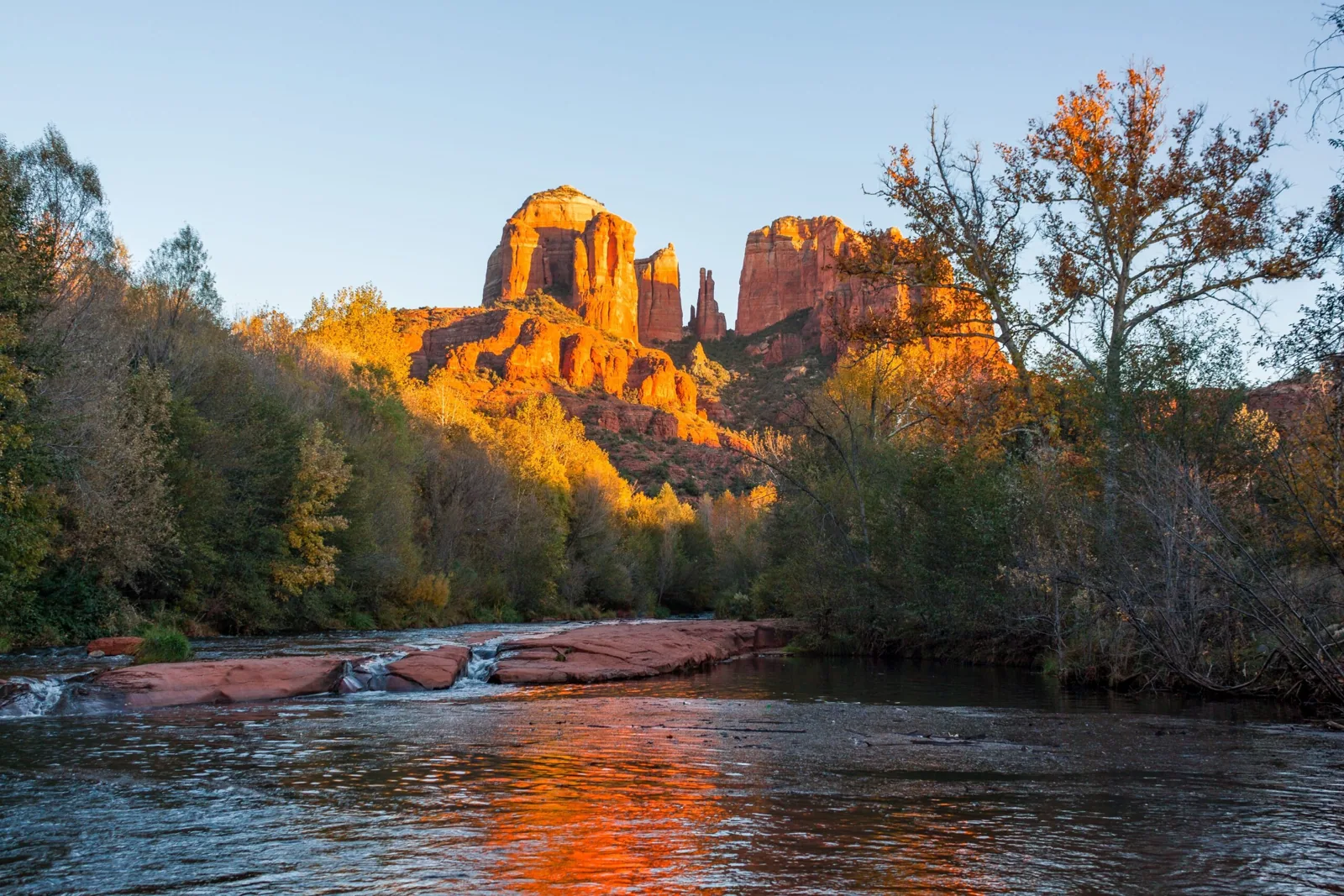
A shaded roof stays wet. In a canyon 800 to 2,000 feet deep, a roof can see fewer hours of sun, and frost can linger well into the day. Commercial Roofing Flagstaff works on commercial roofs in Oak Creek Canyon, AZ, the gorge about 12 miles long between Flagstaff and Sedona. The roof questions here come from the setting: shade, moisture, steep access and a road that threads through switchbacks.
We start by looking at how long the roof stays wet and where the water goes. Then we plan the access, because on this road the logistics are half the job.
State Route 89A climbs the north end through switchbacks and then runs about 13 miles along the canyon floor to Sedona. Slide Rock State Park and the West Fork Trail are the main recreation draws, and the Forest Service serves the canyon with campgrounds and picnic areas. A building that serves visitors takes foot traffic and long seasons of use, and its roof has to keep working through both.
The setting tells us how to inspect any roof along the road: check for lasting moisture, check drainage paths, check for debris from overhead and check the structure under snow.
That list works for any building type, from a small shop to a group of visitor-facing structures. The first walk sorts what each roof actually needs.
Staging is the practical question. Wherever the lot is tight, we confirm before booking where materials can sit and where a bin can stand, so the road stays clear while the roof is open.
Roofs in shade hold moisture. Algae and moss grow on membranes and shingles. Leaf litter and needles pack against curbs and into drains. Frost lingers longer in the morning, and thaw cycles repeat more times.
That changes the maintenance list. We check surfaces for organic growth, because a slick surface is a safety hazard for crews and a sign that water stays too long. We clean drains and scuppers more often than a sun-exposed roof needs. We inspect flashing at walls and curbs, where moisture works into joints.
Flagstaff's freeze-thaw record gives the pattern. Freezing returns in late September there, and the record low is minus 30 degrees F. Where shade holds frost, each cycle opens a seam or lifts an edge a little further.
Falling debris is the other canyon problem. Branches, needles and leaves land on the roof, pack into valleys and drains, and hold water against the membrane. Where a tree overhangs a roof, we recommend trimming it back or adding strainer domes, and we check the membrane under the debris for abrasion and punctures.
Canyon roofs borrow Flagstaff's snow record: 90 to 97 inches a year, measured near 7,000 feet. The canyon runs from a high north end down toward Sedona, which sits at 4,360 feet. A roof at the high end gets planned for Flagstaff-style snow loads, and a roof lower on the route starts from its own assumption. We confirm the load by walking the roof rather than relying on a single number.
From the storm that began February 28, 2023, Flagstaff counted 24.5 inches in some areas, and snow load collapsed several roofs there. Officials told residents to watch for ceilings that sag and trusses that bow, plus leaks that turn severe. Those signs apply anywhere, and a canyon building that closes for part of the winter needs someone to look for them.
Shading helps snow last, too. Shade slows melt, so a drift can linger on a shaded roof long after a sunlit one has cleared, which is why we record drift lines and drain locations in the fall.
Getting a crew and a load of materials down a switchback road takes planning. A lift, a bin and a flatbed of insulation need clear approach and staging space, and a narrow shoulder may not allow it. We scout access on the first visit and mark where equipment can set up, whether a crane is possible and which hours the road allows deliveries.
That scouting changes the scope. A roof that can take a lift and a bin gets a conventional tear-off. A roof with tight access may suit a recover, a coating or a staged repair that needs fewer materials. For a public-facing building, we schedule around the peak visitor season, because visitors drawn to Slide Rock State Park and the West Fork Trail share the road.
Emergency work follows the same logic. The emergency line never closes, and a leak gets a temporary dry-in before anything else. We book the permanent repair for a window when equipment can reach the roof.
We recommend by conditions. For low-slope roofs in shade, welded single-ply systems like TPO and PVC resist ponding stress when drained well. A standing seam metal roof sheds snow and debris, with snow guards over entries. Coatings can extend an existing sound membrane, though a damp roof needs a drying window before application.
Moisture testing comes first. Infrared and core samples show whether insulation is dry, and the answer decides between a coating, a recover and a tear-off. Shaded roofs can hide wet insulation under a clean-looking surface, so the test matters more here.
Where debris from overhead trees collects, gutters and scuppers need guards and a cleaning schedule. A maintenance program puts the cleaning on the calendar.
SR 89A links the two towns. Owners near the north end can be scheduled with Fort Valley and Flagstaff work, and those along the canyon floor toward Sedona on the Coconino County side can be grouped into one run. Give us the address and roof type and tell us when the roof was last walked, and we plan the trip around the road.
A first walk ends in a three-part list: fix now, watch through winter, or defer. Every line is labeled patch or fix, and the price notes add what drives cost on this road: lift access, staging room, tear-off depth and the dry window. A canyon owner can approve the urgent items and plan the rest for the dry months.
It stays wet longer. Moss and algae grow, frost lasts into the day and thaw cycles repeat. Those cycles open seams and lift edges. We check for organic growth, clear debris at drains and test insulation for moisture, because a clean surface can hide wet board underneath.
Usually, with planning. The road climbs through switchbacks and then runs along the canyon floor, so we scout equipment access on the first visit. Where a lift or bin cannot fit, we choose a staged repair, a coating or a recover that needs fewer materials.
Flagstaff's yearly snow runs 90 to 97 inches near 7,000 feet. The canyon runs from that high north end down toward Sedona, so each roof starts from a different assumption. We map drifts and check drains on your roof, and we treat the Flagstaff numbers as the planning ceiling.
They get scheduling care. Foot traffic and parking limit when crews can work, so we plan around peak visitor periods and keep walkways clear. A leak over a public area is a priority, and a temporary dry-in is placed first, before the permanent repair.
Whether the insulation is dry. Infrared and core samples find wet board that the surface hides. Dry insulation keeps a coating or recover on the table. Wet insulation means it comes out. In shade, wet board is more common, so we test before we price anything larger than a patch.
Browse the services, roof systems and building types we work with across Flagstaff and nearby Arizona communities.
A walk of the roof with photos, findings and a written scope.
Active leaks, storm damage and blocked drains get a fast response.
Roofing across Flagstaff and nearby Arizona communities.