
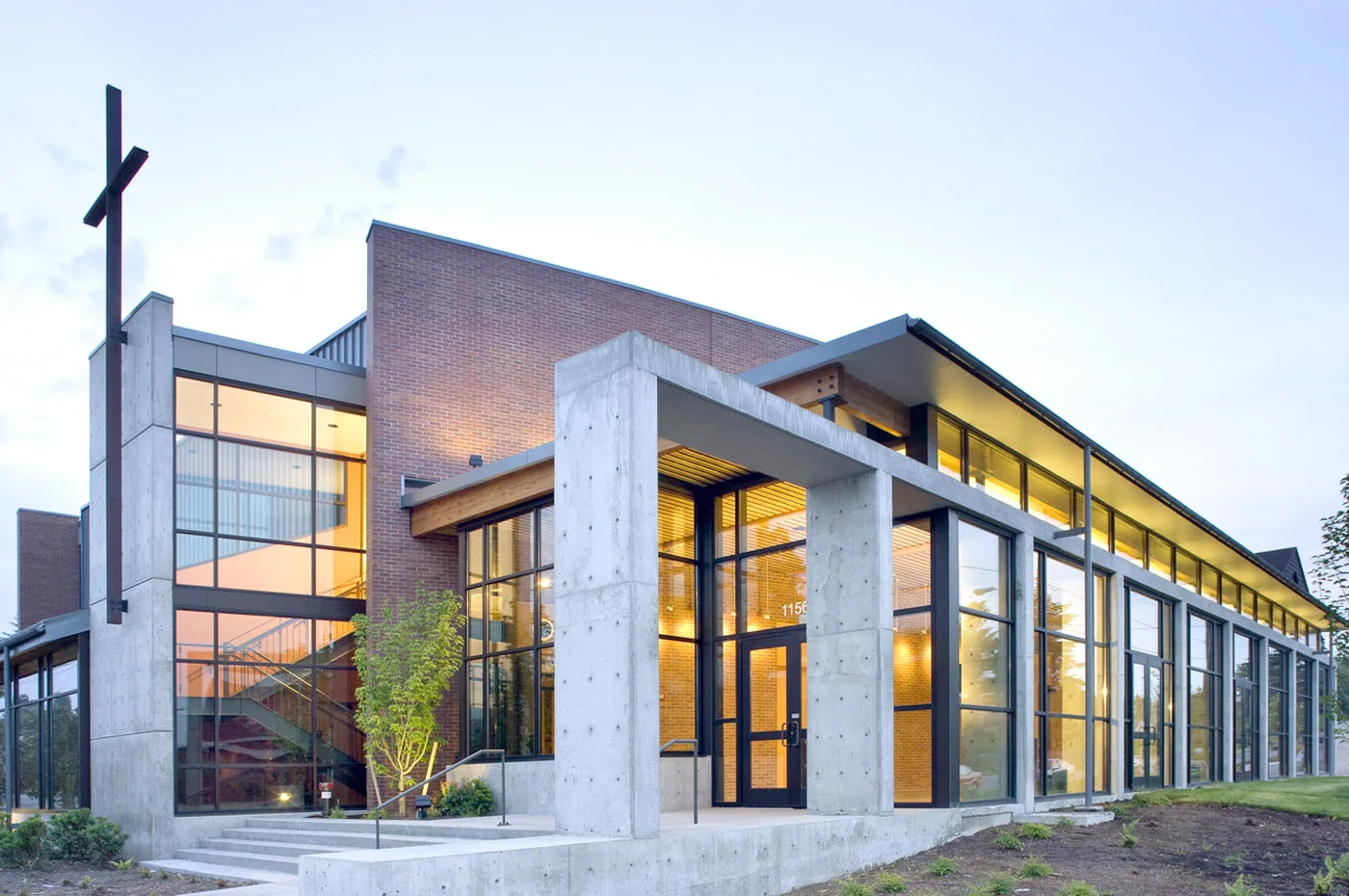
A sanctuary is a big open room with a big roof over it, and snow does not care what happens inside. Flagstaff, AZ collects 90 to 97 inches of snow each winter, and a wide span with no interior walls hands all of it to the trusses. When a church roof fails, it fails over the part of the building that matters most. So the plan starts with the sanctuary, the fellowship hall and every entry where people gather. We check load, clear drains, fix the details that let water in and write it all down for the board.
The board gets a plain list with a price and a date on each item.
Long clear spans have long trusses. Those trusses carry the roof and the snow on it. Parts of Flagstaff took 24.5 inches within days of the late February 2023 storm, and a sanctuary roof feels that jump at once. The city counted several roofs down afterward and listed what to watch for: sagging ceilings, bowing trusses and heavy leaks.
Inside a sanctuary, you can read those signs from the pews. Look up. A sag in the ceiling line, a gap at the top of a wall or a crack in plaster is a structural flag. Call for help and keep people out of the room until it is checked. Nobody goes up to shovel until the structure has been inspected. Our snow and ice damage review starts with the structure and then moves to the surface.
Churches grow in pieces. A sanctuary gets a classroom wing, then a fellowship hall, then a covered walkway. Each joint between old roof and new roof is a place where drift builds and water finds a way in. We mark every valley, step and tie-in on the plan.
Steeples and towers add details of their own. Flashing at the base of a steeple takes snow slide, wind and sun. Bell towers and crosses have penetrations that move in wind. We check the flashing, the sealant and the fasteners at each. Where a roof steps down from a tall section to a short one, drift line damage is common. A low roof beside a tall wall collects drifted snow, so we look at the attachment and the slope there first.
Stained glass and tall windows add a leak path of their own. Water that runs down a wall behind a roof edge can enter at the window head and stain plaster. When a stain shows near a window, we look at the roof edge and the wall flashing above it before we look at the glass.
Some church roofs pair steep sections with flat roofs over halls and offices. Flat-roof drains are the weak point. Under a heavy snowpack, a clogged drain turns the thaw into a pond that goes looking for a seam. We clear drains in early fall and test them again before the monsoon.
July and August monsoon downpours add roughly a third of Flagstaff's yearly 20 to 22 inches, and gutters must handle them in minutes. Gutters and downspouts take the load too. Leaves, needles and ice block them. We clean, check the slope and add heat cable where ice builds at the same spot each year. Our drain and scupper work includes overflow openings, which cost little and protect the structure. Entry roofs need gutters that discharge away from doors.
By late September the nights freeze again, and the town has touched minus 30 degrees F. Long cold seasons mean long freeze-thaw cycling. Water gets into a seam, freezes and widens it. Come spring, the opening is large enough to show on the ceiling. Entrances are the other worry. Snow and ice slide off steep roofs onto the walk below, right where people arrive for services.
We recommend snow guards or ice belts above doors and walkways. We mark the slide zones and advise on rope-off plans for heavy melts. If a roof must be cleared before a service, we plan it for the morning, with the crew finished before people arrive. No one works over an arriving congregation. The preventive maintenance visit in late fall includes a look at every entry roof.
Churches work on budgets that need board approval. A big replacement can take months to fund. Our approach is a staged plan. Immediate repairs address active leaks and safety. Near-term work covers failing flashing and drains. Long-term items go on a replacement schedule with a cost range and a date range.
Each item has a price. Each priority has a reason. A board can approve the first stage and schedule the next. Where a roof recover is possible, it can save money and delay a tear-off. Where it is not, we say so. A coating or a recover only works if the insulation is dry and the deck is sound, and we test before we propose either.
Records help with funding. A dated photo set and a plain list make it easier to approach a lender, a diocese, a denominational body or a donor for help with a roof. We write the summary so a reader who has never been on the roof can understand what is wrong, what it costs and what happens if the work waits.
Get the roof walked before the first heavy storm. Hand over the church address, roof type and the last walk date. We set the sag and drain checks and mark the drift lines. Sun shines about 3,475 hours a year in Flagstaff, so coatings and sealants age even in winter. The fall walk catches sun damage as well.
Replacement work follows the 2018 codes and Flagstaff's 2019 amendments to them, which we check before pricing. A church in downtown Flagstaff, Doney Park or Kachina Village gets the same checks. A hall or office wing with its own flat roof can follow the same method used on a school or a government building.
Look for ceiling sag, bowed trusses, cracks at wall tops and doors that stick. If you see any, clear the room and call. We recommend the building committee keep a one-page list of these signs and a call number posted near the office.
We advise against it. Roofs are slippery, edges are hard to see in snow and a doubtful structure can fail under people. Hire a trained crew. We set a plan after inspection, including which sections to clear and in what order.
Clear the drains and gutters in fall, reseal flashing at the steeple and walls and fix open seams. Those three items cover the usual ways water gets in. We list each with a cost so the board can approve them as a group.
On a dry, sound membrane, yes. We test for moisture first. Wet insulation rules a coating out. If the roof qualifies, the scope puts the coating cost next to the cost of a replacement.
Tell us your service schedule and big dates such as Easter and Christmas. We plan loud work for weekdays and finish sections before weekends, so the building is dry and clear for worship.
Browse the services, roof systems and building types we work with across Flagstaff and nearby Arizona communities.
A walk of the roof with photos, findings and a written scope.
Active leaks, storm damage and blocked drains get a fast response.
Roofing across Flagstaff and nearby Arizona communities.