
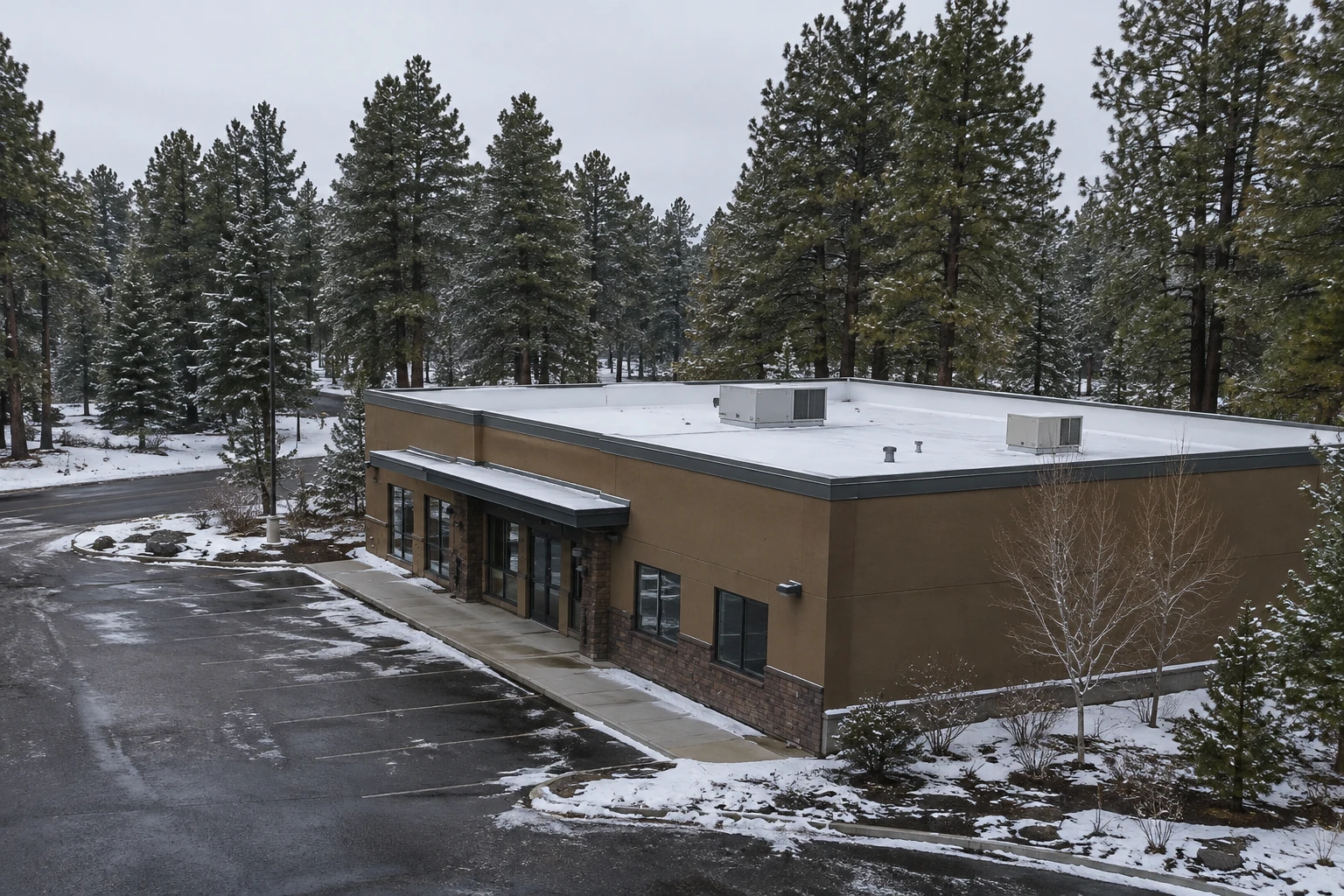
Small buildings still carry big snow. Kachina Village is a mostly residential community of 2,502 residents at 6,798 feet, described as primarily a bedroom community for Flagstaff. In a place like that, a commercial or multi-unit roof is a shared asset, and the people under it use it every day. Commercial Roofing Flagstaff inspects, repairs and replaces commercial and multi-unit roofs in Kachina Village, AZ. We start with the load on the roof and the drains under it.
An owner with one or two buildings is better served by a clear report and a short list of fixes than by a long program.
I-17 exit 331, Kelly Canyon Road, is near Kachina Village. The interstate links the community to the city, and our crews come down it. In winter that same stretch of road is the first thing a storm slows, so we stage materials ahead of a forecast instead of during one. A late delivery on a day with open decking is how a small repair turns into a wet interior.
A hall, a shop, an office or a multi-unit building: each earns its own first walk. The walk records the roof type, the age of the membrane and the condition of the deck. The plan follows from what we find, and the report goes to the owner or the board with photos. Where a building has been patched more than once, we map every patch on the roof plan. A cluster of patches in one area points to a drainage or slope problem that patching will not cure, and the report says so plainly.
A roof that serves several households or tenants has several readers. A board needs a ranked cost list. A tenant needs a work window and a contact. A manager needs a record that holds up at the next meeting. We write the report to serve all three: a plain summary, a ranked list and photos tied to roof locations.
For a multi-unit roof, the report sorts findings into repair now, repair this season and watch. The board sees where money goes first, the tenants see a window, and the manager keeps the file for the next review. We also set the work window with the manager before a crew mobilizes, covering where materials stage, which entries stay open and when residents or tenants need notice. A small building with one entry gets a plan that keeps that entry clear every day.
Flagstaff's 90 to 97 inches of snow a year is the number we plan from, and Kachina Village sits at 6,798 feet, close enough that a roof there gets no lighter assumption. Between February 28 and March 2, 2023, one storm put 24.5 inches onto some parts of Flagstaff, and the city reported collapses from snow load.
Officials told owners to watch for dipping ceilings, bowed trusses and serious leaks. Treat each as a structural flag. A building that shows one needs the snow cleared and a structural look before the next storm. The city and Coconino County share a phone line for people who notice these signs after heavy snow, and an owner can use it while we schedule a walk. The line is a first step. A walk on the roof tells us how much snow is up there, where it has drifted and whether the deck and framing under it show strain.
Leaves, grit and roof gravel pack a drain, ice seals it, and the thaw has nowhere to go but across the roof. We clear the drains and scuppers and follow the water from the field to the edge. A roof that holds water a day after the thaw needs a fix. A pond that survives a day usually points to a low spot or a drain set too high, and either one has a repair that costs far less than a wet deck.
The thaw cycle works on every seam. Water enters, freezes at night and opens the gap. By spring a small flaw has become a leak. We probe seams and flashings on the fall walk and mark each one that is lifting. The penetration flashing around vents and pipes gets the same close look.
Four outcomes are possible once the walk is done. Dry insulation with a few open seams points to repair, and a tight membrane that has simply weathered can be coated. Where layers are dry and still fastened, a recover works. Wet insulation or a deck in trouble sends the roof to our commercial roof replacement scope.
Price tracks roof area, the system, access and the state of the deck. Workable weather comes in late spring and early fall. Flagstaff's July and August monsoon cuts into both, and the first heavy snow closes the season. Book early. A roof that earns a replacement ranking this fall should not wait for the next one, because each winter adds load and thaw cycles to a membrane that has already failed its test. If the budget cannot cover replacement this year, a repair plan and a dated watch list keep the building dry in the meantime.
Crews reach Kachina Village from Flagstaff on I-17. Mountainaire is the next community on the same road, and the two visits pair well in one day. Winter work narrows to emergency roof repair and temporary stabilization, and lasting repairs go on the spring calendar.
An owner with a building in Flagstaff and another here can book one round of walks and get matching reports. The roofs then compare line by line. A manager who also handles a downtown building can pair this visit with a walk in downtown Flagstaff and send one summary to ownership.
Start with a written condition report and a ranked list. Vote on the repair-now items first and put the replacement item on the budget calendar with a target year. The report gives the board a record to cite when members ask why the work is scheduled as it is, and photos tie each finding to a spot on the roof.
Watch for a dipping ceiling, a bowed truss or a door that sticks after a heavy snow. Add water stains that spread after a thaw. When one appears, pull snow off the eave with a rake and ask for a structural look.
Coat it when the membrane is tight and the insulation is dry. We confirm with a moisture survey and a core cut. Replace it when the insulation is wet or the deck has failed. A coating over a wet roof traps water and shortens the life of the new surface.
Emergency work can go ahead: active leaks get held and loose material gets tied down. Permanent membrane work waits for dry, workable temperatures, which means late spring or early fall.
The building's address, its roof type if known and when someone last walked it. Add any earlier reports or photos of trouble spots. With them we line up the drain, seam and sag checks and slot the visit beside other I-17 stops.
Browse the services, roof systems and building types we work with across Flagstaff and nearby Arizona communities.
A walk of the roof with photos, findings and a written scope.
Active leaks, storm damage and blocked drains get a fast response.
Roofing across Flagstaff and nearby Arizona communities.