
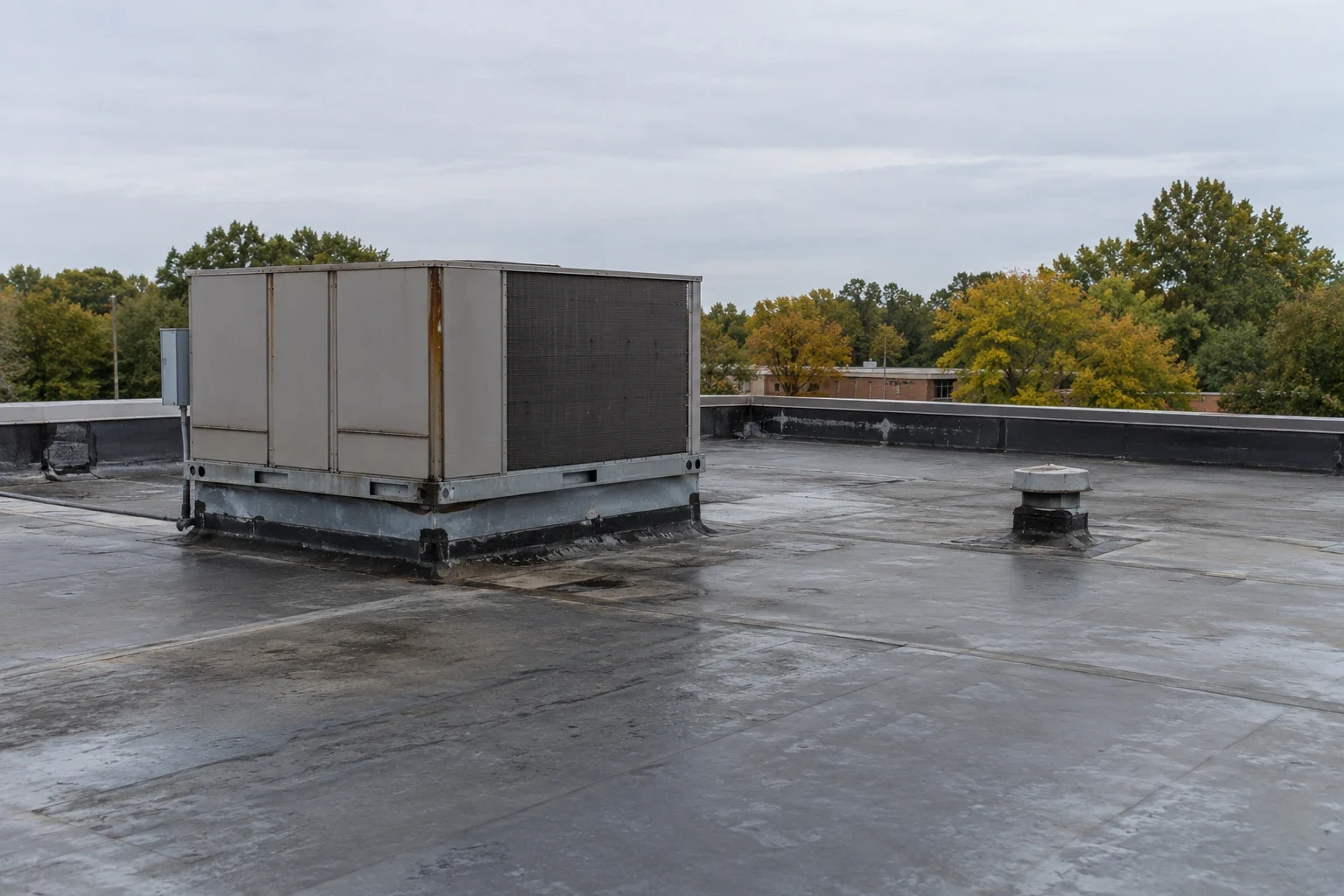
The roof is the line item that snow rewrites in Flagstaff, AZ. An investor can model rent, vacancy and taxes to the dollar. A winter storm that leaves 24.5 inches in a few days, as the one that began on February 28, 2023 did in some areas of the city, can wreck the roof line in a single week. With 90 to 97 inches of snow in an average year at about 7,000 feet, the load is a standing fact of ownership here. The answer is to measure, reserve and plan. We walk the roofs, rank them by remaining life and put a number on the next big spend.
Underwrite the roof, not the listing sheet.
Rain is a nuisance. Snow is the load. Following the 2023 storm, officials reported several roof collapses and gave owners a short list of warnings: sagging ceilings, bowing trusses and severe leaks. An investor who buys a building without checking the roof for those signs buys a risk the model never priced.
We run a short screen on every roof. Look for sag, drift lines, ponding, clogged drains and old patches. Check the age and the system. Ask about past leaks and past claims. The screen sorts roofs into sound, watch and replace. For watch and replace roofs, we price the work so the offer reflects it. Our due diligence roof surveys fit inside a contract inspection period. We ask for access in the first message, list limits in the report and deliver on time.
The surface lies. A roof can look sound over wet insulation. An infrared moisture survey finds the wet areas, and core samples confirm the layers, the thickness and the deck. A roof with two layers has already had one recover. A roof with patches on patches has had a hard life. A deck with rust or rot needs work beyond the roof.
The result is a range of years and a range of dollars, with the assumptions shown. The code matters too. The adopted codes are the 2018 IBC and energy code, with the 2019 amendments to Flagstaff City Code Title 4. A replacement follows that edition, and insulation and fastening can drive the cost. We confirm the requirements before we price, so the number holds when the work starts.
Edge cases get flagged. Historic buildings downtown carry different details and different review steps. Retail centers add rooftop units and tenant access. Industrial roofs carry process loads and dock-side edges. Each case gets its own checklist, and the report names the items we could not reach. A buyer who knows what was not checked can price it or extend the review.
Five industrial parks sit near I-40 and I-17, and the BNSF Southern Transcon runs east-west beside Route 66 and Santa Fe Avenue. Retail gathers along Butler Avenue, I-40 exit 198, and in centers such as Flagstaff Mall, a single-story, 62-store center of 347,000 square feet that opened in 1979. Northern Arizona University had 21,550 students on its Flagstaff campus in fall 2023, and the Railroad Addition Historic District downtown holds historic commercial buildings.
Each asset class gets its own screen. We read the roof before naming a type. Southside and Mike's Pike gets the industrial screen, Butler Avenue and Lone Tree the retail screen, and downtown the historic-building screen. The questions differ, and so do the cost drivers, but the method stays the same.
Seasonality affects the work. Freezing returns in late September, so inspections and repairs fit best between spring thaw and early fall. If a deal closes in winter, we plan the walk around snow cover, using a drone and an interior check where the surface is buried, and we say in the report what that limit means for the findings.
Timing depends on the hold period. A roof with eight years left may need nothing in a five-year hold. A roof with three years left needs a plan, because a buyer will price it. A roof with one year left belongs in the next budget, whatever the hold. We build the replacement queue with hold dates beside it, so the spend lands before the sale and not during it.
The queue feeds the roof capital plan, which sets annual amounts and shows the cost of waiting. Freezing weather returns in late September and has gone to minus 30 degrees F, so deferred work gets worse over a winter, not better. We show that in the numbers. A lender may ask for a reserve when a roof has limited life left, and a ranked list with dates answers the question at the table.
The lease decides who pays for the roof. Triple-net tenants may carry maintenance. Gross leases put it on the owner. Shared centers split cost across common area charges. The roof file has to support whichever split applies. Dated photos, repair logs and drain records show what happened and when.
Disputes turn on records. If a tenant's contractor cuts a roof, the log shows it. If age is the cause, the file shows that too. The owner who keeps a clean file wins small arguments in minutes and avoids bigger ones. The same file serves an owner who works with a property management company, since both see the same record. For industrial assets, the approach also matches what we do for logistics operators, with the dock-side and drain checks that large buildings need.
Call before the contract date. Send the building address, the roof type if you have it and the inspection deadline. We will schedule the walk, run the moisture scan and deliver the ranked list in time. After closing, we update the file and set the maintenance calendar.
The file helps again at sale. A buyer's inspector will test the same roofs. If your file already shows the numbers, the conversation is short. A dated record of repairs, drains and storm checks also supports insurance claims. Over several years the file shows how each roof ages under Flagstaff snow, which is the best guide to when to repair and when to replace.
Usually within days of access, depending on size and weather. Large sites take longer. Send the address and deadline in your first message and list any access limits so we can plan.
Where the scan or the surface suggests wet insulation or where the layer count is unknown. Cores are small and patched the same day. We report where we could not sample and what that limit means.
From the cost to bring the roof to a sound state. We price repair and replacement separately, so you can negotiate on either basis. The report states the assumptions.
Set it from the roof's age, system and condition, not a flat rule. Older roofs with ponding and wet insulation need more. The ranked list gives a figure for each section.
Yes. We deliver it in a format a new owner or manager can open without help. It includes the plan, photos, repair log and cost history.
Browse the services, roof systems and building types we work with across Flagstaff and nearby Arizona communities.
A walk of the roof with photos, findings and a written scope.
Active leaks, storm damage and blocked drains get a fast response.
Roofing across Flagstaff and nearby Arizona communities.