
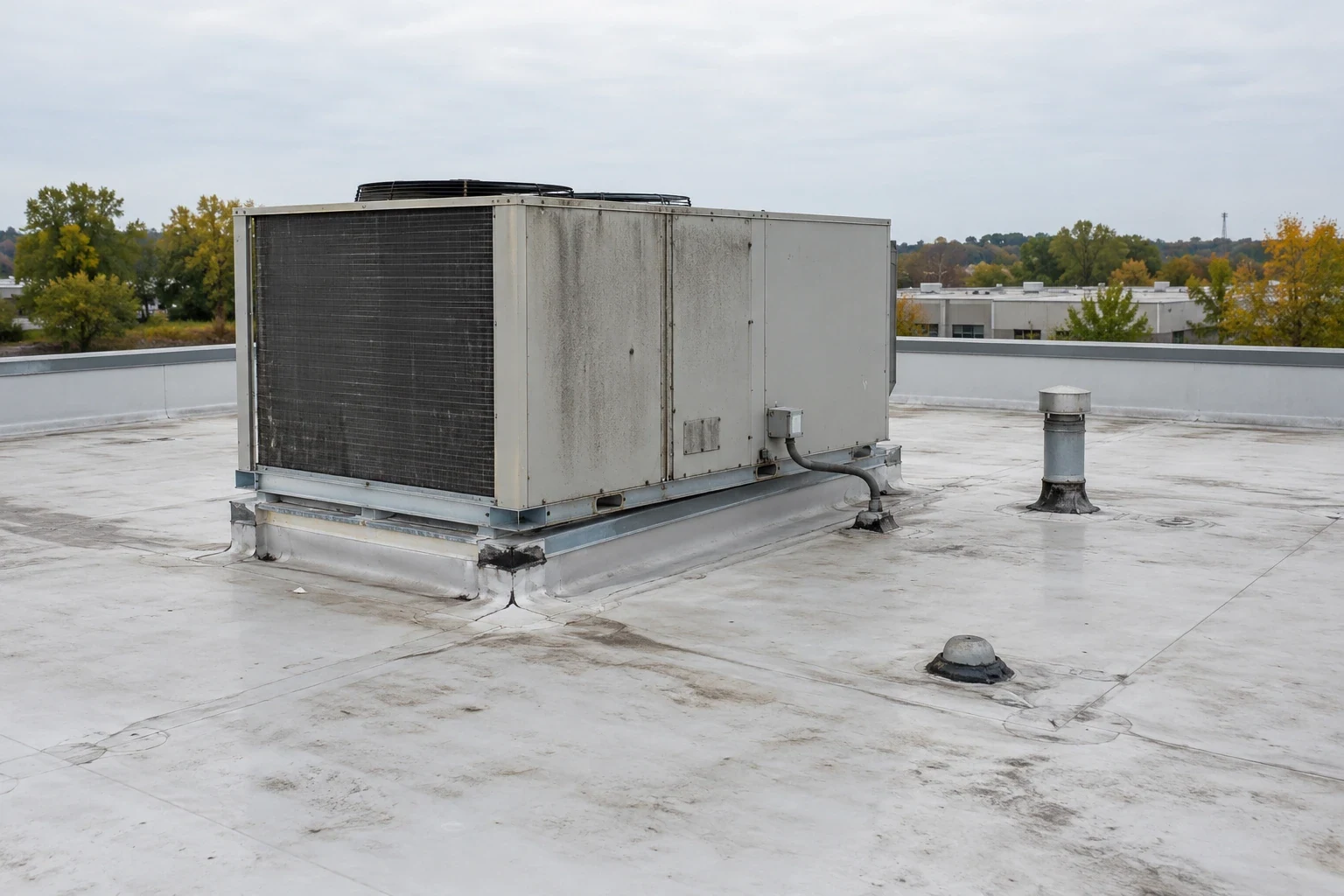
Snow on a data center roof sits on top of equipment that cannot get wet. The deck carries the snow. The chillers, dry coolers and generators sit in it. Melt runs to the drains, and a frozen drain sends water toward the electrical room. In Flagstaff, AZ, 90 to 97 inches of snow a year puts that chain to work each winter.
Schedule the walk ahead of the first big storm. Name the facility, describe the roof and give us the date of the last walk. We set the sag and drain checks inside your access rules.
A data center runs on backups. The roof needs them too. Two drain paths. Overflow scuppers. A deck with margin for drifted snow around tall equipment. A single frozen drain should not put water on the floor.
By March 2, 2023, a storm had left 24.5 inches in places around Flagstaff, and several roofs collapsed under it. Its list of early warnings began with sagging ceilings and bowing trusses. An equipment roof starts out loaded with plant. Snow piling around the units adds more, so ask for a structural review before the next big storm.
A server room can sit in a purpose-built data hall, inside an office or in lab space. The Pulliam Airport and Technology Park area, 5 miles south of downtown, targets technology and advanced manufacturing tenants, so any rooftop plant there raises the same snow and drain questions.
The designs differ, but each puts rooftop plant and pipe runs above spaces that cannot take water. A server room under an ordinary office roof is one case, and a manufacturing plant with heavy equipment loads is another. A data hall combines both concerns.
They share one trait: water below the roof is the costly part. A leak over a data hall can reach racks, power gear or cooling. So the roof plan names what sits under each section, and the sections above the most sensitive spaces rank first for inspection, even if the membrane there is newer.
Start at the equipment. Each unit has a curb or a support, a flashing and a stretch of walkway. Snow drifts on the lee side, then freezes. Check sealant, fasteners and tie-downs for movement. Ice can lift a unit's base, and wind loads add to it.
Then check the pipes and cable trays. Each crossing is a penetration. Look at boots, pitch pockets and seals. Test the drains by running water to them. Clear sumps. Record the flow. A drain you have not tested is a drain you cannot trust in a thaw.
Rooftop generators and fuel lines add another check. Snow can block exhaust and intake paths. Ice can build on louvers. Walk the paths after each storm and clear them. Look for fuel or oil stains on the membrane, which can soften some sheets. A stained area gets cleaned and watched, and a damaged sheet gets repaired with matching material.
Flagstaff's yearly 20 to 22 inches of moisture includes a monsoon share of about one third. Heavy summer rain tests every flashing. Winter tests them with melt and refreeze. Frost is back by late September, and a reading of minus 30 degrees F sits in the record.
Ice forms at any point where heat escapes the building envelope. Warm air from a mechanical well melts snow, and the water refreezes at the cold edge. That ridge of ice can dam a drain or lift a flashing. We look for it at wells, curbs and eaves, and we fix the cause, either with added drains, heat tape or a changed detail.
Wind carries snow too. Snow drifts behind any tall object, and equipment screens make the drifts deeper. A screen that blocks wind also traps snow. We note screens and walls that create deep drifts and check the deck below them. Where drifts keep returning to the same spot, a small change in screen height or spacing can reduce the load.
Operators control roof access. We send rosters and method statements ahead of time, follow escort rules and report at the end of each shift. Hot work, hoisting and work near power or cooling need approvals. Dust and fumes stay away from air intakes.
Clearing snow follows its own written plan. List the people cleared to go up. Plastic tools only. Drains and drift pockets get cleared before open field. Do not pile snow against equipment. Every person up there wears fall protection and has a way down. After a storm, schedule a walk before the thaw, so water has a clear path out.
Weather windows are narrow in this climate, so a missed slot can cost weeks. Build slack into the schedule and keep a ready crew for the next approved window.
Repair covers flashings, seams, penetrations and drains, in short windows. Restoration with a coating can extend a sound membrane. Replacement is phased by section, with each section closed in and tested before the next opens. A commercial roof replacement on a live facility needs a method statement for every step.
Run an infrared moisture survey before deciding. It finds wet insulation without opening the roof. Cores confirm the worst points. Some owners add electronic leak detection under the membrane, and we discuss it when a replacement is planned.
The scope should state the attachment, the wind rating and the drain plan. It should list the stop points where the building can be closed in. It should name who approves each step. The record that results, with photos, readings and test results, goes into the building file and the operator's asset system. Roof condition reports give the operator a dated baseline for each roof.
The best data center roof is a boring one. Walk it in fall. Test the drains. Clear the drift lines. Fix small leaks before they become incidents. Rank roofs by what sits below, then by age and snow exposure. Keep a dated record, and phone us before the first storm with the facility address and your last walk date.
Hold a short list of open items, each with an owner and a date. A small item that sits unowned becomes a spring leak.
We plan with the operator: access rules, escorts, protected equipment and stop points. Work moves in short sections that are closed in each shift. Nothing opens without an approved method statement.
A blocked drain or a failed penetration above electrical or cooling space. Test drains, add overflow scuppers and reseal pipe and cable crossings before winter.
Yes. Snow drifts around tall units and adds weight where equipment already loads the deck. Have the structure reviewed, and watch for sagging ceilings, bowing trusses and sticking doors.
For critical roofs it can pinpoint a leak early. It works best when installed during replacement. We discuss cost and layout when a replacement is planned.
Drains first, then exhaust and intake louvers, then curbs and tie-downs for movement. Photograph the same points each time, and check the sections over critical space first.
Browse the services, roof systems and building types we work with across Flagstaff and nearby Arizona communities.
A walk of the roof with photos, findings and a written scope.
Active leaks, storm damage and blocked drains get a fast response.
Roofing across Flagstaff and nearby Arizona communities.