
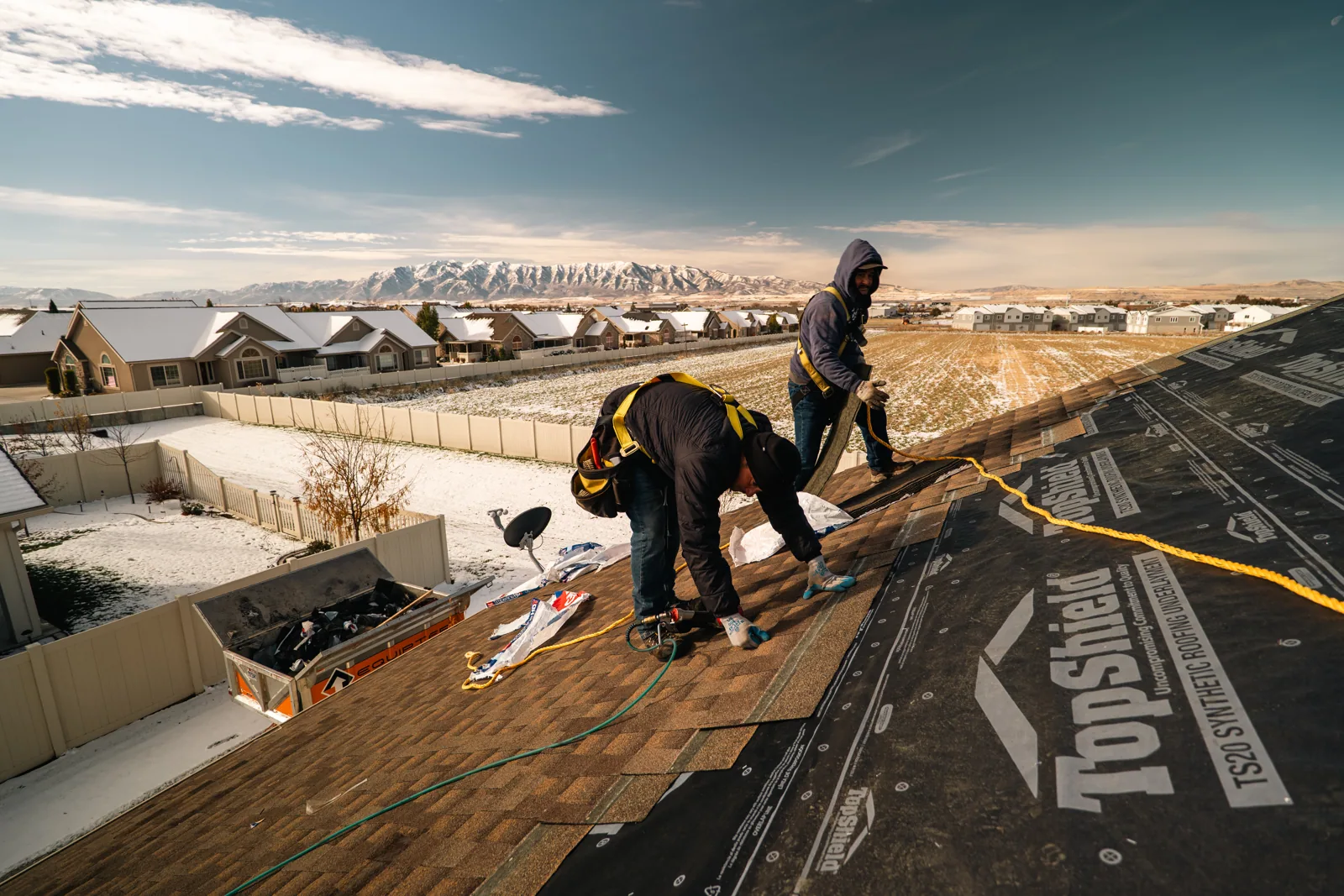
Brand matters less than load. A GAF commercial roof in Flagstaff, AZ faces the same test as any other. Winter brings 90 to 97 inches of snow, the record low is minus 30 degrees F, and the monsoon in July and August adds a third of the year's moisture. The manufacturer sets the materials and the details. The deck, the drains and the snow plan set whether those materials last. We repair and maintain roofs built with GAF systems, and we read each one the same way. Check the sag. Check the drains. Check the seams. Then decide what the roof needs.
GAF sells low-slope systems in several families. Thermoplastic single-ply sheets, such as TPO and PVC, are rolled out over insulation and welded at the seams with hot air. Modified bitumen is a rubberized asphalt sheet, torched, mopped or self-adhered in layers. Built-up roofing stacks plies of felt and asphalt under a surface layer. Liquid-applied coatings cure into a film over an existing roof. Each family has its own seams, its own flashing details and its own failure signs. We identify which one is on the roof before any tool comes out, because the wrong repair material can fail within a season.
Insulation sits under every one of them. Rigid board holds the R-value, and a cover board spreads point loads and absorbs impact. Tapered board gives the slope that drains need. In Flagstaff the board also carries snow weight, so crushed or wet insulation is a structural issue and not only a thermal one. We core the roof to see what is under the surface. A dry, firm base means the membrane can be repaired. A wet, crushed base means the repair is a patch on a failing assembly.
Snow is weight on a deck. The storm that arrived on February 28, 2023 had left 24.5 inches in some parts of the city by March 2, and the city reported several roof collapses. Its warning list was short: sagging ceilings, bowing trusses and severe leaks. Those are structural flags. A membrane brand does not change them. Drifts pile behind parapets and mechanical wells, and the load there runs far above the open field. We mark every drift line on the roof sketch and check the deck beneath it. If the framing shows stress, we say so and send the owner to a structural engineer before any roofing work starts.
Shoveling is the second risk. Metal blades cut membranes. Ice tools gouge seams. A crew that clears a roof without a plan can do more harm than the snow. Use plastic shovels and leave a few inches on the surface. Never chip ice at a drain. Roof rakes reach from the ground and keep people off the roof. Snow guards on a sloped metal section keep a sheet of snow from sliding onto a walkway. The right choice depends on the roof type, and we write it into the shoveling plan.
Walk the roof in September. Freezing temperatures return in late September. Clear every drain, scupper and gutter. Probe the seams and laps with a rounded tool. Look at the base flashings, the curb corners and the edge metal. Press the surface in front of each drain for soft spots. On a single-ply roof, look for seams that have lifted or sheared at the edge. On a modified bitumen roof, look for blisters, granule loss and open laps. On a coated roof, look for peeling and thin spots. We photograph each finding and mark it on the sketch.
Look inside as well. A ceiling stain, a sticking door or a tile that has dropped tells you more than the roof does. Water follows the deck, so the stain sits away from the hole. Walk the interior under any drift line. Look for hairline cracks at wall tops and ceilings that have started to sag. Those are structural flags. Call for a sag check at the first sign.
A repair has to bond. Heat-welded patches need a clean, dry thermoplastic surface of a compatible type. Mopped or torched patches need a bitumen base that will accept them. Coatings need a surface that is clean and sound. A patch of the wrong material peels in the first thaw. We identify the membrane, test a small area, clean and prep, then repair to the system's details. Flashing gets the most attention, since most leaks start there. For a roof past patching, a commercial roof replacement resets the system with the right insulation, slope and drains for snow and thaw.
Every thaw cycle moves water into small gaps and freezes it again. Ice widens the gap. A split too small to see in October becomes a leak by February. The July and August monsoon then tests the same drains from the other side, with short, heavy thunderstorms. A drain that cleared snowmelt in March must clear a monsoon cell in July. Heat cycling at 7,000 feet is strong. We see seams creep, sealant dry and fasteners back out. A snow and ice damage repair starts with the drains and the edges, then moves to the field. A lifted lap on a welded sheet needs a different fix, the kind a seam failure repair addresses with a clean, dry weld.
The industrial parks near I-40 and I-17 number five, and their buildings do not share one roof. Along Mike's Pike the buildings are mostly industrial and boxy, in metal, wood and concrete. Flagstaff Mall is a single-story center from 1979. Downtown buildings are masonry-era stock, because an 1897 ordinance required brick, stone or iron after the fires. Each building class has its own roof questions. A wide single-story building like the mall raises the question of where the water travels to reach a drain. A metal industrial roof has fastener pull. A masonry downtown roof has parapet drift. We read the building first, then the system. The Southside and Mike's Pike district is a good example of how mixed the stock can be.
The Railroad Addition Historic District downtown went onto the National Register in 1983. Roofs there sit on older masonry, behind parapets that collect drift. East of Buffalo Park, the mall is a single-story building with its own drainage questions. Different classes. The same snow.
Read the warranty before any repair. Some terms limit who may work on the roof and what materials may be used. We follow the system's published repair details where they apply and keep the paperwork in the file. A roof warranty management record shows the dates, the photographs and the sign-offs. Code sets the replacement spec in Flagstaff: the 2018 building and energy codes, as amended in 2019, dictate insulation values and attachment. Owners cross-shopping Carlisle SynTec or Johns Manville against GAF should judge each by the roof in front of them, not by the logo.
No. Snow load is a structural question about the deck and framing. A membrane protects against water. If the ceiling sags or trusses bow, call a structural engineer first and the roofer second.
A repair needs compatible materials and correct details. Some warranties limit who may repair the roof. Read the terms, then choose a repair method that keeps the warranty paperwork clean.
Early fall, in dry weather above freezing. Hot-air welds need a clean, dry surface. A seam repaired in October is cheaper than the leak that follows in February.
When wet insulation covers a wide area, laps open in rows or the surface granules are gone to the base sheet. Core samples settle the question.
Only on a dry, sound roof and only in weather warm enough for the coating to cure. Otherwise wait for spring. A coat applied too late can fail in the first freeze.
Browse the services, roof systems and building types we work with across Flagstaff and nearby Arizona communities.
A walk of the roof with photos, findings and a written scope.
Active leaks, storm damage and blocked drains get a fast response.
Roofing across Flagstaff and nearby Arizona communities.